
Minnesota, Manitoba partner to build sturgeon fish passage on Roseau River
Advertisement
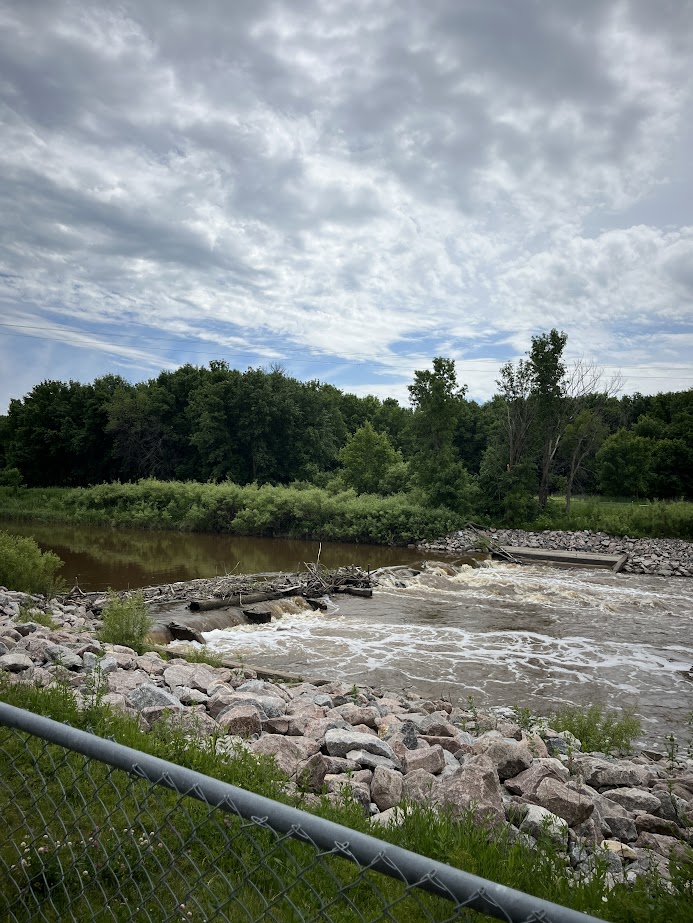
Minnesota and Manitoba are hatching a plan to build a fish passage at the Dominion City Dam, eliminating the “last barrier” for lake sturgeon swimming in the Roseau River.
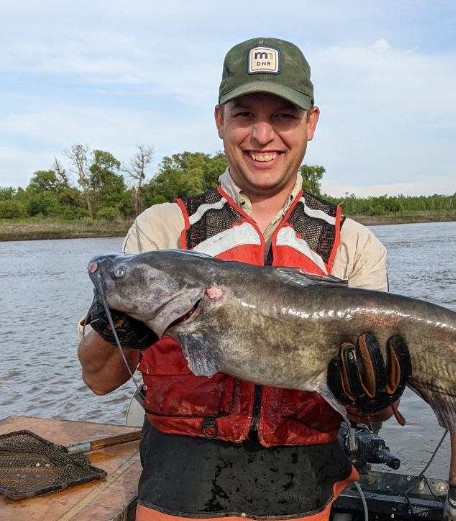
Nicholas Kludt, a Red River fishery specialist for the Minnesota Department of Natural Resources, championed the fish passage to help reconnect sturgeon spawning grounds and migration routes from the Roseau River to Lake Winnipeg.
“Wouldn’t it be a nice conservation success story to then facilitate those fish, when they achieve sexual maturity, coming back up the Roseau River, back across the international boundary, if they so choose, to spawn and then perpetuate this shared resource,” he told The Carillon.

Kludt approached the Rural Municipality of Emerson-Franklin and the Seine Rat Roseau Watershed District in 2024 to discuss building a fish passage at the dam so lake sturgeon could pass freely, after the state realized it was the final blockage for fish traveling north.
The project has spawned partnerships between Roseau River Anishinabe First Nation, Brokenhead Ojibway Nation, the Manitoba Metis Federation, Minnesota, Manitoba and environmental non-profit Nature United.
While there’s no cost estimate or timeline for the project, the watershed district hired an engineer to determine the best options for improving the dam and building a fish passage. Its board unanimously voted in November 2025 to fund $35,000 for surveying and design work on the project.
Kludt said Minnesota was interested in reconnecting waterways in the Red River basin since the 1990s, with efforts beginning in 1997 to breed lake sturgeon for release into the wild. Minnesota later launched The 2002 Red River Basin Lake Sturgeon Restoration Plan, a 20-year plan ending in 2022 to stock the river with the fish to help the species rebound.
Before the plan was created, Kludt said lake sturgeon populations were locally extinct due to over-fishing and the rise of hydro-electric dams. Since female sturgeon take up to 25 years to reproduce, they couldn’t bounce back from the mass fishing, and sturgeon were “completely gone” from Minnesota waterways, he said.
“If you have a high level of exploitation on that fishery, historically, it’s been shown time and again, you will crash it. And that’s what happened. Frankly, we didn’t know any better,” Kludt said.
The Manitoba Natural Resources department has attempted its own sturgeon recovery efforts. The fisheries branch stocked roughly 16,000 young sturgeon in the Assiniboine River from 1996 to 2008, with 15,000 fry added in 2013, according to a 2022 branch report.
Joey Pankiw, manager for the Seine Rat Roseau Watershed District, said Kludt was the driver for the project, and the district has never attempted a fish passage before.
“When Nicholas came to us…it just seemed like a no brainer for us to undertake this project to reconnect the Roseau River in its entirety,” he said.
Sturgeon won’t be the only fish to benefit from the passage, he said, with walleye and jack fish also to gain when its completed. Once completed, fish can swim from the Roseau River, along the Red River and end in Lake Winnipeg, Pankiw said.
“You have that better mobility of fish and they have the optimal places to spawn and breed and develop,” he said. “So it will (allow) them to have better access to all stages of their life span.”
Emerson-Franklin Reeve David Carlson said he would love to see the “iconic” sturgeon return to the river.
Dominion City’s history is intertwined with sturgeon. Manitoba’s largest sturgeon was caught in the Roseau River east of the community in 1903, weighing 406 pounds and measuring 15-and-a-half feet long, according to the Manitoba Historical Society. The female fish, which was 150-years-old when caught, was hauled out of the water by a team of horses. A full-size replica monument remains in the town.
The Dominion City Dam was built in the 1950s to draw drinking water for the town’s treatment plant, but was decommissioned in the 90s after the town joined the Pembina Valley Water Co-op.
“The dam is not really used anymore for the purpose that it was there. If you can get the sturgeon fish coming back up the river, I think most people would think that would be a good thing,” Carlson said.
The fish ladders previously installed on the dam weren’t effective because the sturgeon were too big to cross, he said. He hopes the new plan it will grow local tourism, sport fishing and boost the sturgeon populations in the river.
“It’s what nature had been like here for thousands of years; sturgeon going up the river from the lakes to spawn,” Carlson said.
He views the cross-border cooperation on the river project “significant” amid the trade turmoil and the strained relationship between Canada and U.S. President Donald Trump. When it comes to waterways, Carlson said Canadian and U.S. officials put politics aside because they share the same goals for preserving nature.
“It’s whether it’s flooding, water quality or proper drainage and things like that, we all want the water to do what it needs to do and protect habitats for wildlife,” he said.
The province issued a statement by email.
“The province of Manitoba is proud to partner with neighbouring jurisdictions to protect and defend watersheds and the wildlife who benefit from it. We will continue to monitor the situation at the Dominion Dam passage and look forward to seeing the positive results of our efforts.”