
Ste Anne church celebrates 125 years
Advertisement
Hey there, time traveller!
This article was published 17/07/2022 (1393 days ago), so information in it may no longer be current.
The acoustics in Ste Anne Roman Catholic Church ring clear through its nave, filled with oak pews, each Sunday, carrying soprano and tenor voices singing the hymn of “The Sun of Justice, Christ True Light” to each parishioner following along with the choir.
For 125 years, the community of Ste Anne grew up around the parish, a building now rich with stories from yesteryear. For 125 years, residents near and far congregated to worship, sing, and be one with Christ.
This past Sunday, worship looked slightly different.
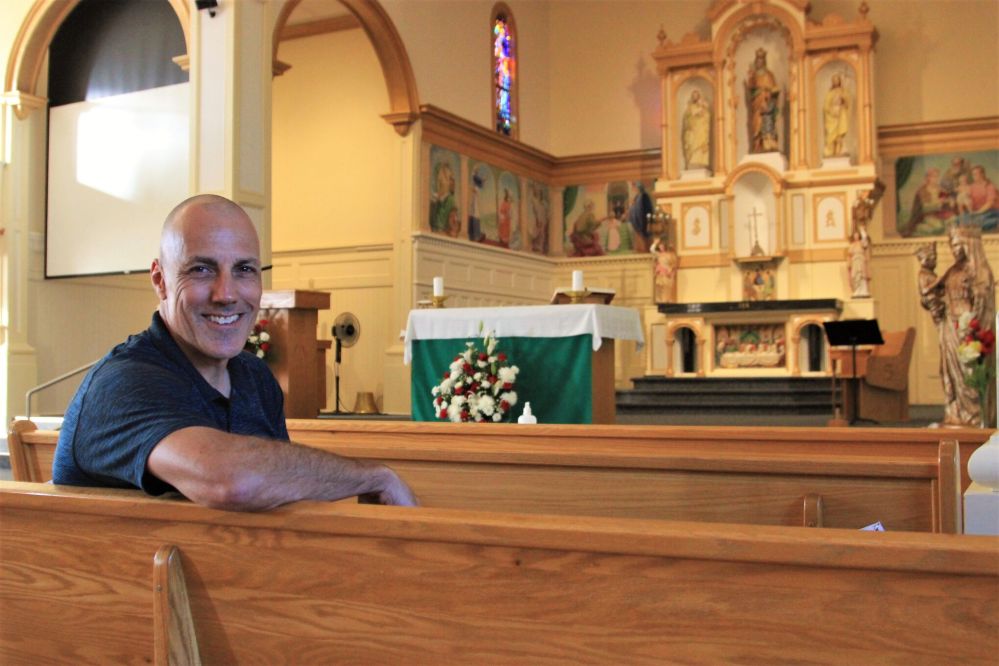
Nearly 400 people, double the usual turnout for mass, filled the pews of the church for a special 75-minute mass to celebrate the 125th anniversary of the church’s construction. But the commemoration took on a different tone than one might expect.
While mass was delivered as usual with the addition of guest priests and musicians, the anniversary included themes of reconciliation to honour the community’s Metis population and the past contributions of the Metis during the settlement of the area along the Seine River, both within the church and throughout the region at large.
Louis Riel, regarded as the father of Manitoba, was the third member of Parliament for Provencher, the federal riding in home to Ste Anne. The Metis politician was elected to represent the area three times.
According to the 2016 census, 855 people of the 4,995-person sample size in the RM of Ste Anne identify as Aboriginal. Of those, 720 are Metis.
Patrick Fredette, president of the pastoral council, said instead of solely celebrating the construction of the building, the church felt it necessary to include reconciliation as a main theme of the day.
“It’s also personal reconciliation for each one of us,” Fredette said.
The church and town are closely intertwined. One’s history feeds into the other’s.
Once called Sainte-Anne-des-Chenes, the town was named after Sainte Anne, known as the grandmother of Christ. She later became the patron saint of travellers.
As such, when the cornerstone of the church was laid in 1895, and three years later the construction of the church completed, the parish received its name from Sainte Anne to reflect the centuries pilgrims travelled west, often along the Dawson Trail and through area where Ste Anne now lies, to colonize the land.
The Neo-Romanesque church, intentionally built in the shape of a cross standing 46 meters long and 22 meters wide, is not only a religious hub in the community but one filled with history.
The architect of the church, Joseph-Azarie Senecal, is the same designer of the St Boniface Cathedral which burned to the ground in 1968. Remnants of the church remain today as a historic site where Louis Riel’s grave also lies.
Lining the walls are paintings depicting parts of the Bible done by renowned Ukrainian-Canadian artist Leo Mol. On the balcony sits a Casavant pipe organ, the 983rd one to be built by the world’s largest organ-building company and blessed by Archbishop Arthur Beliveau on the feast of Saint Anne at the parish in 1923.
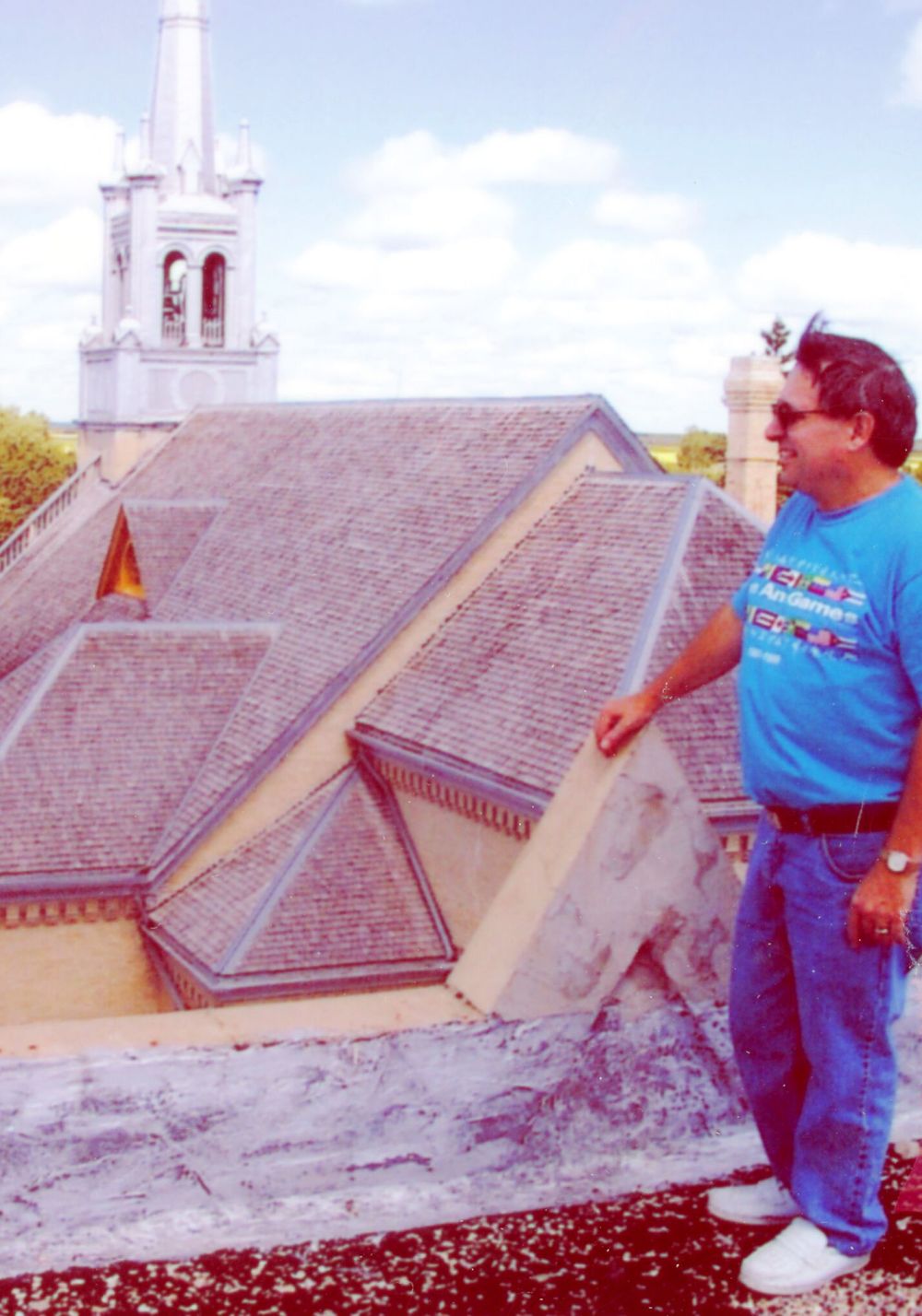
Through the century of its existence, the church has undergone transformations both aesthetic and spiritual. On the outside, paint touch-ups and renovations kept the building sound; on the inside, acceptance of one’s wrongdoings and commitment to betterment kept the faith’s foundation solid, Fredette said.
“We were celebrating how this church took three years to build as a structure, but it takes a whole lifetime to understand it.”
On Sunday, a procession after the service led parishioners to bless a site outside the church’s cemetery where those who were found to have committed mortal sins were buried. Archbishop Albert LeGatt blessed the site to make it one with the rest of the burial area on the property, further connecting those in the community who are no longer alive.
An afternoon of music, children’s games, and half-scale Red River carts to carry (as if doing one’s own pilgrimage) filled the rest of the day’s schedule, though the overlying theme of reconciliation was ever-present.
Fredette said as the church reckons with truths regarding residential schools and the mistreatment of Indigenous people, there is some overdue correction. However, the message of the church remains the same.
“The objective truths of what is being taught, that has never changed, that’s always there,” he said.
“We’re just trying to honor that.”
The concept of the church’s anniversary may be a step towards reconciliation in the community, but for Metis people, like Fredette, the work is just beginning.
“How do we do it? We do it one action at a time; one holy moment at a time.”