
Growing up as a missionary ‘third culture kid’
Advertisement
Hey there, time traveller!
This article was published 01/05/2023 (1136 days ago), so information in it may no longer be current.
From her home in Tallahassee, Florida, Faith Eidse needed little prompting to reflect on years as a third culture kid. The daughter of missionaries Ben and Helen Eidse, she was born in Congo, 12,000 kms away from her current home.
But the memories of those days, when being a child in a missionary family meant uprooting herself time and time again, stay with her, combining to create her identity, to explain who she is today.
Her book Deeper than African Soil was published this month, and while the stories it contains date back to her birth in 1955, the memories and lessons learned still resonate today.
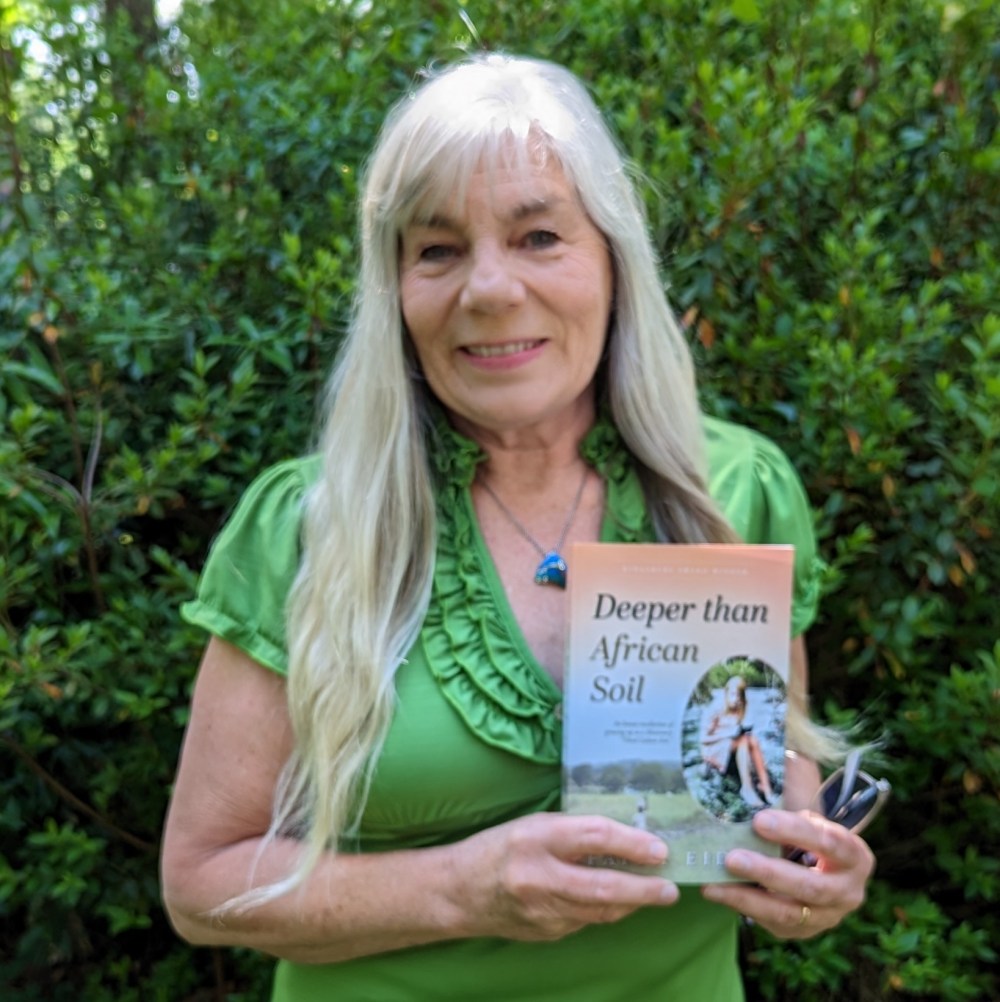
In an interview from her Florida home, Eidse said the book was written as a draft while she was in university, handed in as her master’s thesis. It won the Kingsbury Award, a $14,000 scholarship for writing “of permanent intellectual value”.
The book captures the story of a child raised among worlds.
“It unveils the adventure and suffering of revolution, disease, boarding school trauma, wrenching farewells and losses deeper than most people endure in a lifetime,” the book’s synopsis states. “It explores the nature of memory itself, why we repress it and how to call it forth, all five senses open.”
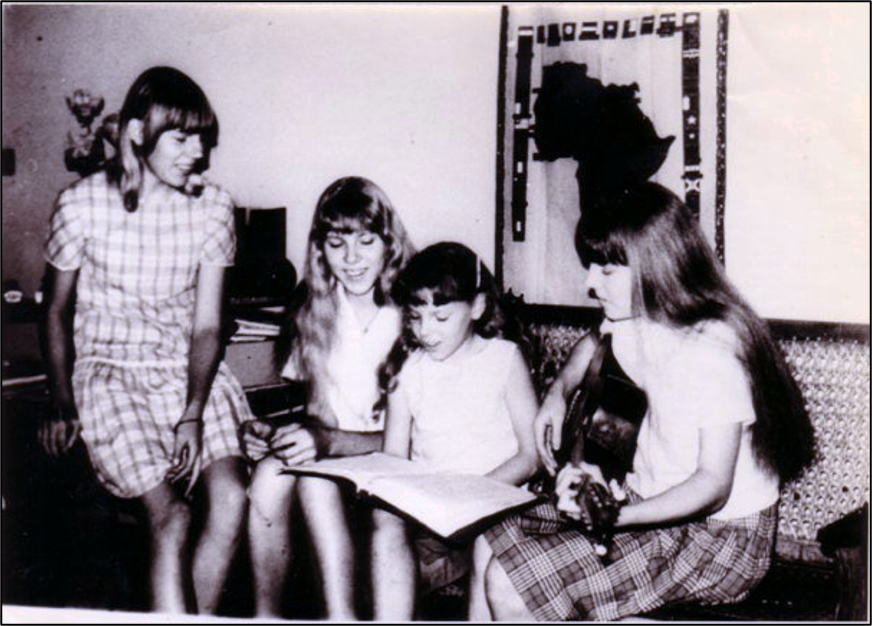
With a Mennonite background and family in the Steinbach and Rosenort area, Eidse’s earliest memories are of Kamayala, a village in Congo where she played with her friends kicking the raffia ball down the street, diving into the spring-fed river or carrying water on her head back to the village.
It was a time of joy, but also one of loss and tragedy. The book explores the Eide’s family being forced to flee from the jeunesse, the Congolese Youth Union who rebelled against Belgian control after independence.
Part of that rebellion included the killing of Belgian priests, where they first cut off their hands.
Eidse said that was because of King Leopold’s policy of increasing the rubber harvest by cutting off hands as punishment.
Because he offered a bounty for hands, his troops would seek to harvest hands instead of rubber.
“They didn’t want to cut off the hands of the rubber harvesters so they cut off the hands and feet of children,” she said.
The book highlights times of triumph and trouble, including abuses while at boarding school, and Eidse’s struggle with identity as she tried to find home wherever she went.
Though this book goes the farthest back, it’s not her first pubished work.
Eidse penned Unrooted Childhoods in 2004, Voices of the Apalachicola in 2006, Light the World: The Ben and Helen Eidse story in 2012 and Healing Falls in 2018.
She has written both fiction and nonfiction, but said she felt it was important to use the style of a memoir this time around.
“I was convinced that memoir has the best reader contract,” she said. “It’s a contract that said I’m going to explore, I’m going to tell you my deepest secrets, my most honest recollections.”
Being honest was important to her.
“People want to read personal stories. They want to know history through personal experience,” she said. “The deeper, more honest, more compelling the story, the more people relate to it.”
Diving into those details of her life creates for gripping story telling, sometimes humorous, other times deeply sad and often gritty stories.
“I had to push myself and, in a way, I not only had to give myself permission, but I almost had to get permission,” she said.
That permission came from her sisters, Hope, Charity and Grace, whose stories are told in part as well.
“I couldn’t have done this without their support and backing,” she said.
Since that first draft, the book has changed, and Eidse said she received input from many others who were a part of her journey, becoming in a sense, a community project.
“It took the first writing about this and the first putting it out there for people to start telling me their stories and for us to explore our stories together,” she said.
Stories of the abuses in boarding schools were later brought to the Mennonite Mission Board along with recommendations to keep children safe in dormitories.
“Some of the people on the board were in tears,” she said. “Some of them had lived some of this. They were missionary kids.”
The book explores the abuses but doesn’t focus on them, merely including them in the telling of the entire story.
And that telling has led to healing.
“When you put your story out there, it’s a healing process,” she said. “You can have some objectivity. When you’re ambushed by pain, you have a way of rising to the top again and getting perspective again.”
No matter where they lived, Eidse said just as in Congo, they embraced the culture around them.
“We dived into the culture, we had a love affair with the culture,” she said. “We also understood that we would have to leave that culture.”
Eidse’s journey saw her live in Congo, the U.S. and Canada, and said all those places were home.
“In some ways I have many homes and many villages,” she said, recalling that at one time she calculated she had lived in 21 homes in 21 years.
And she’s not alone. Children referred to as “third culture kids” have challenges others do not.
“We have experienced more loss by the time we’re 18 than most people do in a lifetime,” she said. “We’ve lost cultures, we’ve lost countries, we’ve lost friends.”
The child of strict Mennonites, in a time when hem lines were important and hanging out with Methodists was forbidden, faith has played an important part in Eidse’s life.
“I do cling to faith because at one time that’s all I had,” she said. “When I left here as a child, eight-years-old, I took my mother-father God with me and I was very dependant on that construct.”
Today she attends a Methodist church and said she has found an inclusive community.
Throughout her life, her connection to Manitoba was strong, saying she found solace in the letters from her cousins who wrote about blizzards and snow forts while she was running under palm trees.
She also came back to attend Steinbach Bible College from 1973 to 1975, wrote for The Carillon from the summer of 1975 to the fall of 1977 and spent six more months at the local paper in 1979 before marrying her husband, Phillip Kuhns of Virginia.
While there were many challenges in her life, Eidse said she’s happy it made her what she is today.
“It enriched my life tremendously and I hope I acknowledge that in the book that the enrichment was something I couldn’t have gotten by staying home in one place,” she said.
Eidse added she also continues to look up to her parents who were “models of service and sacrifice”.
Faith Eidse will be in Steinbach to speak at The Public Brewhouse and Gallery on Saturday, May 6 at 7 p.m. She will share the stage with her cousin Mark Reimer and sister Charity Schellenberg as they discuss being third culture kids.
She will also take part in An Evening with the Authors on Tuesday, May 9 at 7 p.m., along with Charity Schellenberg and Mitchell Toews at the Mennonite Heritage Village.