
Steinbach RCMP first to wear body cameras
Advertisement
Hey there, time traveller!
This article was published 02/12/2024 (516 days ago), so information in it may no longer be current.
The RCMP has started wearing body cameras in an effort to promote transparency and accountability in the communities they police.
“But I look at it as being a police officer of 29 years, I wish I had this 29 years ago. A lot of this stuff I have interacted with and imagine if I could present what I saw? That’s how I look at it personally. To me it’s how do I protect myself and how do I present what I see?” said Sgt. Paul Manaigre, media relations officer for D Division.
“You can write notes, but a picture is worth 1,000 words now I’ve got two minutes, five minutes, two hours of video it speaks volumes. It’s also going to keep the members accountable.”
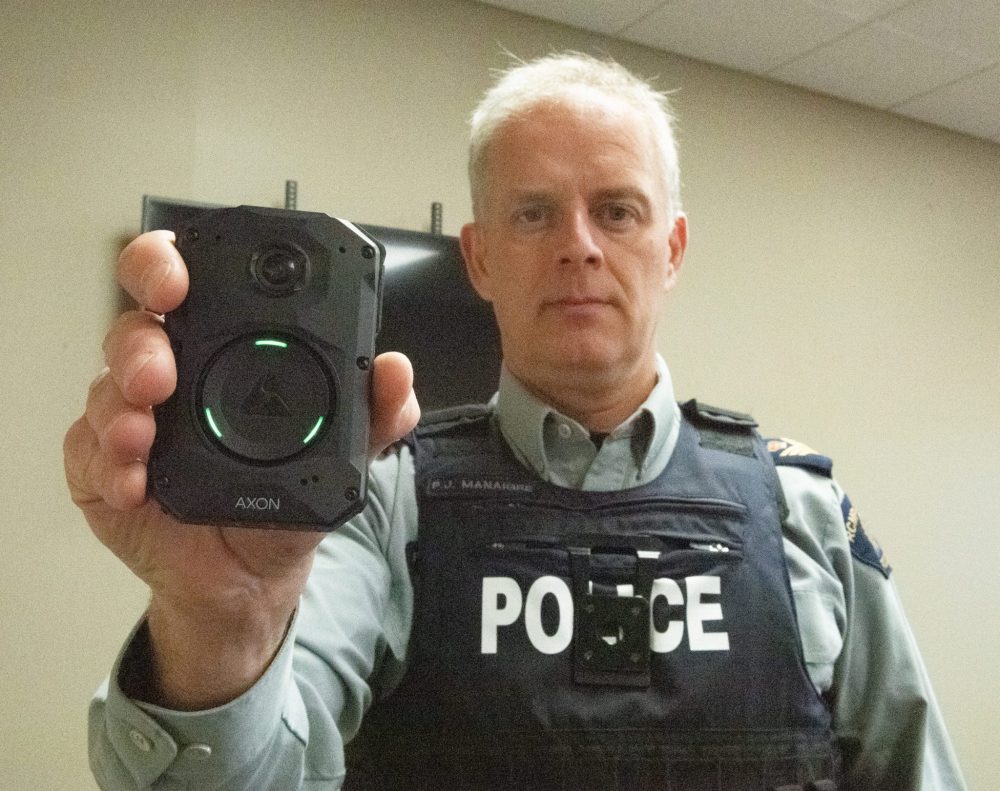
Between Nov. 22 and April 2025, more than 490 RCMP officers across the province in 44 detachments will be wearing body cameras, including those providing services to a number of first nations communities. The first detachment wearing the gear is Steinbach.
“There’s 33 officers here, it’s close proximity to Winnipeg, so if there’s issues we have a unit of seven public servants that are basically running our body worn camera unit, so if there’s issues we’re not even an hour away to headquarters so they can hopefully resolve any known issues that might come up this weekend,” said Manaigre.
It’s expected that, over the course of 18 months, all detachments in the province will have frontline officers wearing body cameras, including St Pierre-Jolys, which has 18 officers and will receive their cameras Jan. 22. Each camera is specifically assigned to an individual officer.
Officers will activate their body-worn cameras during calls for service, including mental health calls, interactions with people in crisis, crimes in progress, for investigations, public disorder and protests, and to record information to support the performance of their duties.
Body-worn cameras are not intended to be used for the purpose of 24-hour recording, surveillance, nor when intimate searches are conducted. When in contact with the public, the officer will announce he is recording.
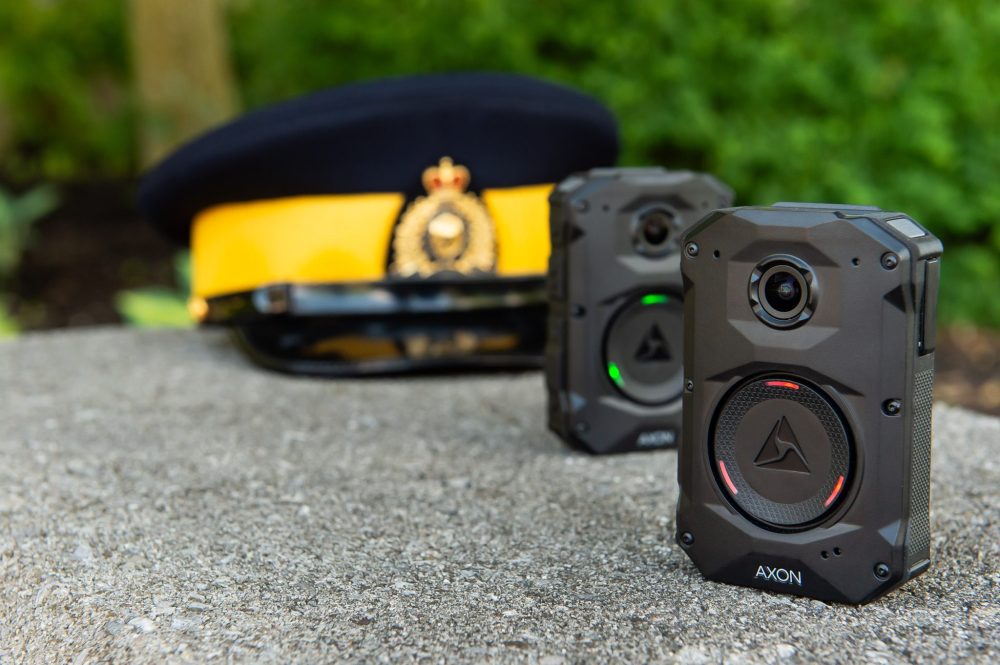
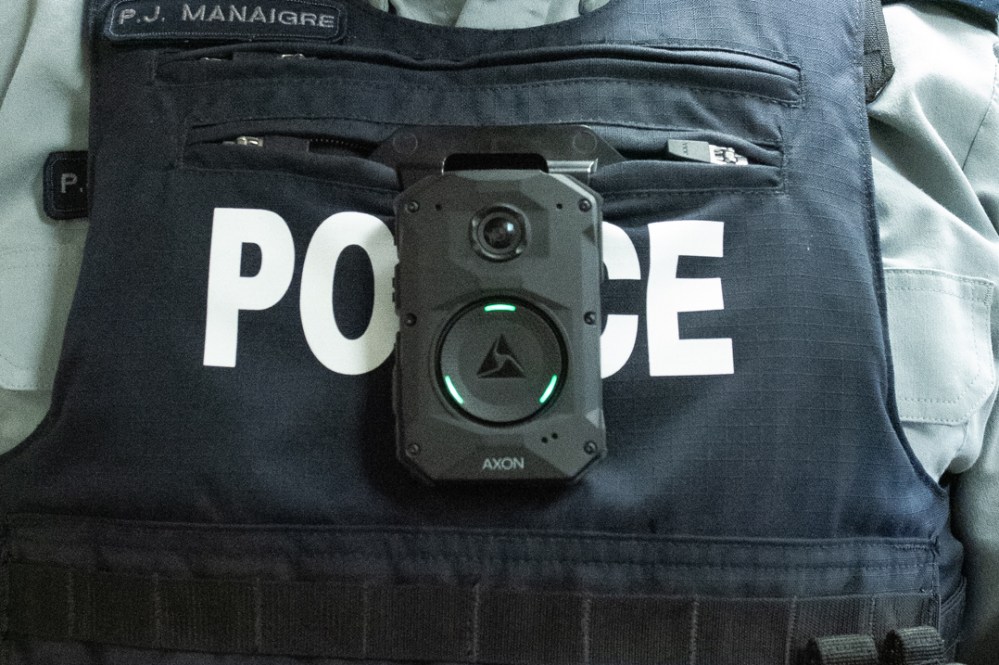
The public will know when the camera is in operation when there’s a red light flashing below the lens.
The camera can store 60 hours of audio and video with a battery life of 13 hours. The camera is docked at the end of each shift to charge the battery and to upload to the AXON cloud server. Each camera costs around $3,000.
“You can see how it’s built. It’s rugged, it can be dropped. Weight wise it’s not super heavy – a little bit heavier than a cell phone. It’s bulky rubber I can probably drop it (with) no issues. It’s quite surprisingly nicer than I would ever have expected,” said Manaigre.
Failure of an officer to turn on the camera can result in disciplinary measures according to the RCMP code of conduct.
Manaigre said the body cameras don’t necessarily make the officers feel safer when they’re performing their duties, but they can reduce the number of complaints made against them.
“I see a lot of information related to public complaints and it just blows my mind that that stuff makes it as far as it goes,” he said. “If there were cameras there, I guarantee you some of that stuff – and I’m not saying every public complaint is false, there’s officers that do wrong things – but a lot of them are frivolous and I’m hoping that’s what the camera systems are going to reduce.”
Christopher Schneider, a sociology professor at Brandon University, said he doubts the cameras will yield the benefits expressed by the RCMP.
Schneider, who studies policing and technology, said data on similar programs in other jurisdictions showed mixed results.
In some studies they have reduced police use-of-force encounters, while in others the numbers increase; the same is true about public complaints involving officers, he said.
“We have no way to measure, one way or the other, if body-worn cameras actually do lead to transparency or accountability,” Schneider said. “That money could be better invested elsewhere.”
Since 2020, the government has committed $238.5 million over six years and $50 million afterwards in ongoing annual funding for the cameras and its digital evidence management system.
Zane Tessler, the former head of the Independent Investigation Unit of Manitoba, disagreed with Schneider’s assessment, saying the introduction of body cameras “can only be viewed as a good thing.”
Tessler is a former criminal defence lawyer and Crown attorney who was the IIU’s civilian director for around a decade. He was responsible for establishing policies, regulations and hiring investigators for the independent agency, which reviews all serious incidents involving police.
“It’s a long time in coming. I’ve always been a major proponent of body-worn cameras,” Tessler said.
“The positives certainly have to outweigh the negatives… services across the country (have introduced body cameras), I think to the betterment of themselves and to the public.”
Tessler said body-worn cameras will not resolve all issues in policing, but could provide the evidence needed to exonerate or discipline officers.
Should the footage be used in court, individuals who are recorded and are not part of the investigation will have their faces blurred and sections of the recordings that are not relevant to the investigation can be redacted.
Places where the expectation of privacy is high, for example private dwellings, hospitals, and religious places, and situations where privacy is essential, for example intimate searches, the camera will not be recording.
“If the safety of the officer or the public trumps the privacy issue, the camera stays on,” said Manaigre.
Videos can’t be edited or deleted by the officer and any requests to delete the video will go through the officer’s supervisor. Videos will only be stored for a certain period of time. For example, traffic tickets will be kept for two years while more serious matters such as murders and sexual assaults will be kept indefinitely. Access to the data is under the control of seven public servants in Winnipeg’s head office. Access is logged by time, date, and person accessing the information.
A request for access to videos by the public can be made through the Access to Information Act.
-With files from Tyler Searle