
Winnipeg Metropolitan Region releases survey to get public opinion
Advertisement
The Winnipeg Metropolitan Region (WMR) has released a survey aimed at finding out from stakeholders, municipalities, and the general public, what their concerns are and what they would like to see in regards to regional planning.
“So, in December of 2024, the board decided not to move forward with Plan 20-50. So, the board recognized that a different approach was needed, and one that better reflects what’s going on in these municipalities and what the priorities are today. We decided to reset our approach to regional planning,” said WMR executive director Jennifer Freeman.
“We’re currently developing this new plan, we’re working with the municipalities in the region to understand what those priorities are. Now, because this is a new plan, we want to consult with boards, councils, stakeholders, as well as the public, so they can weigh in on what they prioritize, like what some of these key regional issues are.”
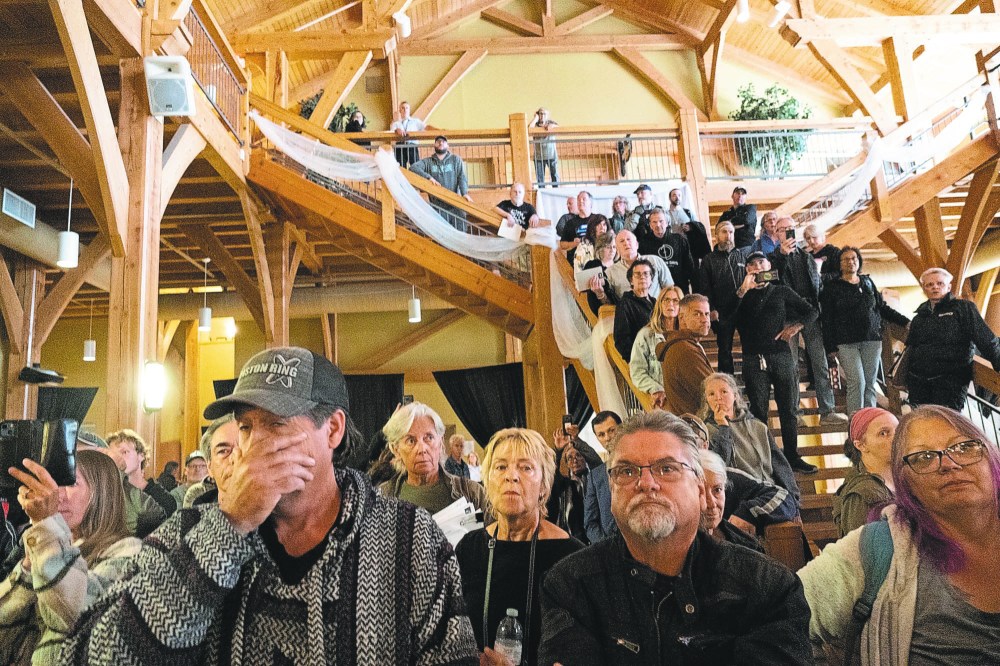
The Capital Planning Region, which was established by the province and operates the WMR, is mandated by the government to create a regional plan by Jan. 1, 2027.
The survey consists of a number of questions, which asks what issues are important to respondents, such as how important is the environment, how important is having a regional transit system, and whether they want a region that gives access to clean and safe drinking water for all.
Under the Pallister government, the WMR was directed through legislation to draft Plan 20-50, which Freeman said was “too prescriptive” and “too comprehensive.” The plan received resistance from the public and some municipalities. She said the new plan will be more flexible and the language used will be user friendly.
“Plan 20-50 has been dead for the past year. There is no Plan 20-50. This is a new plan. This is a new approach that we’re working on,” said Freeman.
In its current reiteration, the WMR is composed of 14 municipalities, as opposed to the 18 that were mandated to participate in the beginning. Regarding the Southeast, the board consists of the RMs of Springfield, Tache, and Ritchot, and the Town of Niverville. The region contains two-thirds of Manitoba’s population and its GDP.
Freeman said Manitoba is one of the only provinces in Canada that doesn’t have a capital planning region. She noted municipalities will have to work harder to get funding by working in silos, whereas in a region doors open especially in regards to federal funding.
In August 2024, Premier Wab Kinew made membership to the WMR voluntary after some municipalities rejected being a part of it. Freeman said the new plan will make it possible for municipalities to join at a later date should they change their minds.
One of the issues that arose in regards to Plan 20-50 was that it would create 15-minute cities, which are cities where housing, employment, and services are all available within a 15-minute walk, bike ride, or public transit ride. People thought it would limit their mobility and impinge on their rights. They were also worried that their land would be expropriated. Feeman said this plan is not about 15-minute cities and encourages the public to visit the WMR website to learn more.
“It think the main thing is when you hear things like 15-minute cities that’s very emotionally triggering and makes people fearful,” said Freeman. “This is nothing to fear. This is about working together, this is about getting those dollars…We respect (the public’s and municipalities’) autonomy, I think that’s a really important piece.”
The Town of Niverville, was one of the first municipalities to voice their concerns regarding regionalization and Plan 20-50. It had concerns regarding the costs associated with studies that needed to be done on regionalization, loss of autonomy, forced membership, and the need for the recognition of Niverville being in a transition zone.
Mayor Myron Dyck said the municipality will “reserve judgement” on whether to join the WMR until the results of the survey and government’s amendment of Bill 37, which concerns the WMR, is complete.
Dyck was asked if he saw any benefit to Niverville being a part of a regional plan.
“I find that in life there are very few absolutes other than death and taxes. And so there is always some merit to most things, it’s a matter of if there’s enough merit.”
RM of Springfield Mayor Pat Therrien, who is also a WMR board member, is a strong proponent of the WMR.
“I’m a very strong believer in the concept of regional planning. It has to work. You can’t be in a silo…. Now, regionalization is the federal government’s flow of money will come through the federal government to the province. They’d rather send it to a region. (That) way it’s more efficient.”
Therrien likes the survey and sees it as a way to hear from his constituents on what issues matter to them the most when it comes to regional planning. He said issues like 15-minute cities, expropriation of land, and Winnipeg’s veto power are not in the new plan.
“I know the City of Winnipeg, it seems like every 50 years they’re looking to expand…I’m always cognizant of that fact. I love my RM and I want to keep (it) the RM of Springfield, that’s what I want. We’ve got 1,100 square miles, the oldest RM in the province, and we want to keep it the way it is – a combination of rural and suburbia,” he said.
He said the RM will hold a public information session regarding a number of topics in January and the WMR will be one of the issues discussed.
Freeman said reports will be released in the coming months and she hopes to see a draft plan ready for review in the spring. The survey will be made available until Dec. 12. She said open houses will be held in the future to discuss the plan with the public.
To participate in the survey, visit winnipegmetroregion.ca/news and click on the news article pertaining to the survey. Any questions about the WMR visit its website at winnipegmetroregion.ca or contact the office at 1-204-989-2048.