
COLUMN: Carillon Flashback April 12, 1957 – Ste Anne welcomes gas pipeline crew
Advertisement
Chamber of Commerce president Robert Arbez, welcomes Majestic Contractors to the village of Ste Anne, where the company has set up an operations’ base on the Ste Anne Legion grounds, before beginning to lay 85 miles of pipe for Trans-Canada Pipeline.
“We know the task ahead will be difficult and will demand a great deal of your time and effort, yet at the same time, we hope that you will not be so busy that we cannot get to know you personally. The doors of Ste Anne are open to you and we sincerely hope your stay will be pleasant through the months ahead.”
A soft southern drawl has invaded the quiet village, along with more than $2 million worth of pipe-laying equipment. The Majestic pipe-laying company is one of the many companies working on one of the most ambitious projects in North America. The $280 million Trans-Canada Pipeline, following a 2,250-mile route through four provinces, will carry natural gas all the way from Alberta to Montreal.
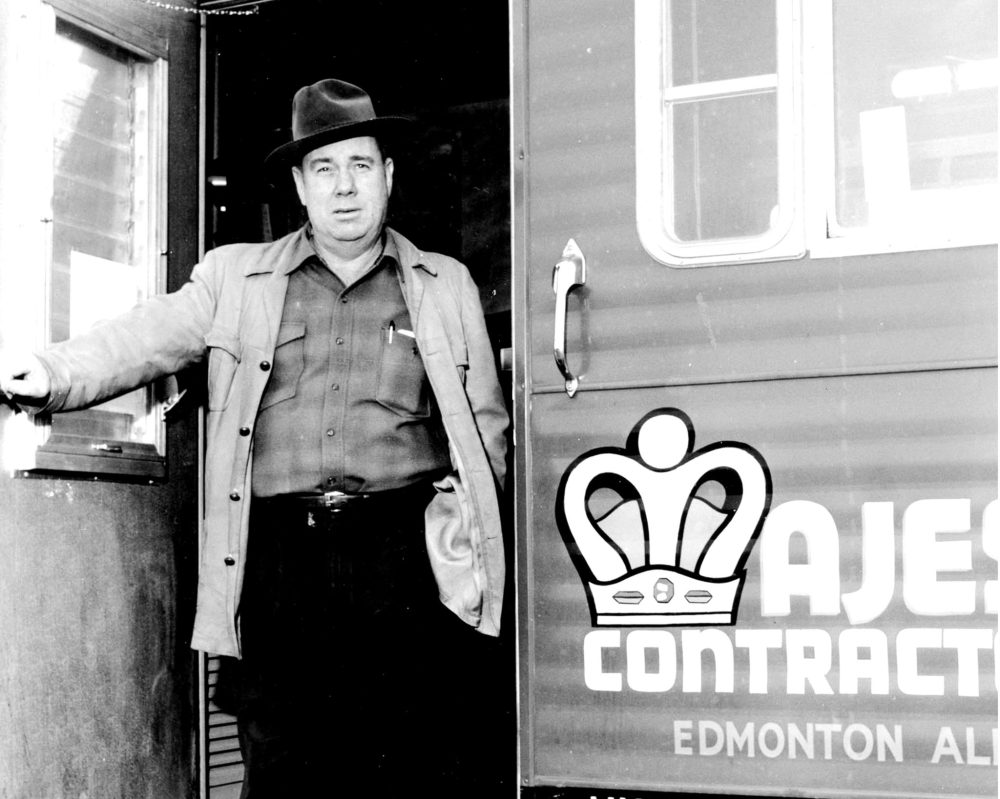
Majestic has the responsibility of laying 85 miles of 30-inch pipeline between the Red River and the Ontario boundary. Key personnel moved into Ste. Anne late in 1956 and soon machinery began to arrive, a radio tower was set up and trailers appeared overnight.
One of those trailers belongs to K.B. Killingsworth, of Madison, Kansas, who is boss of the big Majestic outfit. While Majestic has the distinction of being a Canadian-owned and operated corporation, it must rely on the technical knowledge of oil men from the American southwest, where pipeline technology was developed.
Technicians for the Majestic project hail from Oklahoma, Kansas, Texas, Arkansas, Louisiana and Mississippi. Most have worked in at least half a dozen different countries in South America, the Middle East and various parts of North America.
Today, after 30 years in the business, Killingsworth enjoys the reputation of being one of the best operators in his field. Known by one and all as “Rusty,” because of his red hair and freckles, Killingsworth maintains a forthright and sensible approach to men and the job.
Killingsworth has a passion for fancy chrome accessories on his personal truck and his $12,000 trailer contains a host of time and labor-saving gadgets for his wife, Tillie, who shares his nomadic lifestyle. The Killingsworths maintain a home and half a dozen show horses in Madison, Kentucky.
Killingsworth attributes his success in a tough business to his flair for picking the right men for the management team, to handle things like easements, right-of-way disputes and payroll.
“We’re here to lay pipe, not to run an office full of nice looking girls.”
Pipe-laying itself is divided into seven operations. The first is to clear brush and other obstacles and make the terrain passable for heavy equipment. The right-of-way is 65 feet wide.
Somewhere between 250 and 300 men work on the job once the pipe arrives and more than half are hired locally, Killingsworth said.
“When we need 50 more men, we’ll hire the first 50 through the door. But most will not be able to take the physical demands of the job. After a few days, perhaps only half of them will be working for us.”
Wages are good on this job, but men have to be in A-1 physical condition to be able to stand up to the long hours, seven days a week. While the company tries to stay away from long days, if one of the crews gets behind, the days are lengthened. The crew behind must also keep up and usually, three weeks into the job, the pipe layers are working from sunup to sundown.
This is the second section of the Trans-Canada pipeline Majestic is building. The first was a 110-mile section from just inside the Alberta boundary, to Swift Current, Saskatchewan.
Pipe laid on the east side of the Red River is only 30 inches in diameter, while that on the western side is 34 inches. Compressor stations are required along the route to keep the gas flowing at maximum capacity. One such station will be located at Ile des Chenes.