
AMM calls for the approval of bail, sentencing reforms bill
Advertisement
Hey there, time traveller!
This article was published 15/12/2025 (182 days ago), so information in it may no longer be current.
The Association of Manitoba Municipalities is calling for the approval of Bill C-14, which will amend the Criminal Code regarding bail and sentencing laws, and is currently sitting in committee.
“We hear firsthand, especially in these last 18 months as we tour municipalities, that public safety on the streets of Manitoba municipalities is the number one concern for our members. And there clearly needs to be a change, especially to the bail reform and repeat offenders part of the Criminal Code,” said AMM president Kathy Valentino.
Bill C-14 (The Bail and Sentencing Reform Act) outlines 80 changes to the Criminal Code, the Youth Criminal Justice Act, and the National Defence Act, by focusing on two main areas of reform: stricter bail laws to address violent and repeat offenders and organized crime; and tougher sentencing laws for serious and violent crimes.

AMM wants laws that are stricter when it comes to organized retail theft, which is one of the proposed changes to the Criminal Code, and that the time it takes to prosecute repeat offenders is reduced. Valentino said rural crime is on the rise and she hopes the amendments address rural crime as seriously as urban crime.
“We have to keep our streets safe, we have to get this passed because we have to stop this cycle of repeat offenders and them getting out all the time before they get into the court system and jail…So we’re working very hard on it,” she said.
The federal government claims since 2014, police reported crime rates have increased, particularly for homicide, sexual assault, extortion, child sexual offending, violent firearm offences and various other property crimes. Canada’s Violent Crime Severity Index was 41 percent higher in 2024 than it was in 2014.
Recidivism (reoffending) rates have generally declined over the past 10 years. However, offenders with 10 or more prior convictions were much more likely to be reconvicted within three years than those with nine or less prior convictions.
Further, those released from custody are more likely to reoffend as compared to those who were subject to some form of community supervision.
The AMM claims Manitoba has among the highest rates of violent crime in Canada and that 69 percent if Manitobans are worried about crime and that concern is growing. It also states that Manitoba has the highest vacancy rate for RCMP officers. Twenty-one municipalities in the province use the RCMP to police their boundaries.
National Police Federation president and CEO Brian Sauvé stated in a press release that the police union, which represents more than 20,000 RCMP members, welcomes the changes.
“For years, police across Canada have been frustrated by the consequences of a system that too often releases serious, violent offenders who reoffend while on bail. This not only endangers the public, but also diverts significant police resources toward re-arresting the same individuals, when those resources could otherwise be used to prevent and respond to new crimes.”
The union highlighted three changes to the Criminal Code that they are in support of: adding aggravating factors to sentencing to protect first responders in regards to aggravated assaults; the proposed direction to police and courts on applying the principle of restraint while respecting public safety; and the expansion of reverse onus provisions (the offender must prove why he should get bail) for serious violent and organized crime offences (including taking into account previous convictions within the past 10 years).
The Canadian Civil Liberties Association is calling into question the federal government’s proposed amendments to the Criminal Code as the national human rights organization maintains the offender has rights under the Charter of Rights and Freedoms.
“The right to not be denied reasonable bail without just cause is found under Section 11E of the Charter. And the Supreme Court in two cases in the early 1990s…talked about when a reverse onus provision can be constitutional. And essentially it has to be targeted and narrow in scope and solving or addressing a particular problem in the operation of the bail system,” said Shakir Rahim, director of the criminal justice program for the CCLA.
The CCLA would like to see bail system data collected by the federal government prior to making amendments, support and funding for interventions that improve bail compliance, and improvements to provincial jails.
In response to the proposed amendments in Bill C-14, the province has made sure the court system has the resources it needs to process offenders, has added more prosecutors and support staff, and is building a new jail in Dauphin, according to Minister of Justice Matt Wiebe.
Wiebe noted the government is looking at opportunities to expand treatment and training opportunities for inmates, and will add more teachers and educational assistants at the Manitoba Youth Centre.
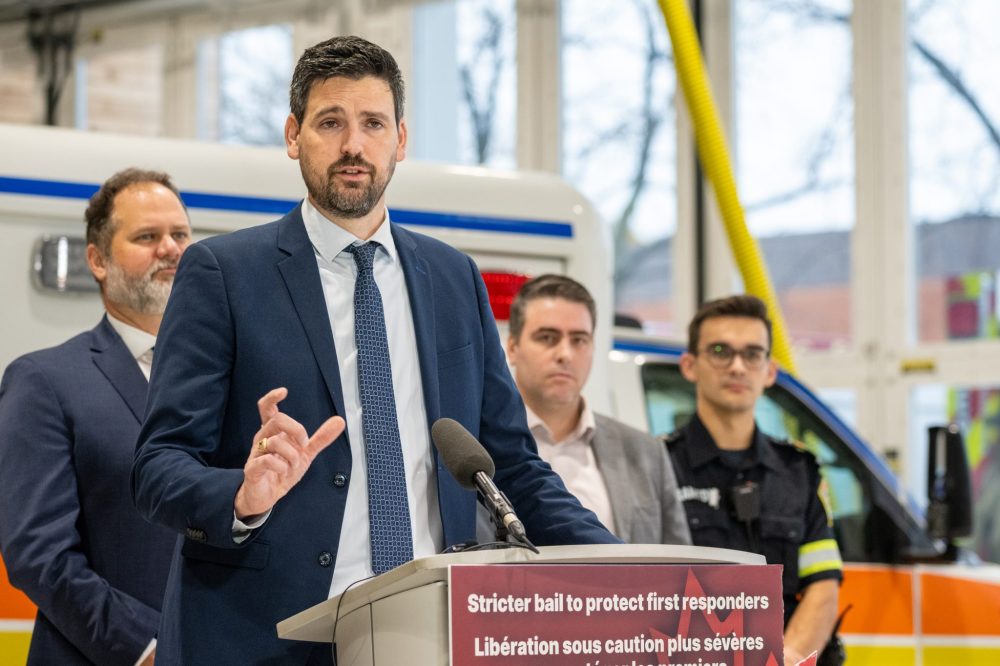
He also said Manitoba was instrumental in getting the federal government to include the protections for first responders after consulting with the Paramedics Association of Manitoba and the United Firefighters of Winnipeg.
“They need to be protected when they’re assaulted on the job,” he said, adding the province also recommended changes to sentencing repeat violent offenders and organized retail theft.
Wiebe said the province has increased funding for law enforcement, including rural RCMP members, by 30 percent over the last two years. In April, the province committed $5 million to rural crime issues.
Manitoba has also been working with the RCMP to get Manitoban recruits back to the province after they graduate from Depot to work in rural and remote communities.
“In Manitoba, there’s a real need. We have very specific and challenging needs that need to be addressed, and it can only be done by more law enforcement,” said Wiebe.
“So, that’s why we’re encouraged that now there will be more officers who will be posted directly to Manitoba, and especially in some of those key spots where we know communities really count in the RCMP.”
Despite the measures the province has taken to increase rural policing, the City of Steinbach has hired a security firm to patrol the industrial park and residential neighbourhoods because there are not enough officers at the detachment.
The city paid Steinbach Security Services $70,000 for the five months it worked in 2025 and has renewed the contract for another year for a total of $145,000 for two personnel. The city paid the RCMP about $4 million this year and are budgeting $4.29 million for 2026, or $245,000 per officer. The city budgets for 18 members at the detachment, but on average there are only 14.
According to a report given to the city by the detachment, Steinbach Security Services allowed officers to focus on higher-priority calls and offered a sense of improved safety for residents.
“They will be a deterrent to the petty crimes that we see, the property crime, the small thefts,” said Mayor Earl Funk during a council meeting in June when the security contract was first announced. Funk did not return calls for an interview on Bill C-14.
In the coming months, the Government of Canada will also bring forward further reforms to address court delays, strengthen victims’ rights, better protect people facing sexual and intimate partner violence, and keeping children safe from crimes.