Manitoba Museum mural showcases Grunthal ice age fossils
Advertisement
A new mural at the Manitoba Museum displays ice age fossils found in southeastern Manitoba.
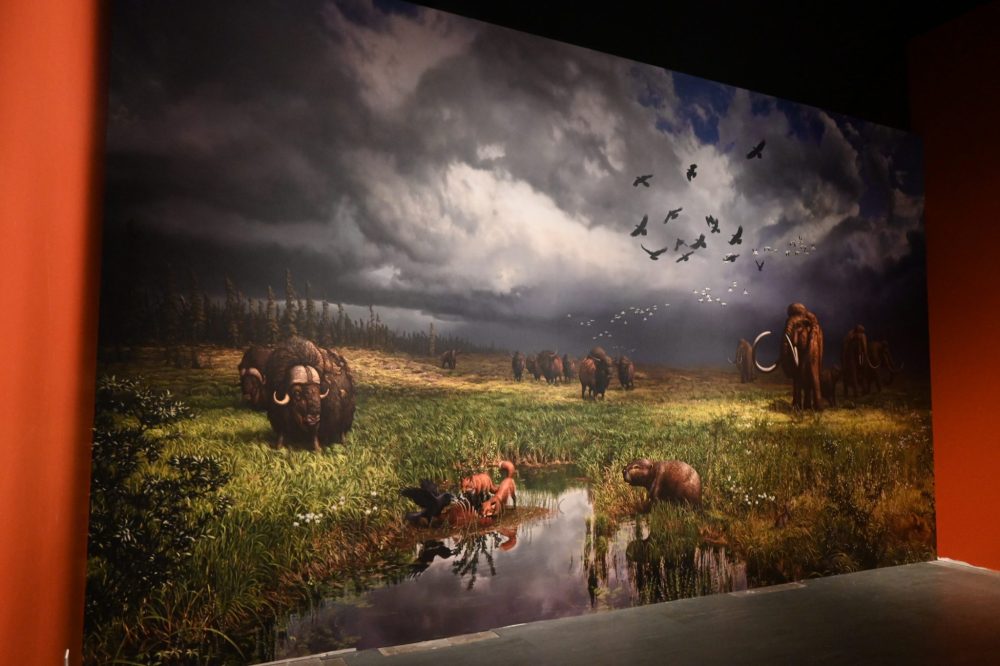
Unveiled on Dec. 1, the mural inside the Winnipeg museum shows woolly mammoths, muskoxen and a giant beaver wandering Grunthal’s former marshy and pine-tree-dotted landscape.
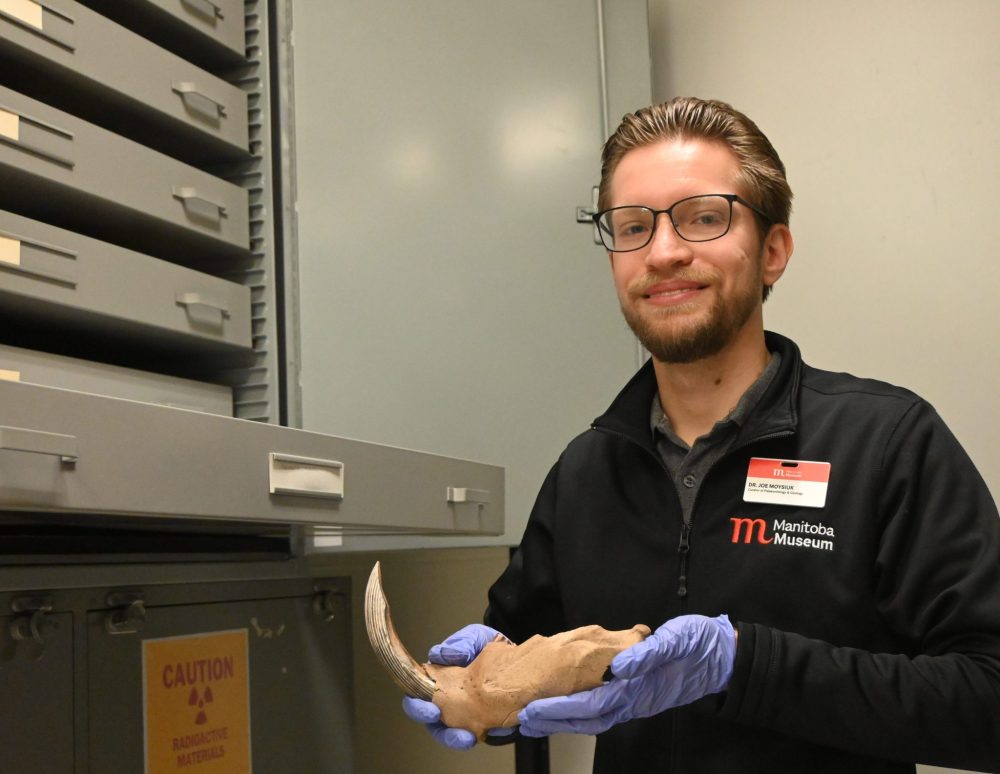
Joe Moysiuk, the museum’s curator of paleontology and geology, said the fossils found in gravel pits around Grunthal are at least 40,000 years old. Those fossils are some of the most intact versions of ice age mammals found in Manitoba, he noted.
“I hope that people will come away with a feeling of the immensity of time and how much our province has changed over the last few tens of thousands of years,” Moysiuk told The Carillon.
Artist Julius Csotonyi began work on the mural roughly three years ago, he said. To ensure it remained scientifically accurate, the museum team created a list of animals and plants that would’ve lived in the Grunthal area. The team also consulted fossil and plant pollen records to represent the land’s time period, down to the pine trees’ branches.
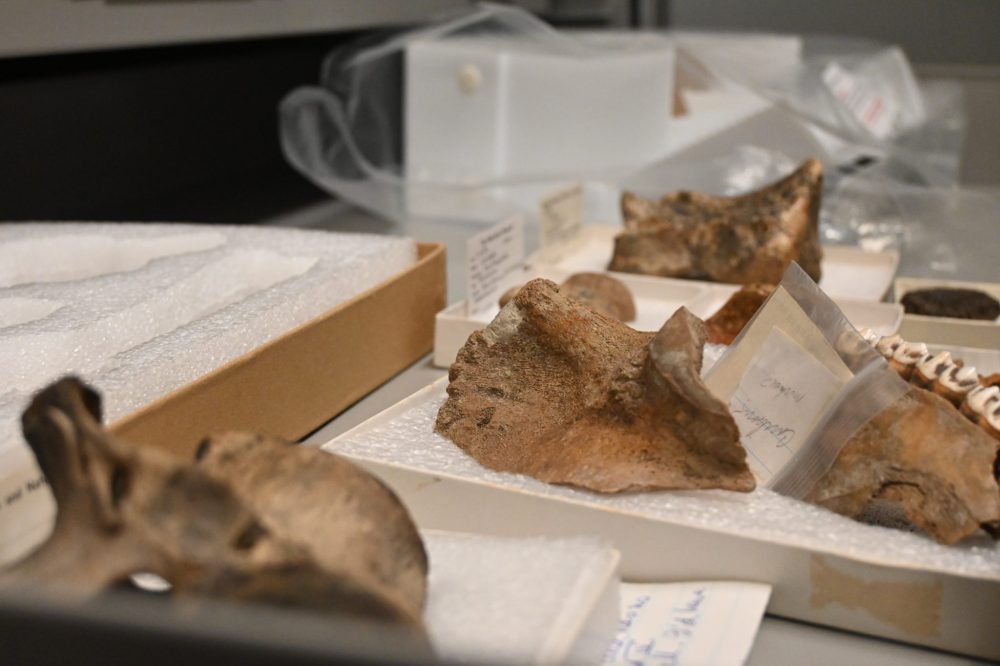
The museum has a couple dozen fossils found in Grunthal, with most found by amateurs digging, he said. Some of those include a muskox skull, a woolly mammoth tooth and a giant beaver jaw.
The giant beaver jaw find represents the only sign of that species in Manitoba, which gives researchers insight into how it migrated and was distributed in different habitats, he said. When alive, it would’ve been the size of a black bear.
“These finds are significant for Manitoba in terms of understanding the ranges of some of these very charismatic, large animals that used to inhabit our province,” Moysiuk said.
During the Ice Age, massive glaciers nearly two kilometres thick would grow and retreat throughout southern Manitoba. Grunthal would often be ice free and the fossils found there were probably moved by ice or water from where they were originally buried, said Moyiuk. The area’s pockets of gravel and sediment preserved the fossils before they could solidify into stone.
“We don’t exactly know how far, but this just seems to be a good place to be looking for ice age bones,” he said.
Moysiuk said Grunthal’s quarries were crucial in discovering the fossils because many were found deep within the ground. If it weren’t for gravel excavation, many of the fossils wouldn’t have been found, he noted.
Moysiuk appreciates the level of detail in the display.
“It’s one of those artworks where, if you want, you could just walk right by it and say ‘That’s cool,’” he said. “But if you actually take the time to take a look and admire the details, you see how much work went into creating this.”