
Library regionalization off the table for now
Advertisement
Hey there, time traveller!
This article was published 23/01/2026 (185 days ago), so information in it may no longer be current.
The City of Steinbach has joined a growing list of municipalities to opt out of the process started by Public Library Services (PLS), to investigate a regionalization plan in southeastern Manitoba.
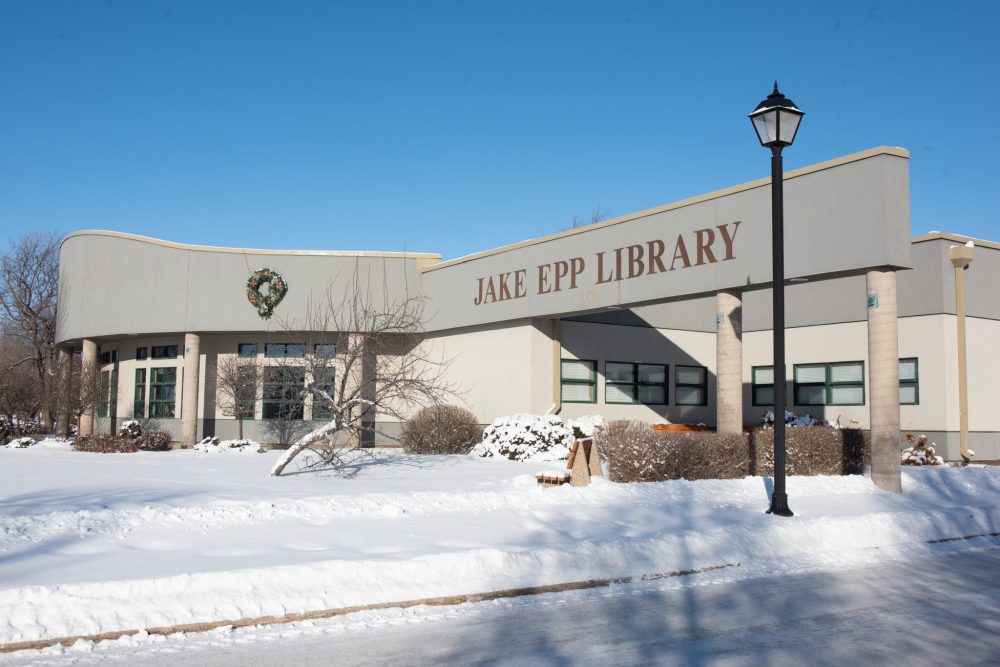
At a Tuesday meeting, Coun. Jac Siemens, who sat on the steering committee representing Steinbach, made a motion to formerly end its participation in the regionalization process as currently led by PLS and continue to operate the Jake Epp Library independently.
The issue of regionalization is not new and has been discussed in some form since at least 2000.
This process, however, came about as a 2024 PLS initiative where 18 municipalities were invited to be part of a working group.
Ten accepted the challenge, and the group met six times between March and October with the goal of creating a regionalization plan that would offer library services to the 110,000 residents in the Southeast.
While investigating funding formulas, board make-up and vision, the group talked to other regional libraries in the province, learning what they were trying to do was unprecedented.
“Each operated differently and we found out that no new regional library had been formed since the late 1970s,” Siemens said. “Southeastern Manitoba is the only part of the province that does not currently have a regional library.”
And other libraries did not come together in large groups all at once.
“The majority of regional libraries were built one community at a time, one library at a time, unlike what is being proposed at this time for southeastern Manitoba,” he said.
But Siemen cautioned against giving up on the idea of regionalization altogether.
“While I make the motion to not continue under the current model, I don’t want to completely say no to regionalization,” he said.
Provincial funding formulas also make regionalization difficult.
While it is beneficial to be regionalized, Siemens said the province had changed the rules in 2023 to make it necessary for six municipalities to join together before funding is improved. That’s up from the three required prior to the change.
Coun. Bill Hiebert also echoed Siemens’ concerns about the provincial funding model.
“With that and that most of the municipalities have said no at this point, it doesn’t make sense to move on,” he said.
Despite the decision, Coun. Susan Penner found value in the process, thanking those on the steering committee for their work.
“Just because we’re not going ahead with it does not mean the process was a waste,” she said.
Coun. Michael Zwaagstra agreed, describing the lack of progress as disappointing.
“We’re obviously not going to get anywhere close to the six municipalities we would need in order for this to be a financial improvement from what the community had for the library,” he said. “Clearly there’s something wrong with the funding formula.”
“I am glad that we did our due diligence and looked into this, and it doesn’t mean it won’t happen sometime in the future, but under the current rules that are set in place it just doesn’t make sense,” he added.
Siemens told council that municipalities considered cost, loss of autonomy, and benefits in making their decisions.
Mayor Earl Funk also remains open to the idea of regionalization.
“The fact that we’re not going with it right now doesn’t mean it’s over,” he said. “The discussion is not done.”
“When a different time comes, a better funding model comes, we can talk about it again.”