
Manitoba government introduces bill to regulate community wells
Advertisement
The Manitoba government introduced a new bill to change the definitions of community water sources and licensing requirements for operating spigots.
Environment and Climate Change Minister Mike Moyes, who introduced the bill on March 11, said the legislation will improve oversight on public wells and “cut red tape” for smaller water systems.
The bill, which amends the Drinking Water Safety Act, will allow government directors and public heath officers to designate the type of water source based on its intended use, water quality and use duration rather than solely the number of connections it has. The current version of the act designates a public water source by having 15 connections or more.
It also adds that the government officials can order a land owner to pay for the licensing and manage a public or semi-public water system when running if the system has no clear owner.
“This is going to be reducing red tape and ensure that we have the the correct oversight, so that some of these smaller community water sources are actually in line with what needs to be done so they’re not deemed a public source if they’re actually quite small,” Moyes told The Carillon.
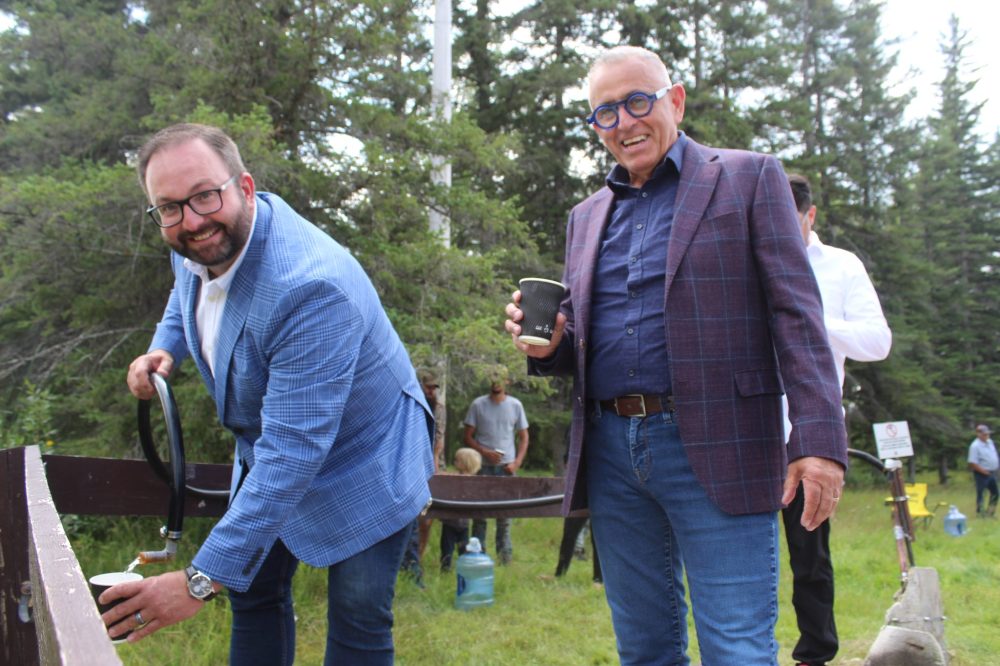
In July 2025, the province closed a community well in Piney, sparking protest from locals. It reopened two weeks later. A bulk-fill station in neighbouring Woodridge has been shut down for nearly two years after Woodridge Community Club board members refused to install chlorination systems, citing high costs. The province ordered chlorine for the fill station when officials learned it was supplying cisterns and drinking water for residents.
Moyes said both Piney and Woodridge won’t be impacted by the new bill, and the situations didn’t influence the bill. Provincial governments haven’t changed the act since 2002, and an amendment was overdue, he noted.
Konrad Narth, Progressive Conservative MLA for La Vérendrye, disagrees. He said more clarity is needed on how the province determines water consumption. Narth is also worried the bill gives more authority to the province to discover and monitor community wells, which traditionally haven’t needed chlorine.
“If somebody says that they know that people are consuming that water, does that then mean that the Office of Drinking Water deems that it should fall under a public water source, then needing to conform with all the regulation,” he said. “At what point does it stop?”
A boil water advisory is in place at the Piney well and there are signs designating the water source as not drinkable. Narth believes having proper signage should be enough to address any of the province’s liability concerns.
He wanted to see funding assistance when a well operator is required to licence the system to reduce the cost barrier. Narth plans on proposing amendments to the bill as its debated in the legislature.