
1946 – 2026 Watching Steinbach Grow: Steinbach’s past meets future up and down ‘Stony Brook’
Advertisement
The creek, which many believe gave Steinbach its name, winds its way through the community from east to west, or southeast to northwest, depending on your perception of the diagonal slant of Main Street.
This creek was never really given the English translation of the name it shared with the community, but the “stony brook” was just as practically important to the early settlers as it is an historic landmark and a reminder of the past for today’s residents.
The layout of the 20 lots, inhabited by the earliest of settlers in 1874, was mapped out to give each family a piece of this waterway.
Today, the Johann G. Barkman Walkway, from Elm Street to Kroeker Avenue, has a number of plaques on pedestals along the way, to give visitors to the city an idea of where it all started.
Constantly moving forward, it would appear, the creek is about the only thing in Steinbach that time has seemed to have left standing still. No longer is it the raging torrent of the spring runoff, the quiet stream from spring to fall, and a skating rink for the community’s youngsters in winter.
Instead, its banks are lined with decorative stone from Elm Street to Barkman Avenue, and much of the rest of the creek has been closed over with a system of storm drains.
But the creek still provides an echo of the past and along the Johann G. Barkman Walkway, as well as along Main Street and throughout the city, small pocket parks are a reminder of the families who founded Steinbach, and other parks are named for mayors who were at the helm over the past 80 years of growth and prosperity.
At the centre of the city, at Reimer Avenue and Main Street, a clock tower and bronze statues depicting an early Mennonite family are also monuments to the past.
Those first settlers laid a solid foundation for the future, when, in 1946 the village committee decided the community was ready “to strike out on its own” and bid a fond farewell to the Rural Municipality of Hanover.
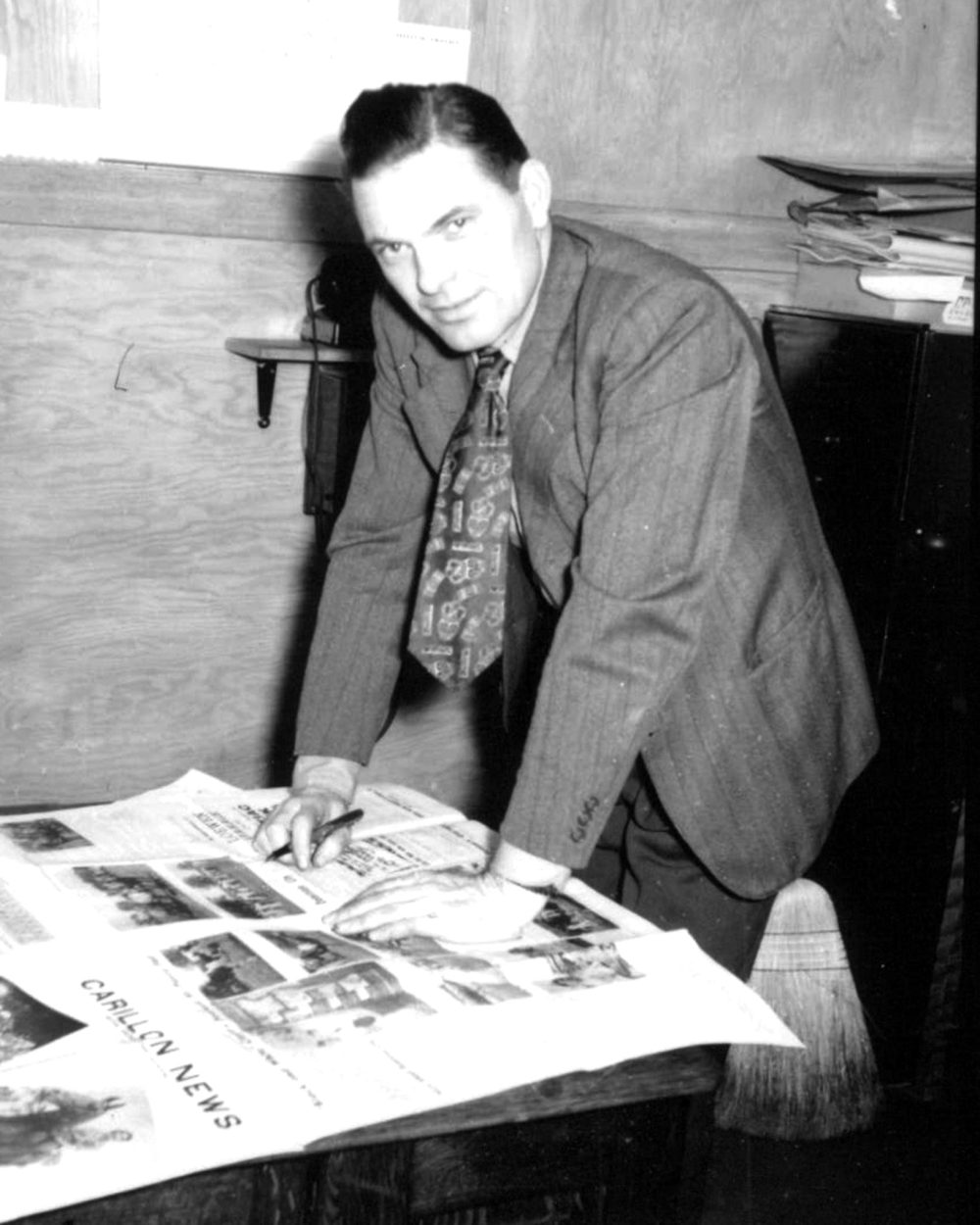
The election of a four-member town council in November of 1946 was the first municipal election covered by The Carillon News, which was launched as the community’s English-language newspaper in February of that year, to be published by Derksen Printers alongside the German-language Steinbach Post.
Now, 80 years later, the Steinbach Post is no longer published and The Carillon is printed in Winnipeg.
No longer needing the large building on Main Street, The Carillon staff has been moved to offices on Industrial Road, located on what used to be the community’s fairgrounds and golf course, which later became Steinbach’s first industrial park.
In a world where most things change, the format of Steinbach’s weekly newspaper has not varied much from the original and is still published as an award-winning weekly community newspaper. Every week there is the usual mix of politics, sports, business and religion, with weekly jottings from dozens of rural correspondents, keeping Southeast residents and internet readers all over abreast of what is happening in this part of the world.
When Eugene Derksen launched The Carillon News in February of 1946, he said letters of encouragement and a substantial number of paid-in-advance subscriptions were convincing proof that the people of Southeastern Manitoba were interested in a local newspaper. With such endorsement, Derksen said, it would be easy to make The Carillon News a good paper.
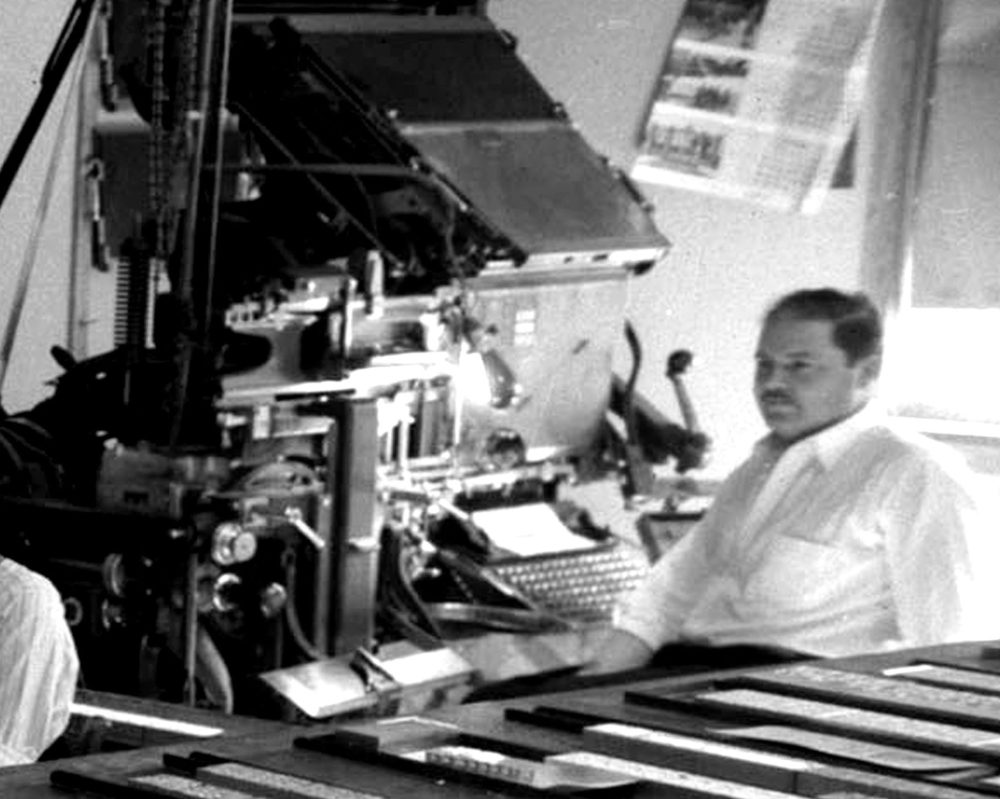
“To help bring about good neighborliness among our communities and to promote individual and community enterprise shall always be the guiding principle of The Carillon News.”
Many of Eugene Derksen’s comments still hold true today.