
1946 – 2026 Watching Steinbach Grow: Steinbach grew along with its credit union
Advertisement
Hey there, time traveller!
This article was published 06/04/2026 (201 days ago), so information in it may no longer be current.
Steinbach’s story has always been one of advancement on all fronts, including public works, educational facilities, and especially the business community, which thrived without the benefit of a railroad. And there is no better example of that than the phenomenal growth of the Steinbach Credit Union that just happened to provide council chambers for meetings of the newly elected Steinbach town council.
The development of the community’s own, home-based financial institution, from a tiny group of businessmen with a manager running things out of the office of a local transfer company to the huge multi-billion-dollar business occupying a six-storey building on Main Street today, can be termed very much a “chicken and egg” story. Did the Steinbach Credit Union grow because Steinbach grew or did Steinbach grow because the credit union provided the catalyst for progress?
But both the Town of Steinbach and the SCU did grow, and humble beginnings mirrored the quiet way the original settlers went about their daily lives, minding their own business, so to speak.
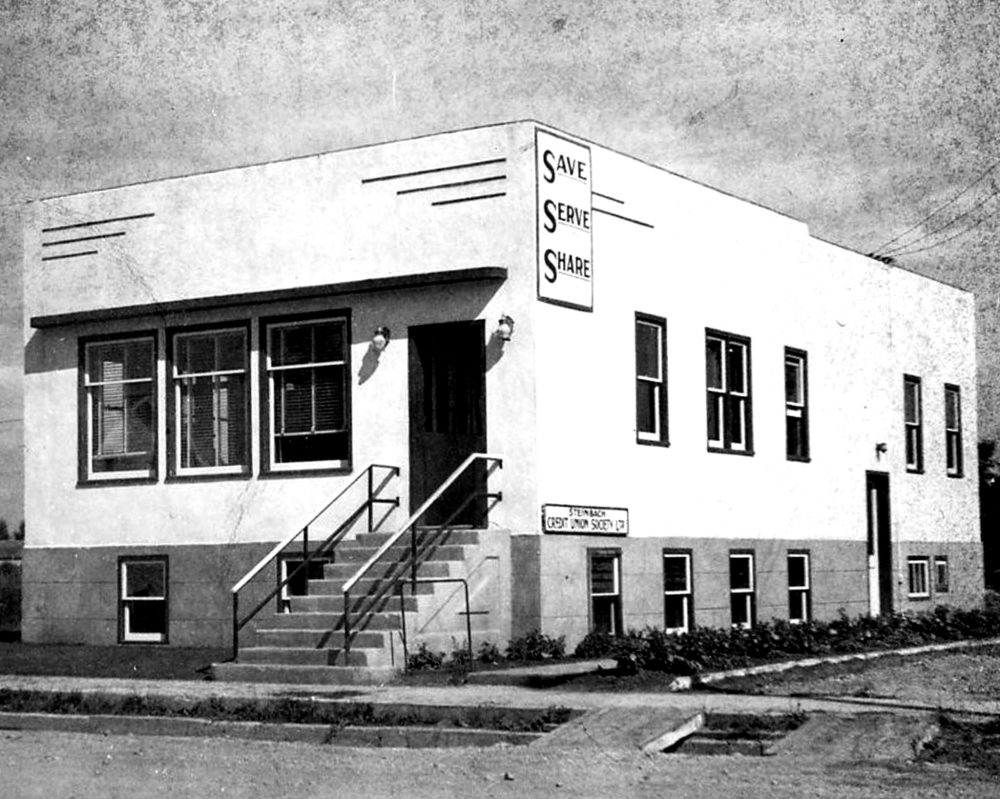
Members marked the opening of their new office building on Reimer Avenue in 1946 by buying additional shares and launching a drive for new members to further swell the ranks of the rapidly growing Steinbach Credit Union.
At a general meeting in the basement of the new premises prior to the official opening of their new building, members agreed the occasion should be observed in some “special manner”.
Since the art of thrift and the habit of saving money form the foundation of all credit unions, it was decided opening week should feature the purchasing of additional shares.
A set of prizes would be given to winners who bought shares during the week with special consideration being given to children, who would start the habit of saving early in life. Draws for prizes would be held Dec. 2, 1946, and coffee and hot dogs would be served to all.
The phenomenal growth of the Steinbach Credit Union had been outlined for members at the annual meeting earlier that year. The SCU boasted 45 members and share capital of $170 the month after opening its doors June 2, 1941. Six months later, the membership had swelled to 95 and the share capital had risen to $540. By the end of 1942, share capital had increased to $1,913 and loans issued totalled $5,900. A dividend of four percent was paid on shares. By April of 1946, there were over 800 SCU members with a share capital of $43,000.
When directors looked at these figures, they decided the Steinbach Credit Union needed a sound building with money storing facilities. The board reported to the April, 1946, annual meeting that a site had been purchased just off Main Street on Reimer Avenue, next to the post office, for the construction of a new credit union building.
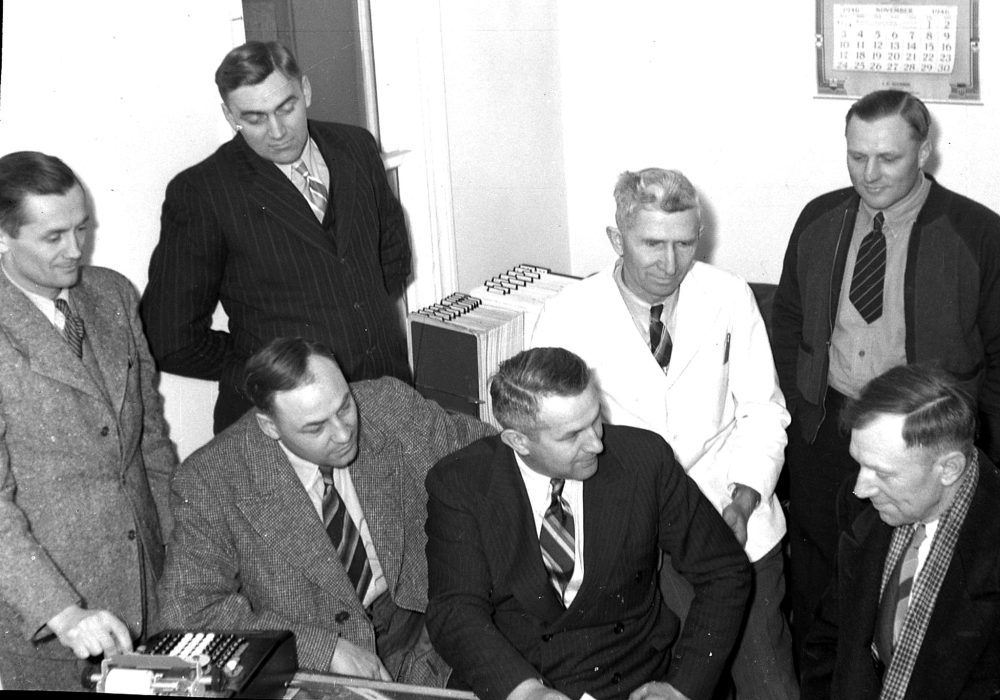
That building would be constructed, if and when members of the five-year-old financial institution showed their approval by increasing share holdings.
Apparently, the board did not have too long to wait for an answer, for the new building was up and ready for operation by November of the same year.
During construction, membership rose to 1,125 and during the first 10 months of 1946, the credit union loans department was very busy with the credit committee approving 785 loans for nearly $103,000.
A popular monthly employee wage-deduction savings plan was launched at the same time. The employer, as requested, would deduct a portion of the employee’s wages every payday and deposit the funds in the credit union. (It was an early version of direct deposit which is still popular today.) This two-fold plan increased the credit union’s working capital and helped workers save some of their money. A steady savings account also made a SCU member sure of approval when applying for a loan.
The board also took the opportunity at the 1946 meeting to answer the question the credit union members had about how the borrowed money was used.
A breakdown of a six-month period showed loans were used as follows: Building and home improvements, $20,547; garage $7,625; feed $5,173; hatcheries to buy chicks $3,650 and implement purchases $3,650.
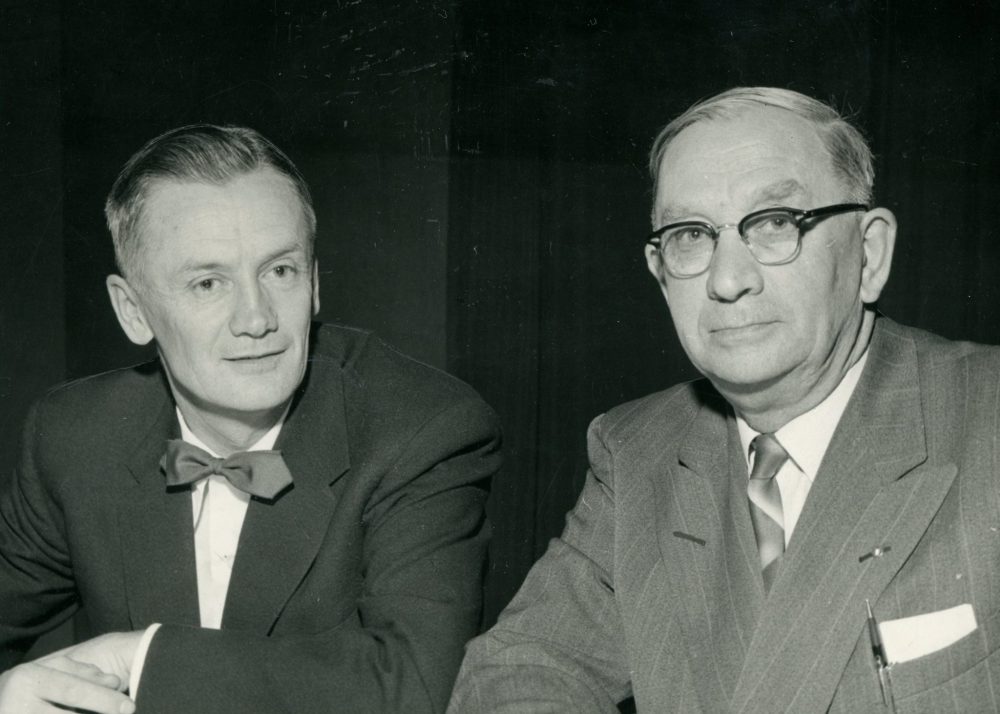
At the time, SCU president Joe Penner said it was no wonder local business firms realized the potential of the credit union, and were beginning to support it in a big way.