
COLUMN: Tales from the Gravel Ridge – An oven that functioned well
Advertisement
Whether or not you need a well-functioning oven in your kitchen depends, to some degree, on the cooking and baking habits of those in your household, and more specifically, on the habits of the individual responsible for meal preparation. In our present context such responsibilities might vary from time to time and, of course, from one household to another. We have options today that weren’t always the case in the past.
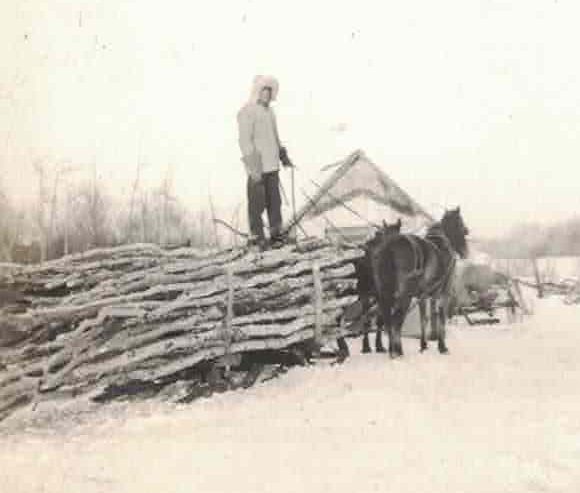
In the community of my childhood, the responsibility for such an essential aspect of the needs and habits of a family fell to the mother of the home, or possibly the older daughters. During the first decade or so of my life, the community of Rosengard had no electricity. In large part, the cook-stove in our kitchen helped to heat our house. In addition to that important function, it was also vital for the preparation of all cooked and baked foods. The fact that our community did not have electricity until the late 1940s or early 1950s was not a problem for us. After all, we were not accustomed to having light and power provided to us. As long as we had a source of trees to harvest and a means of cutting them into suitable size pieces to stoke our stoves, we were set to go. Mr. D.D. Ginter was the man to go to for such services. He had a reliable wood-sawing business, and as far as I know, he was the only person in our neighbourhood who could provide that essential service.
All that to say, no matter how diverse your recipe library might be, nor to what degree your culinary skills have been developed, some source of heat is required to prepare most properly cooked meals. When you are accustomed to turning on a switch, and as a result your electric oven heats up, you are caught by surprise when no such magic happens. It’s quite intriguing how ingenious you can become if necessity asks it of you. Under such circumstances it becomes imperative that you make alternative arrangements, such as cooking a turkey on top of your electric stove. Of course that can happen only if the quandary you’re in doesn’t mean a loss of electric power altogether.
From my own experience, I can attest to the fact that my mother knew how to prepare delicious, nourishing meals. She did so day after day, and I have no doubt that the women of our neighbourhood in their own unique ways did as well. In the context of writing a paper some years ago, I interviewed members of my own family as well as others of the community regarding how their respective mothers, many decades earlier, had managed, within limited resources, to prepare satisfying meals. It was heart-warming how universally they responded somewhat along the line that, “She knew how to make it work”. Their replies and comments didn’t however come as a surprise to me. The families of our neighbourhood were not well off generally, and had managed to survive, and in their own way to thrive, during the worldwide Great Depression of the 1930s. They simply kept on doing what they had always done. After all, what were their options.
Many, many decades after we had left Rosengard, and indeed after the older generations of our community were no longer alive, I had the opportunity to speak with David Ginter who was volunteering in the blacksmith’s shop at the Mennonite Heritage Museum in Steinbach. David recalled helping to saw wood at our place, with his father’s wood-sawing business. What remained so vividly fixed in his mind was the food they were served at our place on that occasion so long ago. He had been a very young man who would have been much too shy to ask for more if the food had not been available on the table. It warms my heart to think that my mother’s kindness resonated with David Ginter so very many decades later.
The baked breads and countless other foods prepared by my mother by means of our reliable wood-burning stove and oven continue to nourish my soul to this day.