
COLUMN: The Carillon Flashback January 11, 1989 – ‘Free Trade’ is not entirely free
Advertisement
Canadian shoppers, who can’t wait to head south to take advantage of free trade bargains are cautioned to check with their nearest customs officer first.
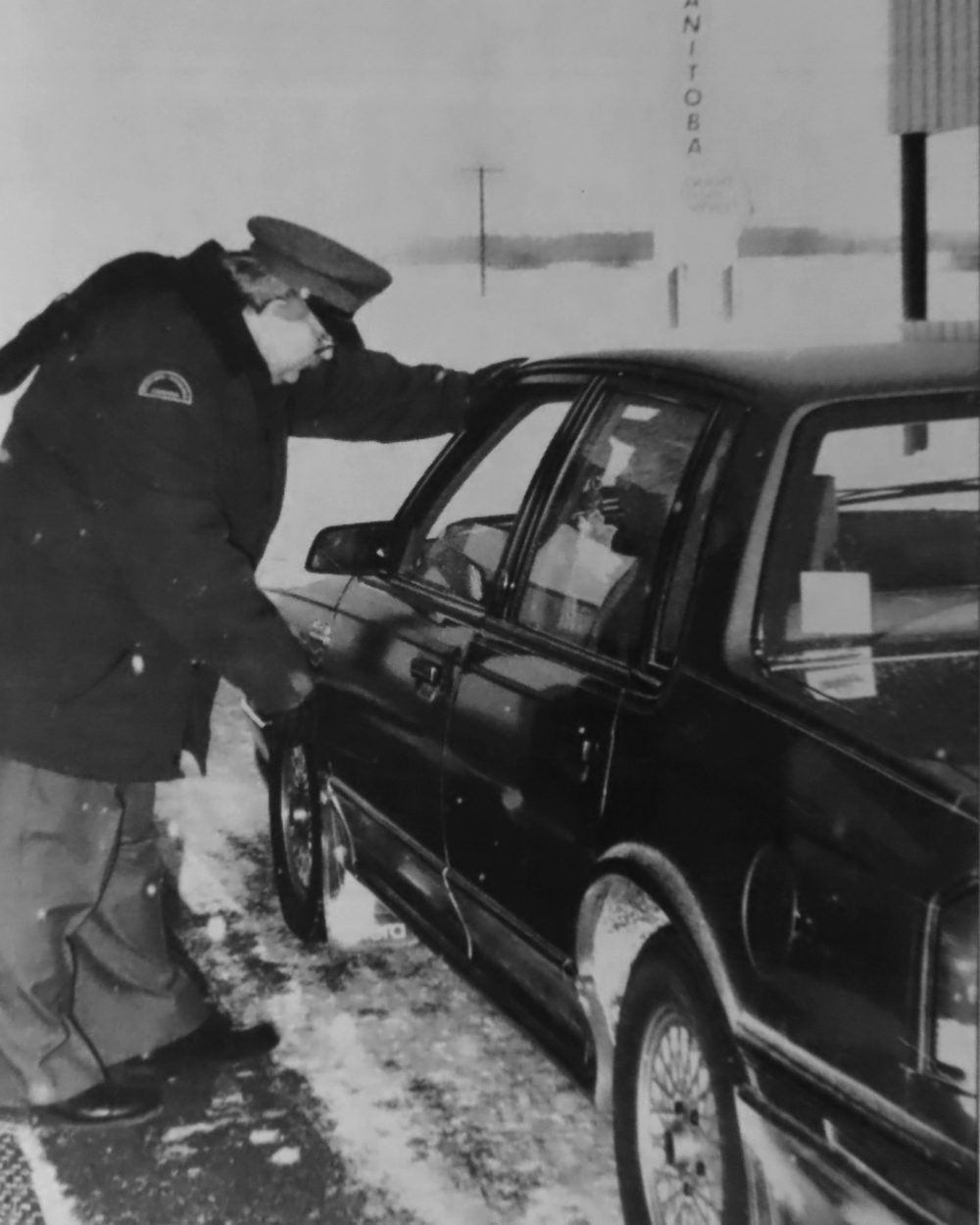
Tolstoi customs inspector Verne Kulyk says while a few things have been altered with the implementation of the Canada-United States Free Trade Agreement, Jan. 1, not all goods will automatically become duty free, as some people have been led to believe.
On some goods, duty will be eliminated immediately, while on others, tariffs will drop gradually over the next 10 years.
One noticeable change, for example, involves vehicles. Prior to Jan. 1, a Canadian could not purchase a used vehicle in the U.S. and bring it back to Canada, unless it was 15 years old.
The restriction has now been reduced to eight years.
The vehicle is subject to a Canadian tariff of 8.2 percent. The restriction on used vehicles will be reduced by two years each year after five years.
By 1991, the duty rate will drop to 6.4 percent. Car shoppers are warned when they arrive at the Canadian border they will be required to pay the 8.2 percent duty and 12 percent federal sales tax. Once they get their car home and register it, they will have to fork over another seven percent provincial sales tax.
There are a number of items which become duty free with the implementation of the free trade agreement.
The list includes computers, skates, furs, fur garments, unwrought aluminum and whiskey.
In the case of whiskey, the savings will be minimal, for only 6.5 cents per litre of what most people consider duty is actually duty. The large part of the extra cost still remains. There is still 13 percent per ounce in excise tax, which comes to $4.91 per 40 ounce bottle as well as 18 percent federal tax and a 15 cents per ounce Manitoba Liquor Commission fee.
The second group of items included in the agreement will see duty phased out in five equal steps, between Jan. 1, 1989 and 1993, on paper products, furniture, paint and after-market auto parts.
Current duty on after-market auto parts is 8.2 percent and will drop to 7.3 percent and in 1991 will be 6.4 percent.
There is a third group of items that will have duty phased out over 10 years and that list includes things like tires, textiles, clothing, appliances, and most agricultural products.
Because the current personal exemptions still apply, Kulyk suggests tourists looking for a particular item from south of the border should get details of duties and taxes ahead of time. Something that appears to be a bargain at Grand Forks may not be, when duties, taxes and exchange are taken into consideration.
Kulyk feels the Free Trade Agreement will result in an increase of traffic from Canada to the United States.
The natural shopping trend seems to be in that direction, rather than Americans driving to Winnipeg to shop.
While free trade will make the Tolstoi border crossing busier, construction of a new bridge on Highway 29 at Roseau River has had a much more immediate impact.
The truck traffic, mostly bulk scrap metal and fuel, has more than doubled to 30 trucks crossing the border to Canada daily, Kulyk said.