
Steinbach ER impacted by Winnipeg patients
Advertisement
Nurses and union leaders say Winnipeggers — who are frustrated with wait times at city hospitals — head to rural emergency rooms instead, but the facilities don’t have enough staff to meet the extra demand.
The Manitoba Nurses Union said last week that people from outside the local area were crowding Steinbach’s Bethesda Regional Health Centre.
Nurses there signed an open letter to the regional health authority and provincial leaders in which they called for a second triage nurse to be placed in the emergency department.
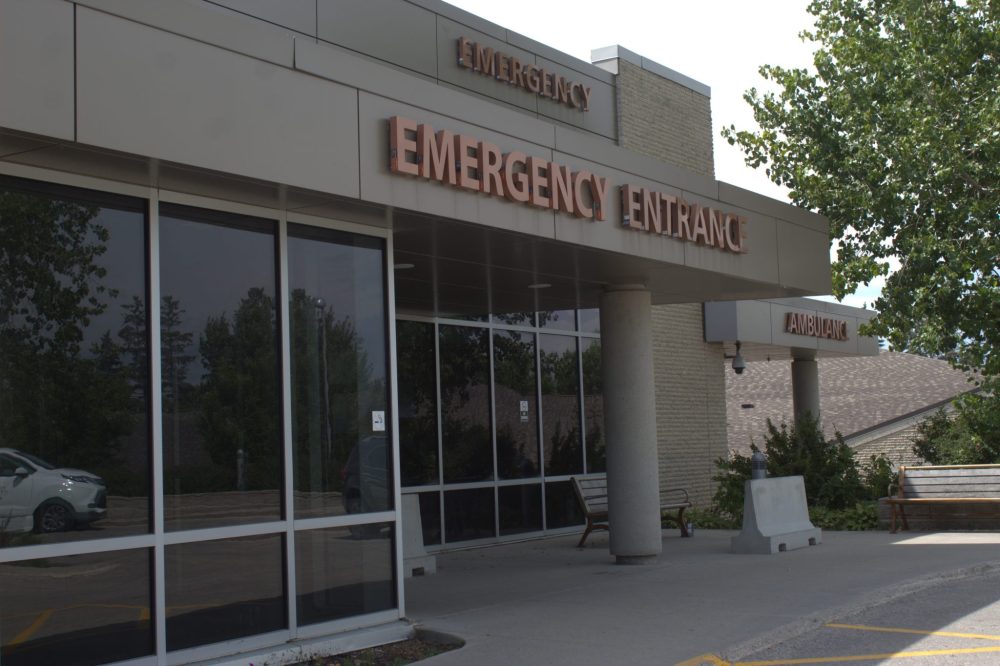
The letter, signed by 40 nurses at the hospital, said it’s common for ER patients to wait more than an hour before being seen by a triage nurse, and eight hours before being reassessed. One nurse can be responsible for 30 patients at any given time, the letter states.
And the issue is not restricted to Steinbach.
Patients in the Selkirk Regional Health Centre emergency department have waited up to 18 hours during peak times, said one nurse who works there.
The nurse, who spoke on the condition of anonymity, said in recent years they have noted more Winnipeg patients who’ve driven the 25 kilometres north to Selkirk’s ER, believing the wait for treatment would be shorter than in the three emergency departments inside the Perimeter.
“They’re all trying to access health care, right? And everybody deserves health care. And I feel bad, because people have to come out here thinking that the wait times are less,” the nurse said. “I can’t blame people for wanting to seek care, and they’re desperate to see someone.”
Long waits to see a family doctor and lengthy estimated wait times at Winnipeg facilities push patients to travel farther to seek immediate care, the nurse said. Much of the time, there is only one doctor working in the Selkirk ER.
The nurse said hospital administrators have tried to address the problem by scheduling more nurses, hiring physician assistants and deferring low-acuity patients to nearby clinics, but the problem persists.
“Even with all that in place, it’s still getting bad,” the nurse said. “Then we can’t get to the patients in a timely fashion and deal with their issues and take care of them properly, which could result in (a critical) incident.”
When the NDP was elected to government in 2023, one of its promises was to address wait times in hospitals by recruiting and retaining more staff. The party has touted the hiring of thousands of health-care workers and increasing the number of hospital beds across the province.
Wait times in Winnipeg emergency departments ranged from 7.75 hours to 13.75 hours on Aug. 6. The Interlake-Eastern health authority — which oversees the Selkirk facility — does not display emergency room wait times on its website.
Stacey Ross, 55, died on Jan. 16 after her family said she waited 11 hours in the emergency room at St. Boniface Hospital. The fatality is subject to a provincial critical incident review, which is a process that probes fatalities and serious injuries in the health-care system.
Union president Darlene Jackson said facilities in Selkirk, Stonewall and other small communities are feeling the pressure as a result of urban residents seeking health care in rural centres.
“Wait times in Winnipeg are really driving people out to these other facilities in hopes to have wait times that are less lengthy. So what we’re seeing is that a lot of these facilities are getting busier and busier,” Jackson said.
Jason Linklater, president of the Manitoba Association of Health Care Professionals, said health care should be operated in an integrated system, but instead the province, Shared Health and the regional health authorities try to address problems in isolation.
“Those problems then spill over into other areas, which is exactly what seems to be happening in rural emergency departments,” Linklater said.
“Many of those hospitals were short-staffed to begin with, including a shortage of laboratory and imaging technologists that are essential for emergency care. They simply aren’t staffed to handle an influx of patients from Winnipeg.”
Provincial physicians’ advocacy organization Doctors Manitoba said it is not surprised to hear some Winnipeg patients seek ER care in nearby rural communities to avoid long wait times in the city, however, patients should know rural ERs can, and do, experience lengthy waits.
“We have raised physicians’ deep concerns for several years about long ER and urgent-care wait times, which is generally caused by gaps in physician coverage or patients backing up in the ER waiting for in-patient hospital care,” the organization said in a statement.
For their part, regional health authorities said they haven’t noticed a problem.
A spokesperson from the Interlake-Eastern authority said in an email there has been no increase in the number of people travelling from Winnipeg for emergency care, and Manitobans have travelled both to and from larger centres for emergency care for many years.
Ensuring that patients, regardless of where they come from, receive timely and appropriate care is a provincially co-ordinated effort, the spokesperson said.
Data provided by a Southern Health spokesperson shows in 2024, 5.5 per cent of ER patients at the Steinbach hospital were from Winnipeg, but it has declined to 3.3 per cent so far this year.
– Winnipeg Free Press