
Stuartburn holds information session on Sundown Ridge, Caliento Bog projects
Advertisement
It was almost a full house at the Vita Hall last Wednesday night as Stuartburn residents and municipal politicians came to hear what drainage solutions engineers had to protect homes and farmland from overland flooding.
“Since this council took office in 2022, water and drainage have been amongst the biggest concerns and challenges facing the RM,” said Reeve Michelle Gawronsky.
“Rather than looking at isolated trouble spots, we wanted to understand the whole system,” she noted.
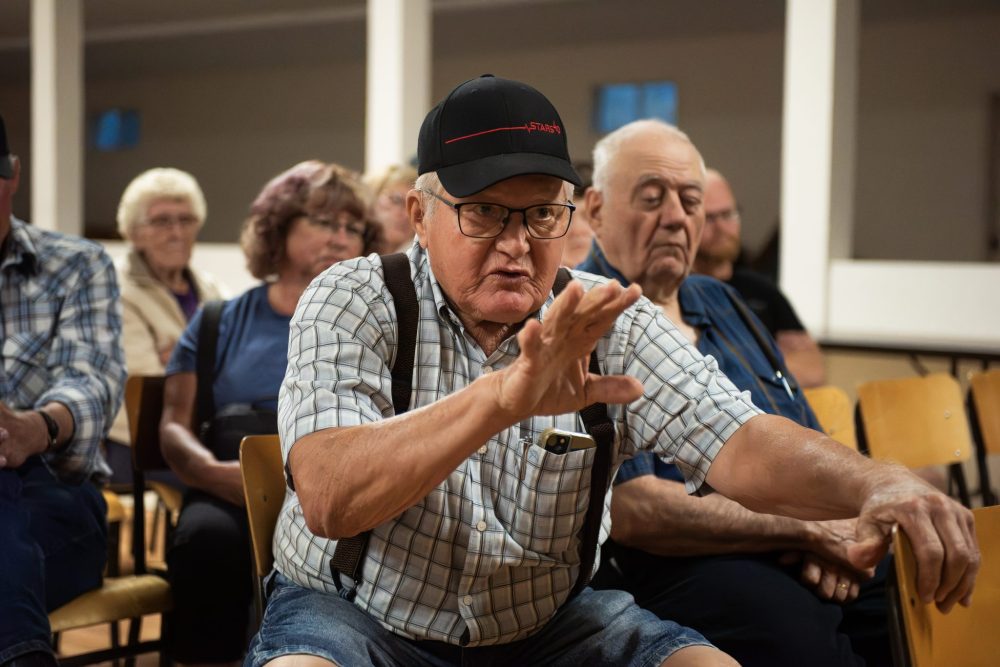
The engineers from Strategic Solutions Engineering (SSE) shared the results from the drainage survey they conducted earlier this year and recommended retention sites at Sundown Ridge and, if there is funding, Caliento Bog.
The area for the Sundown Ridge project originally drained west around the north side of Sundown. Manitoba Transportation and Infrastructure constructed a drain to direct flow south through the old PR 201 towards Sundown Bog along Road 54E. The drain prevents most of the flow from moving west, except for local overland flow.
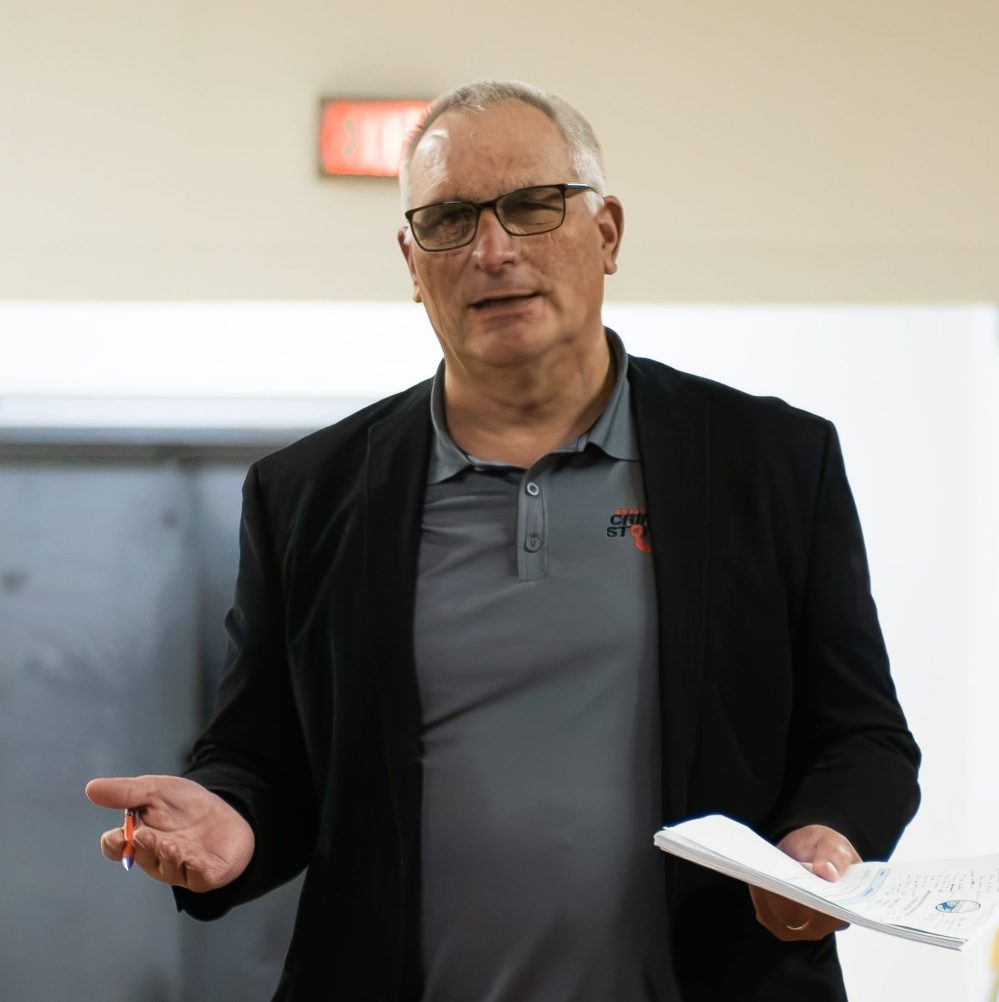
SSE CEO and head engineer Hank Venema and his team recommended that a berm be built on the northeast side of Sundown Ridge, which would control the water through an outlet.
Reactions to the recent information session were mixed as the engineers tried to explain their water study and its findings to residents.
“Unless you’re building a complete lagoon that’s four-sided, that’s built out of clay or a liner, this will not work,” said Dale Dooley.
Dooley, who has family land northeast of the town of Sundown and has consistently been flooded by overland flooding from Horseshoe Lake, has been against the Sundown Ridge project since he first heard about it. Dooley feels the project will flood homes in Sundown rather than protect them.
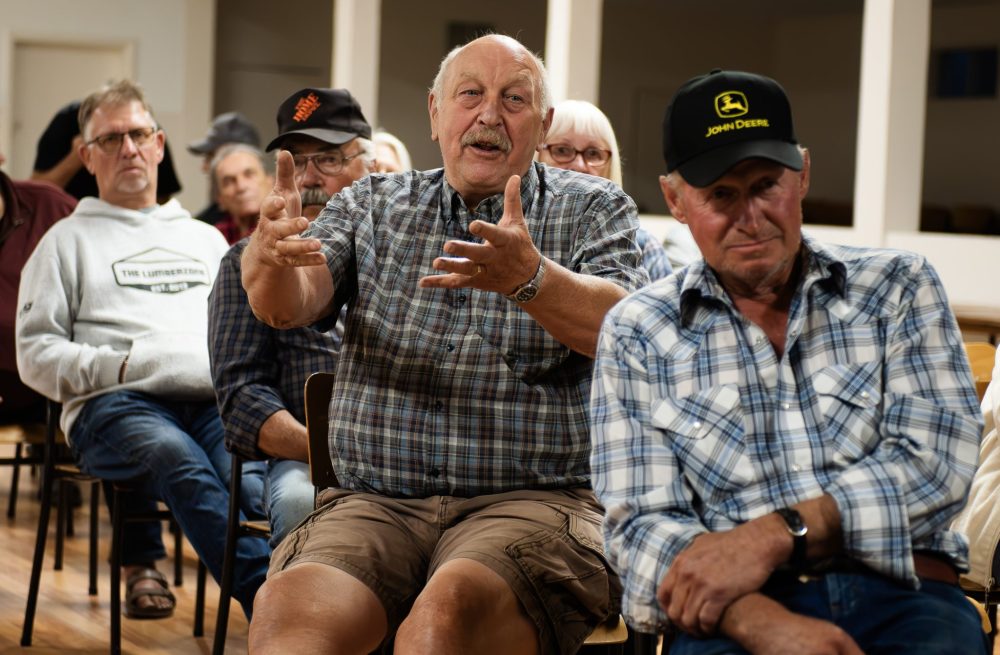
He said more studies need to be done by SSE, including soil samples. He also believes that the RM should be concentrating more on maintaining the drains in the municipality rather than building water retention projects. Venema said the drains and the retention pond have to be worked on together for the management of water to work.
Sundown resident Bill Dell, who is suing the RM for flood damage to his property, agreed with Dooley that the Sundown ridge project is a mistake. He also questioned whether Venema had a financial stake in SSE’s recommendation to sell cattails for profit.
Venema has shares in a company that harvests and sells cattails for various applications, such as biomass fuel and a substitute for peatmoss. Venema admitted he has shares in a cattail harvesting company, but that company has no interest in harvesting in Stuartburn.
Paul Stadnyk, who lives on Road 38 East about nine miles north of Vita, said he had to build a dike as he lives along a swamp. The 81-year-old said he is for the project even though it won’t protect his land.
“It’ll help the people out there. And I hope maybe someday, eventually I might get some help here, like when they talk about (cattail harvesting),” he said, noting the dense growth of cattails near his land has caused a lot of flooding as the water has nowhere to go but on flat agricultural land.
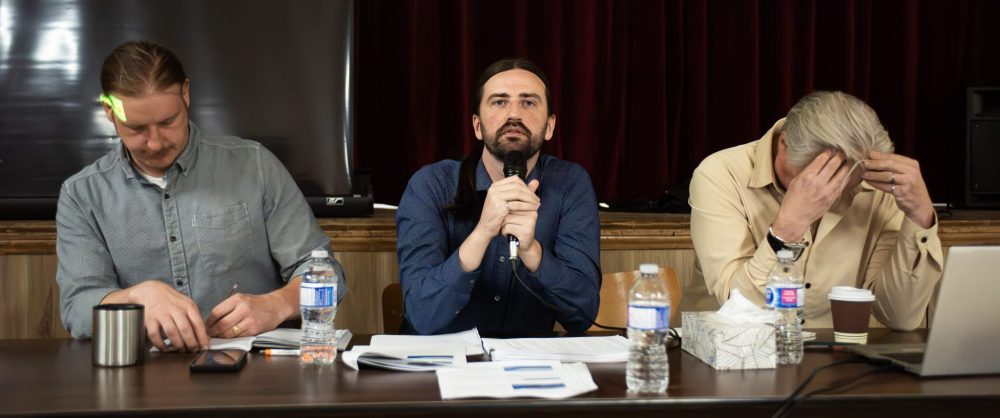
Eighty-year-old Tom Shewera, whose farm is along the eastern side of the Caliento Bog, said part of his land has been flooding for more than a century and wondered if it was worth anything if he sold it now or waited for the retention project to be built. Shewera pays close to $200,000 per quarter in taxes and that “the land is not good for half the price.” Engineer Andrew Murray told him the land would probably be worth more if he waited for the retention project to be built as it would protect his property.
“Do you want to buy some land,” said Sherewa jokingly to Murray.
Another incentive brought to residents for the Sundown Ridge and Caliento projects was the financial gain that the RM could get from selling the water it retains and the cattails it could harvest. Venema noted the RM could receive phosphorus and water supply credits also. Venema estimated the RM could get about $2 per cubic metre of water, which is what the Pembina Valley Water Co-op sells its water, and $100 per ton of cattail that is sold. The money the RM gets from these initiatives could be used to fund the Sundown and Caliento projects and other drainage projects in the municipality, according to Venema and Gawronsky. Gawronsky wouldn’t say whether residents would get a share of the profits from the harvesting of cattails on their property.
Venema told residents by controlling the flooding, the RM opens itself up to industry which is more likely to set up operations in the municipality knowing their investment is secure.
“But the bottom line is, when you stack up all these benefits, it’s a good project. It’s a good project. There’s reasons to do this project,” he said.
The province did a study in 2017 regarding the Roseau River Watershed, which the majority of the RM of Stuartburn falls under. In the study, five key areas in southeastern Manitoba were listed as being locations of high priority for water retention sites, one of which was the Sundown Ridge project while the other was the Gardenton Floodway, which is currently in development.
The province found that the retention site could reduce peak flows of water by 83 percent and 67 percent for 10-year and 100-year flood events, respectively, which the province stated would significantly reduce downstream flood impacts.
The 2017 study also found the combined storage of the Sundown Ridge retention site, combined with a retention site at Horseshoe Lake in Piney, could hold all inflows for a 100-year event.
SSE submitted a study in July 2024 to the RM of Stuartburn regarding the Caliento Bog water retention site and the importance of the Z Dyke (located at the northwest side of the bog), which could redirect water from the Vita Drain and Rat River into the bog where it would be stored and released gradually, thus protecting homes and farmland while controlling flooding and drought.
RM of Piney Reeve Wayne Anderson and Couns. Mark Bernard and Dale Edbom came to the Stuartburn meeting. Bernard questioned why SSE’s study did not get input from neighboring municipalities nor did it address the impacts those RMs would face should Stuartburn build its water retention sites.
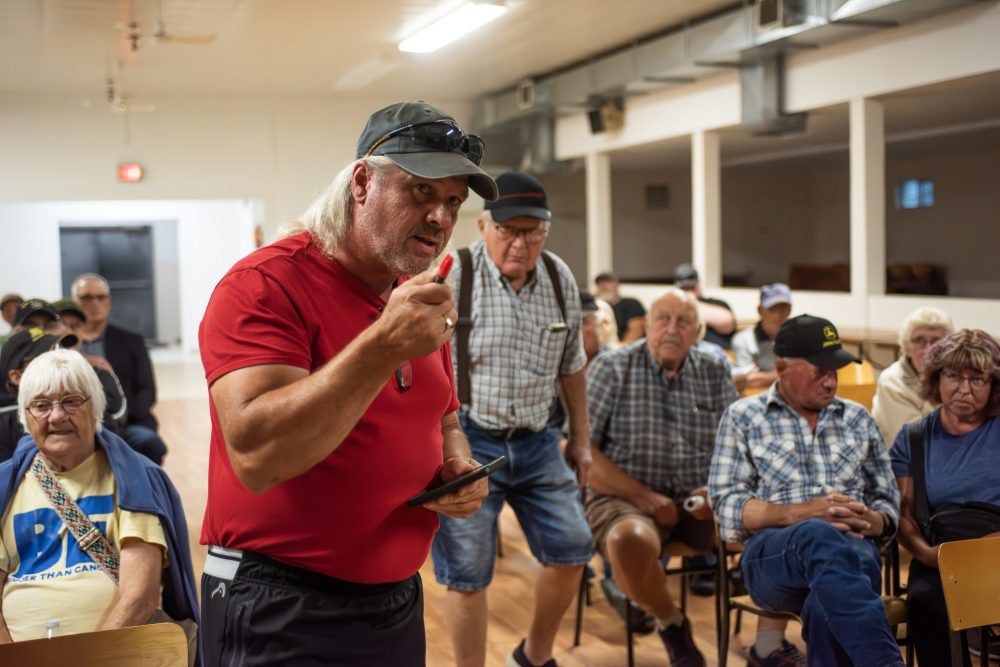
“I think the risk management has to be done. And I appreciate the money. I get that. It’s important. But the ratepayers and farmers need to know what’s going to happen to their family (land),” said Bernard.
Venema and Gawronsky welcomed Piney to join in the retention project with both saying that the more RMs that are on board with the retention projects the better for the region. Gawronsky would like to have a regional approach to flooding in the Southeast where all the municipalities worked together.
“I was thrilled today to hear that Piney is back into being interested. What do we do with it? Horseshoe Lake is in their RM. We want to be able to make sure that we’re working together that benefits both RMs,” she said.
Horseshoe Lake, which is owned and managed by Ducks Unlimited, has been overflowing into Sundown for years.
A recent feasibility study on the Sundown Ridge project was conducted by the Seine Rat Roseau Watershed District, that deemed the project not worth the $3 million cost. A soil study by the province found about 44 percent of the soil in Stuartburn is sand, followed by loamy (18 percent), organic peatmoss (14 percent), and stoney/cobbly soil. Soil drainage was classified as being very poor to imperfect with a high water table.
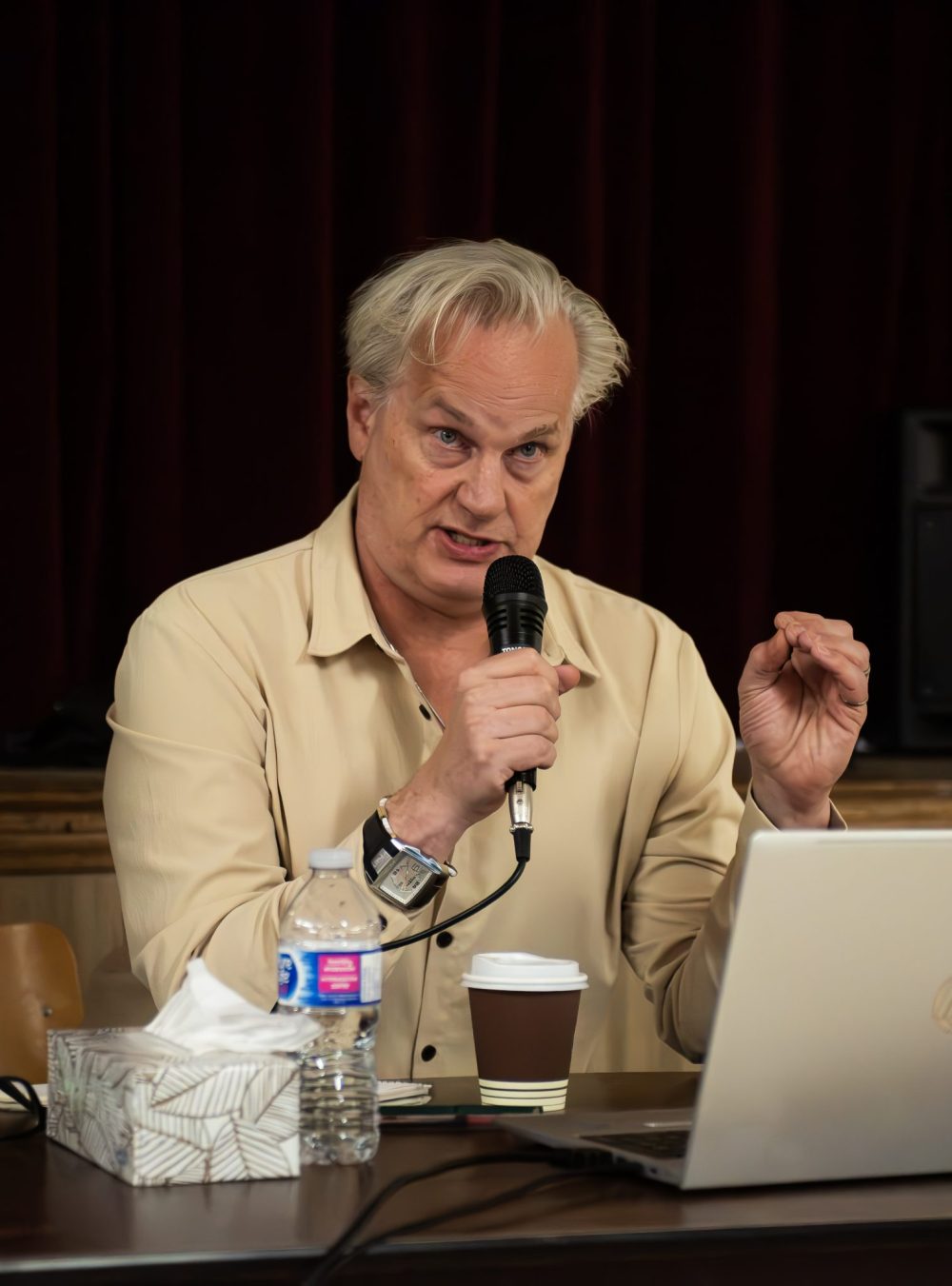
“A geotechnical analysis for a construction project is different than a soil survey analysis, right? There’s different things. So, we’re not aware of geotechnical surveys that have been conducted where we think we could construct. We haven’t seen any geotechnical analysis,” said Venema.
Funding for the survey was paid for through a $100,000 grant from Co-operators Insurance. Stuartburn also received $150,000 from provincial grants and EcoWest for the drainage project. Venema and Gawronsky both say the project will not be paid for by taxpayer money as it will be funded through federal and provincial grants and other sources.
The province’s regional cabinet lead for the executive council, Brandon Burley, was at the meeting and told the crowd that the province is currently an observer of the proposed retention project and that nothing would be approved until all concerned departments have had a chance to review the data from SSE and have given their approval.
“The important thing here is that the province of Manitoba has such a large amount of influence and this one RM is not going to be able to go and start doing water projects to change the flows across the face of the region. The province of Manitoba has a huge say in that and as far as the province is concerned the work that have been done to this point, this is exceedingly preliminary,” said Burley.
In May, Minister of Environment and Climate Change Mike Moyes, Minster of Transportation and Infrastructure Lisa Naylor, representatives from EcoWest, the Nature Conservancy of Canada, Co-operators Insurance, and SSE toured the proposed locations for the two water retention sites in Stuartburn and looked at the overall drainage issues the RM is facing.
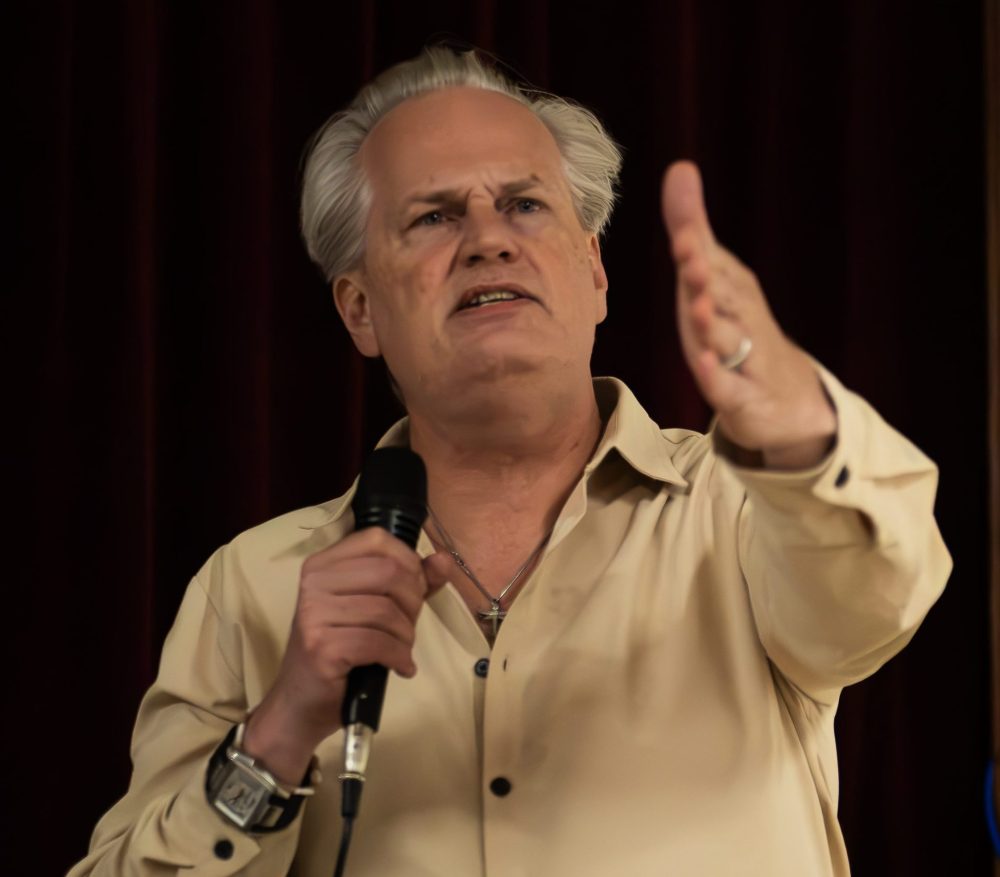
Gawronsky said council is also meeting with the province to see what could be done to stop landowners from clearing swamp land, which is making flooding in the RM worse and it prevents clean water from entering the aquifer.
The Sundown Ridge and Caliento projects are currently in Phase 2 with at least two more phases to come before a design is submitted to council, according to Venema who estimates shovels in the ground in about three years.