
1946 – 2026 Watching Steinbach Grow: Everyone is always welcome at Steinbach’s many churches
Advertisement
A century and a half of growth and prosperity has been built on a foundation of faith by 18 families of settlers, who came to Steinbach in 1874 in search of a home where they could live in peace and enjoy freedom to practice their Mennonite religion.
The diversity of the many churches built in the community since then is reflected in the growth of Steinbach in the areas of commerce, industry and education as well. As the number of churches grew, so did a diverse population where religious holidays were important days on the family calendar.
The first congregation to conduct church services formally, dated back to 1874, when the families of the Kleine Gemeinde (little church), today known as the Evangelical Mennonite Church, came to Manitoba from Ukraine. The establishment of the Church of God in Christ (Mennonite) and other Evangelical Mennonite churches followed shortly.
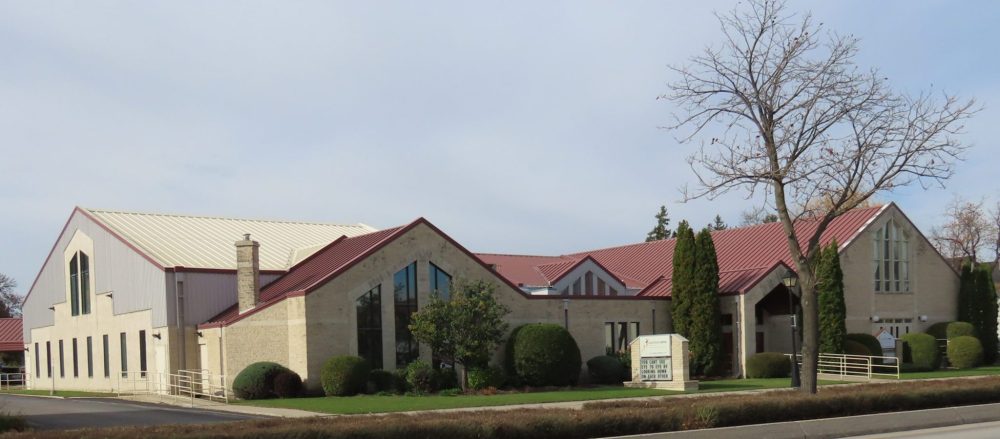
By 1946, when Steinbach changed from being a village in the RM of Hanover to a town on its own, there were seven congregations, all of Mennonite denomination.
A visitor to Steinbach in 1959 might have been confused to see 11 churches and be told that the eight largest ones were all Mennonite churches. But that was the case.
There are a number of reasons for the multiplicity of Mennonite churches. The many migrations of Mennonites from their isolated communities caused a number of divisions of opinion about religious matters, even before they ever immigrated to North America.
The surprising thing about all these churches is the way they stuck together and the way they cooperated on all major issues.
Non-participation in military service, adult baptism, and abstention from the swearing of oaths were the main tenets held in common by all Mennonites. Quite a number of Mennonites enlisted for armed services during the Second World War, but these were not, as a rule, considered to be church members in good standing.
The scriptural teachings of love and caring for your brother were given high priority in the daily living patterns by all Steinbach Mennonite churches. To outsiders, the town appeared to be a close-knit and caring community from its inception and was seen as a great place to raise a family.
The work ethic of the people soon resulted in Steinbach becoming a commercial centre that served the surrounding area.
In the 1940s, the religious scene in Steinbach experienced changes at a pace unprecedented by the village, since it began some 70 years earlier.
The changes experienced in society after the war resulted in great changes in the style of worship services by all the Mennonite congregations.
In Steinbach, most of the Mennonite churches discontinued the use of the German language in favor of English to accommodate the younger generation, who were more at ease in English. The worship mode of the Mennonite churches took on more of the American Evangelical style and tempo. Also, the community soon experienced the establishing of other congregations, like Pentecostals and other independent groups.
As the population of Steinbach increased, the growth in the number of church groups kept pace with the increase in the size of the town.
When the Town of Steinbach celebrated its 50th anniversary in 1996 and reached city status, there were 23 churches. As could be expected, more than half still were Mennonite and were sometimes in conflict with modern day business affairs in Steinbach.
The United Church of Canada and the Lutheran Church had been rural congregations, and when they chose to close down their country churches at Clear Springs and Friedensfeld (respectively), both churches located to town.
Today, the many churches in Steinbach of Mennonite, Lutheran, Pentecostal, Catholic, Baptist, United, independent, Evangelical Free and other denominations, reflect an ongoing ability to cooperate, in spite of differences of opinion where religious matters are concerned.
The people of Steinbach have always attempted to be good citizens of this country, by giving generously of their time, finances and abilities to the many needs of a pioneering country. These Christian concepts have been promoted and supported both at home and abroad.
Many of Steinbach’s people have been missionaries, engaged in famine relief, social welfare, medical care, and Evangelism; serving in Africa, South and North America, Europe and Asia.
The Carillon has always chronicled the activities of the many Steinbach churches and those in the surrounding areas every week with two pages in the paper dubbed “The Religious Scene.”
Every week, a collection of items ranged from columns like Billy Graham’s My Answer or Moments of Meditation featuring short sermons by representatives of the Steinbach Ministerial Association, or news of evangelists and gospel singing groups on their way to visit the community.
During Canada’s centennial in 1967, a once-in-a-lifetime opportunity for Carillon staffer Mary Barkman came with the opportunity to interview Billy Graham during his crusade in Winnipeg.
A highlight of the church pages during Steinbach’s centennial year in 1974 was Dave Schellenberg’s Steinbach’s Churches: A Centennial Series, which shone the spotlight on the early beginnings and constant growth of both congregations and church buildings in Steinbach.