
COLUMN: Tales from the Gravel Ridge – Finding means of keeping in touch
Advertisement
Memories of my early childhood highlight the importance, and indeed the absolute necessity of finding ways of being in contact with others. Such communication might well be by means of conveying a message from one person to another individual by means of an intermediary, or a third party.
My husband and I recently attended a conference hosted by The Centre for Transnational Mennonite Studies at the University of Winnipeg, with the title of “Long-Distance Relationships Communication and the Mennonite Diaspora”. We decided to attend the conference by means of online streaming. It was a very practical arrangement for us at the time.
For me personally, the significance of the efforts my parents, Cornelius and Katarina Falk put into retaining contact with members of our own family, as well as with our parents’ extended families came to mind as we listened to the various presentations given during the conference. These presentations focused on both historical methods of long distance communication, as well as those of more recent times.
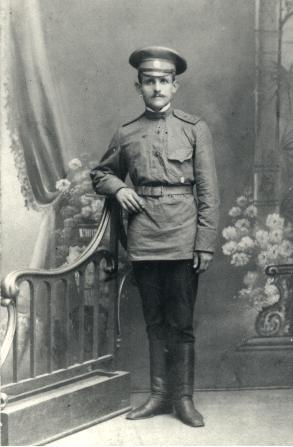
When our parents and their three eldest children arrived in Canada in 1929, the children, Katie, Ben and Margaret were ages 5, 3 and 1 years of age respectively. Our respective biological grandparents were no longer alive at the time. However, we have photographs of our biological extended families, and these serve, in their own right, as a means of connection. Some of our classmates at the Rosengard School seemed to have plenty of extended family members nearby. This was the case because their ancestors had arrived in Canada in the 1870s, some 50 years before my family and others of our Rosengard community had left their Mennonite villages in Ukraine during the 1920s and into the early 1930s. In our case, our family celebrated festive occasions in various ways by the eldest members of the family coming home, as they were able, from their respective places of work in Winnipeg, or at other nearby locations. It was only at a much later time that I began to realize the enormous degree of loneliness and anxiety our parents must have felt when they were new Canadians. Those feelings must surely have been intensified as news from those who had remained in the Mennonite villages in Ukraine were never uplifting, but often very disturbing. Hopes of ever seeing anyone of them again, became more and more faint.
The conference presentations highlighted the enormous efforts required of individuals and groups communicating within the circumstances of diaspora peoples. For those Mennonite families who lived in various parts of South America as well as in Mexico, the ways in which they managed to establish communication were creative to say the least.
It so happened that my parents too became a part of this creative communication model, with an additional element or two. During the 1950s, a letter from Russia arrived in our Steinbach mailbox, written by my mother’s step-brother, Gerhard Froese and his wife Greta. The letter indicates that they and their seven children are alive. The writer further indicates various individuals of whom they have no information, but mentions some others who, as the letter puts it, are in “Mittel Assien”, translated as Middle Asia. He then asks about various other family members of whom they know nothing, and then asks the poignant question as to whether his “dear mother is still alive”. My parents had the letter published in the Steinbach Post indicating that the mother and various members of the extended family of whom the writer is enquiring are in Neuland Colony in Paraguay.
In his later years, my father, Cornelius Falk, engaged in creating a handwritten genealogical record of the descendents of his grandfather, Jakob Falk, born in Ukraine in1818. I am astonished when I consider the prodigious amount of information he accumulated and carefully wrote in Gothic Script, creating a detailed historical genealogical record. One of the means he used to acquire information was by posting a notice in the Mennonitische Rundschau asking readers of the paper for genealogical information relating to his work.
I am so grateful for the handwritten genealogical record my father, Cornelius Falk so diligently created.