
Fee hike frustrates volunteer firefighter
Advertisement
Hey there, time traveller!
This article was published 26/12/2020 (1956 days ago), so information in it may no longer be current.
A member of the Ritchot Fire Department says paramedicine’s transition to a self-regulated profession amounts to little more than a fee hike for volunteer firefighters like himself.
Renewing his Emergency Medical Responder (EMR) licence used to cost Kelly Rudnicki $100 per year.
Ritchot doesn’t require its firefighters to possess an EMR licence, an entry-level paramedicine credential that involves at least 120 hours of training. But Rudnicki didn’t mind paying the minimal renewal fee to maintain a licence that keeps a career path open.
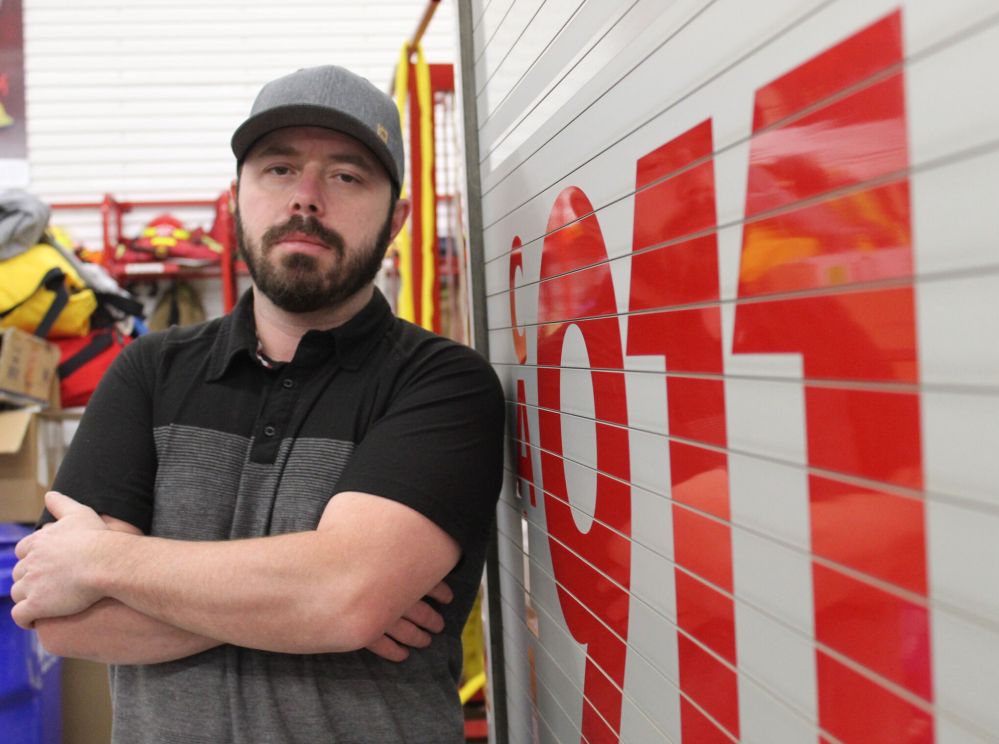
“The only reason why I’m deciding to hold on to my licence is because if I do apply to the (Winnipeg Fire Paramedic Service) again, I need that as a minimum requirement,” he explained.
Rudnicki, who lives in St Adolphe, said he knows a dozen other volunteer firefighters who maintain an EMR licence for the same reason. But doing so has recently become more expensive. The cost of renewing an EMR licence has risen to $550.
“That’s a pretty steep jump in registration fees, especially at the volunteer level,” Rudnicki said.
Licence holders now also need liability insurance in their own name in the amount of $5 million, which Rudnicki said costs another $150 annually. Previously, some volunteer firefighters were covered under municipal insurance packages.
Rudnicki said he’s left with two options: pay more for a licence he only needs to keep an employment prospect alive, or let it expire along with his goal of becoming a career firefighter. (Taking the EMR course again costs upwards of $1,500).
He worries the higher costs may discourage new recruits from joining a volunteer fire department, or hinder experienced members from furthering their career in Winnipeg.
Last Thursday, Rudnicki bit the bullet and paid a $126.75 transition fee due Jan. 4. He has until Mar. 14 to pay the full $550 and obtain insurance.
The new rules stem from paramedicine’s transition to a self-regulated health profession.
The College of Paramedics of Manitoba was established in 2018 to establish consistent standards and processes for education, governance, licensing, complaints and discipline, and more.
All paramedics and EMRs practicing in Manitoba must register with the College, whose authority over bylaws and regulations is derived from the Regulated Health Professions Act.
Establishing a new regulatory entity doesn’t come cheap. The College is not for profit but receives no government funding. It must recoup all operating costs, including legal costs associated with professional conduct cases, through registrant fees.
According to Trish Bergal, the College’s executive director and registrar, fees also contribute to a reserve fund needed to ensure financial stability.
“It’s quite a process to establish a brand new regulatory body. It’s several years in the making,” she said.
Rudnicki, who has 13 years of firefighting experience, said volunteers should be charged a lower fee in recognition of their unpaid contribution to community safety. He’d like to see the College create a tiered fee structure that recognizes the difference between full and part-time paramedics and EMR licence-holders who are volunteers.
“I just feel like they’re working against us. They need and want people like us, but at the same time we’re kind of getting punished,” he said.
Bergal said the College values all roles within first response, and is not trying to penalize volunteers, but can’t exempt them from accountability measures integral to self-regulation, whose chief purpose is “protection of the public interest.”
EMR shifts can be “very dynamic” but the cost to regulate a member is the same regardless of hours worked, a College information sheet stated.
Bergal said a flat fee structure also allows the College to project revenues and set a sound operating budget.
She advised registrants in Rudnicki’s position to contact the College.
“Those individuals, we’ve been asking them to call us and we’ve been helping to guide them through those situations. I appreciate the conundrum they’re in because the hiring department asks them to be a licensed EMR, but they don’t necessarily need to be a licensed EMR in their community.”
Bergal said those waiting to apply to the WFPS could find work with Shared Health’s COVID-19 response. She framed it as “a resume-building exercise” that also meets a current need.
“This concept of taking training just for one day being hopefully hired by an organization I think is unfortunate,” Bergal said. “They could fulfill important roles elsewhere in the system right now while they’re waiting for a certain organization to open up a hiring process.”
Rudnicki can at least be confident the new fees won’t increase anytime soon. The College has pledged to freeze fees for the next three years. Once the reserve fund is built up, Bergal said the College may lower fees if there’s an “imbalance” between revenues and expenses.
If the College won’t budge on fees before then, Rudnicki said he’d at least like to see more value for money.
“Nothing’s really changed like education-wise or anything like that. They’ve just changed governing bodies. It’s a little frustrating.”
Meanwhile, the College’s changes to liability insurance have irritated Ritchot’s next door neighbour, the Town of Niverville, which does require EMR licences of its volunteer firefighters.
On Oct. 20, town council passed a resolution calling on the Association of Manitoba Municipalities to lobby the province to exempt volunteer medical first responders from College membership fees and approve municipal insurance coverage for individual members.
The College has said the municipal cost implications of self-regulation “depend on the arrangement that each municipality has with the paid or volunteer staff that provide service.”
Bergal said there’s nothing stopping a municipality from reimbursing volunteer firefighters for fees incurred. But there’s little incentive for that in Ritchot, which doesn’t require firefighters to hold an EMR licence.
Rudnicki said it’s clear not all first responders are comfortable with the increased individual liability entailed by self-regulation.
“You’re starting to see career firefighters who are paramedics start to drop the paramedic side of things, because they don’t want to have that extra…liability over their heads,” he said.
That’s exactly what’s happened in Winnipeg, where 63 firefighter-paramedics have withdrawn their paramedic status over the past year, according to letter penned last month by Alex Forrest, president of United Fire Fighters of Winnipeg.
Bergal cautioned against assuming that trend will spread to rural fire departments, which don’t have designated fire-paramedic positions.
“You can’t compare apples and oranges,” she said.