
Tache Community Centre $28.5-million design approved
Advertisement
Hey there, time traveller!
This article was published 15/10/2023 (912 days ago), so information in it may no longer be current.
A final design was finally approved for a new recreation centre in Lorette by Tache council Oct. 10 and one thing was clear: money will need to be fundraised.
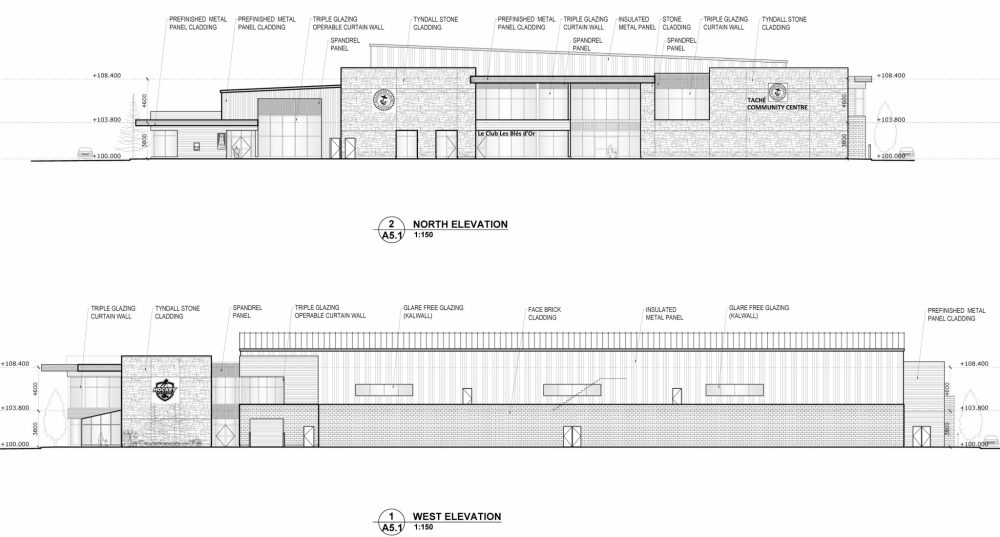
That is because the most recent estimated cost ahead of going to tender is $28.5 million to house a new arena with six changerooms, library with children’s corner, seniors space, commercial kitchen, bar, two-lane walking track, seniors centre, social activity hall, sports activity hall for things like taekwondo and dryland training, meeting room, conference room, and media room.
The two-storey Tache Community Centre will have a $750,000 elevator included in the pricetag, though an outdoor terrace and patio area was taken out to save money. The arena will have enough bleachers to seat 300, according to outgoing CAO Christine Hutlet.
When federal and provincial funding was announced in January, the cost was estimated at $11 million for a 62,000-sq.-ft. arena and 8,000-sq.-ft. library. Funding for the facility will include $4.4 million from the federal government’s Investing in Canada Infrastructure Program (ICIP) and at least $3.67 million from the provincial government.
Incoming Premier Wab Kinew did make an election pledge to put another $5 million towards the recreation centre, though Tache council will have to wait until the new NDP government takes office to hear back on any follow through of funds. Kinew made the promise with NDP candidate Chris Wiebe, who lost the Dawson Trail riding to Progressive Conservative incumbent MLA Bob Lagasse.
Even if the new provincial government comes with more money, the RM is on the hook for millions more than originally planned, and community fundraising will be necessary. The CAO laid out the options for council to pay its portion at Tuesday’s meeting.
Going with numbers that did not include the election promise, $20 million needs to be raised by the RM borrowing, a tax levy, and fundraising.
The first option presented was to use the RM’s Canada Community-Building Fund grant money, formerly know as gas tax, to pay the interest on a loan that would be repayed for 25 years. That would take away $640,000 per year — almost all of what the RM now receives from the federal fund — from any future infrastructure projects like sewer, water and roads for the first few years, going down as principal is paid off.
The second option uses more accounting ink, and was the one the CAO and councillors were leaning towards after the tenders come in from contractor bids.
It involved getting municipal board approval to use $4 million in Community-Building Fund money starting at $350,000 per year, with the rest levied on taxpayers. Starting in 2027, that would cost each taxpayer would pay $17.40 until 2041, with an increase after that until the loan is paid off in 2050 because the RM is only allowed to use Community-Building Fund money on the $8 million of compound interest, not the principal.
Tache is still paying for its loan to buy land and build the new municipal office of Provincial Road 206, so starting the recreation centre loan a year earlier in 2026 would mean one year of taxpayers paying a $93 tax levy.
Fundraising of $2.5 to 3 million is also desperately needed to avoid completely draining the RM’s reserves.
“We need to raise every dime we can,” stressed Hutlet at the meeting.
“If you have zero, no fundraising, no nothing (sic), you are decreasing your reserves by $11.8 million. And that’s a lot. It could put you in a precarious position – it’s going to limit what you can do in the future,” she added.
And Hutlet warned, the $28.5 million is not guaranteed either.
“You’re never going to get through a project without some sort of change order or some adjustment,” she said, adding the final price is likely to go up a million from what the tender comes in at.
Staff is looking at any cost saving they can find in minor changes to what is going out to tender, which is why the commercial kitchen is smaller than originally planned and the patio is out.
One cost saving that was considered is not happening after all. That was the removal of the walking track, which council earlier made clear they wanted to keep. It is estimated to cost $4.4 million to keep on the second floor, according to the CAO.
Going back and forth with the engineers and architect has also cost money. The final design does have fewer windows to save cost.
The ice plant will also be a more-expensive but safer and more environmentally-friendly CO2 version, rather than ammonia-based. The extra $600,000 for that is included in the $28.5 million.
The final design was passed unanimously with Coun. Natashia Lapeire not available for the vote.
“Council has to get behind it, not just by resolution. And you can’t spend $100,000 to get somebody to raise that money because that’s a huge amount to pay. It has to be done at the grassroots level,” said Hutlet.
“You have to get your groups together to come forward and really put the big push on to make sure this is going to be successful,” she added.