
Ile des Chenes woman collecting menstrual products for the north
Advertisement
Hey there, time traveller!
This article was published 06/07/2025 (414 days ago), so information in it may no longer be current.
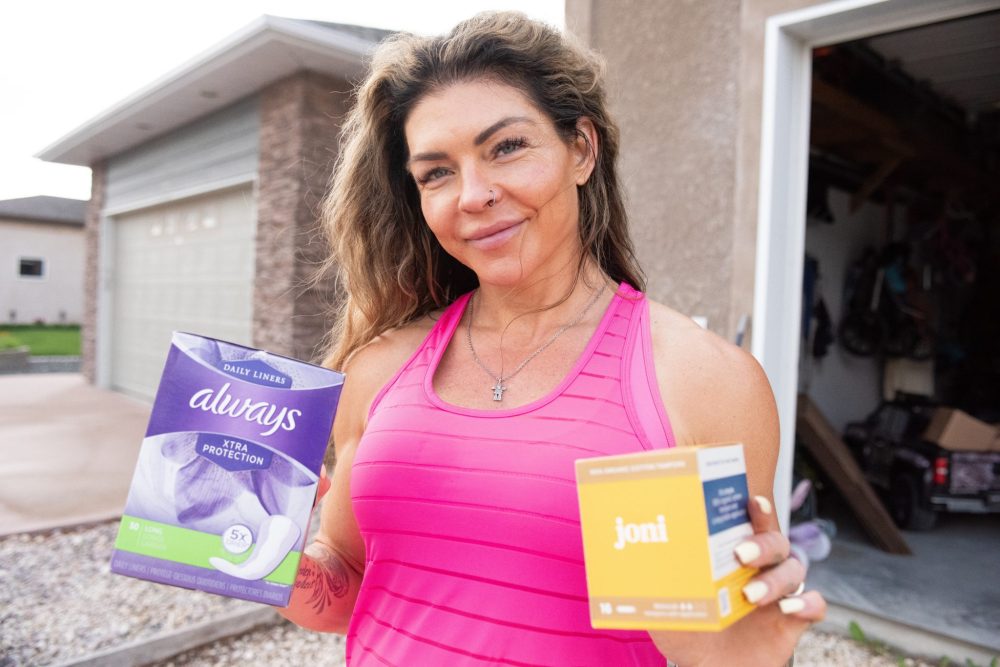
An Ile des Chenes woman is collecting menstrual products to send them to rural and remote communities in Manitoba and Nunavut.
Janessa Roy is the education coordinator for Moon Time Connections and Manitoba’s chapter lead. She will be holding a drive Aug. 15 to Sept. 15 to collect menstrual products from communities in the Southeast.
“My goal with that is doing a little back to school theme as families are shopping back to school supplies. While you’re in Walmart you could just throw in a bag of pads or however you want to help contribute, it’s kind of like a back to school theme,” she said.
Last year, Moon Time Connections shipped products to 259 community programs in 192 communities.
Over the span of her menstruating lifetime, a woman will spend about $6,000 on pads, tampons, or other menstrual products. For women and girls in rural or remote communities in the north that number increases two to three times.
“What is still expensive for us here in more city regions is just way higher up north,” said Roy.
While feminine hygiene products range in price from $5 to $16 in large urban centres such as Winnipeg and Steinbach, in northern and remote communities those prices can be as high as $45.
This is creating what is known as period poverty, where people have to decided if they should spend money on rent, food, or other life necessities or on menstrual products. For many up north the decision is a difficult one to make and sometimes it is made for them.
“It’s not always cost, people just assume it’s cost but there’s an accessibility piece (as well) and just for an example…during a time like COVID when road access is closed down then there is suddenly a lot less shipments of products coming in and not only that, but we’re also dealing with far less stores or places that distribute products as well.”
A survey conducted by Moon Time found that 74 percent of Indigenous respondents in remote communities “sometimes” or “often” have issues accessing period products.
Roy said the barriers that are created by not having access to these menstrual products or not being able to afford them include missing school, work, ceremony, or simply being active.
“And then there’s the whole dignity piece of being able to bleed just healthfully and when you’re not given the proper resources, you’re using other materials that aren’t meant for menstruation and that’s not good for your mental health,” she said.

Some might say the solution to the menstruation problem in rural and northern communities is the use of reusable items such as pads and menstrual cups, but Roy said this is a colonial way of viewing things.
She said these items are very expensive and access to clean water is a problem in some communities as these items need to be cleaned regularly as they’re touching or going inside the body.
Another issue is cultural, as some communities view menstruation as a sacred process that is about shedding or cleansing the body and by inserting things into the vagina, the process is blocked.
Roy believes that true menstrual equity comes from having a choice of products. “We believe that everybody should have the exact same opportunity to access the same options. We don’t want to send just one thing.”
To volunteer your time or to donate menstrual products email Roy at mtc-mb@truenorthaid.ca. To donate money visit truenorthaid.givecloud.co/moontimeconnections.