
Spiking smoke levels force rancher to cancel horse rides
Advertisement
Hey there, time traveller!
This article was published 20/08/2025 (414 days ago), so information in it may no longer be current.
Myra Angerman can hear the distinct wheezing sound when her horse Dash takes a breath, a symptom caused by wildfire smoke.
The 53-year-old owner of Rocky Ridge Ranch Equine Centre, 15 kilometres south of Steinbach, was forced to cancel rides for Dash and her other 18 horses because of the unsafe smoke levels blowing in from wildfires across Manitoba.
The centre does horse boarding, breeding and beginner classes for riding. Angerman said the smoke has forced her to cancel up to 80 percent of her summer programs.
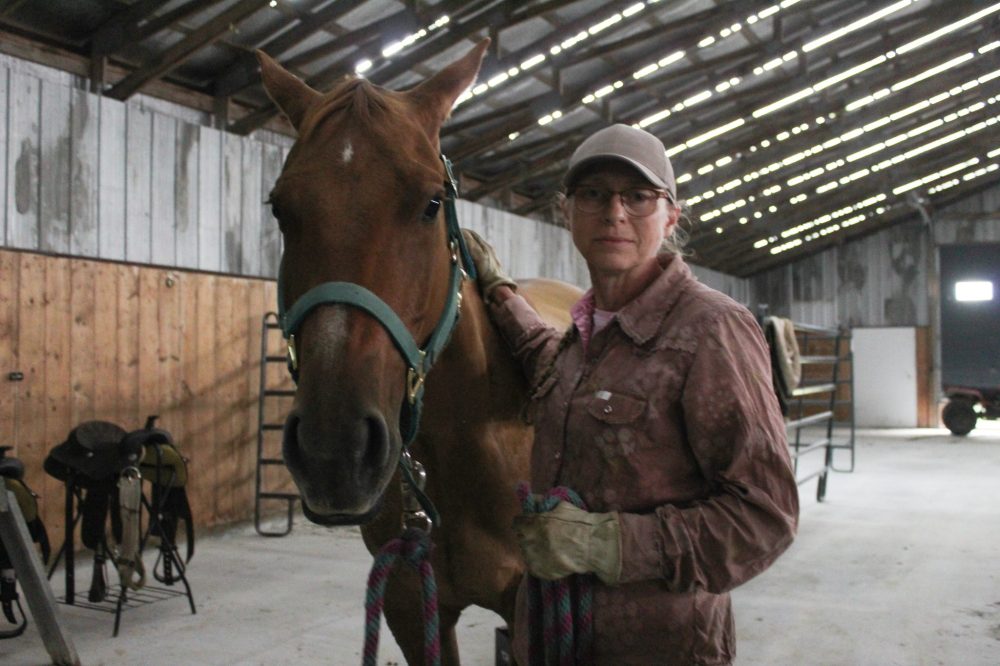
“What can I do about wildfire smoke other than just try to treat the animals as good as we can,” she told The Carillon.
While Angerman isn’t concerned about lost business, her main worry is that she’ll lose her horses. Some of her horses already have weak lungs and are more susceptible to developing asthma.
Angerman said the smoke can shorten the lifespan of her horses, and it can take up to six months for one to recover.
She’s tried sheltering them by moving them inside the barn, but if the wind picks up, the horses are sometimes better outside in pasture to dodge the smoke.
Dash is a 12-year-old quarter horse and one of Angerman’s best horses for riding. Since smoke started rolling onto the ranch, Dash has struggled to breath. His nostrils are flared, trying to suck in as much oxygen as he can. Each breath is laboured. She’s been treating her horses with herbal medication and a Buckley’s-like concoction to open the airways. But that’s only a temporary fix. She said even low levels of smoke can still trigger symptoms for the horses.
Along with the smoke, the dry weather has also kicked up more dust, which irritates her horses’ lungs and further hampers their breathing.
Manitoba had the worst air quality in Canada last week, with Winnipeg breaking its record for the smokiest year to date, the Free Press reported.
Michelle Husulak, large animal veterinarian and faculty member at the University of Saskatchewan, said high levels of smoke particles, a form of antigen, can cause weepy, swollen eyes, inflamed airways and extra mucus.
“When there’s this constant bombardment of antigens to the immune system, the body reacts in an inflammatory way,” she said.
Horses can develop equine asthma, which causes their airways to narrow if there’s particles that irritate its breathing, Husulak said. Equine asthma isn’t a new issue and can be triggered by dust or moldy hay, she said. Those things can typically be controlled. But the smoke is particularly bad for the horses because there’s nothing that can be done to limit it besides keeping them indoors, Husalak said.
The common treatments for equine asthma includes steroids and muscle relaxants that decrease the inflammation, she said. If the horses are exposed to smoke for extended periods, the impacts can range from developing scar tissue to weight loss because the horse is using all their energy to breathe. Husalak said it’s important to feed the horses good quality and nutritious food so their body weight doesn’t plummet.
“They don’t have the same oxygen exchange as they would in a normal, healthy animal, so they have very laboured breathing. They’re working very hard just to get air into their body,” she said.
Husulak said horses show clearer symptoms from wildfire smoke compared to other animals because they have longer life spans and they’re trained as performance athletes. But the smoke still affects other animals and wildlife.
“We’re all dealing with more inflammation in our airways just because of this of the smoke,” she said. “It’s a universal problem.”