
Steinbach women create cultural group for Indigenous girls
Advertisement
Hey there, time traveller!
This article was published 13/10/2025 (244 days ago), so information in it may no longer be current.
As it is National Women’s History Month in Canada, The Carillon spoke with four extraordinary women in the Southeast who are making a difference in their communities and have done or are doing extraordinary things. Women will be profiled every week for the next four weeks.
Val Gross is a woman who loves children and who wants to make a difference. She grew up with foster siblings her whole life and knew she wanted to be a foster mother herself. She studied social work in university but felt there was too much red tape with that profession and that she would make a bigger impact in a child’s life by being a foster parent, something she’s done for the past 28 years.
She’s a mother to nine children, six of whom are Indigenous foster children. It was when her foster daughter Zammy began asking questions about her skin colour, hair colour, and wanting to look caucasian that Gross knew she had to take matters into her own hands.
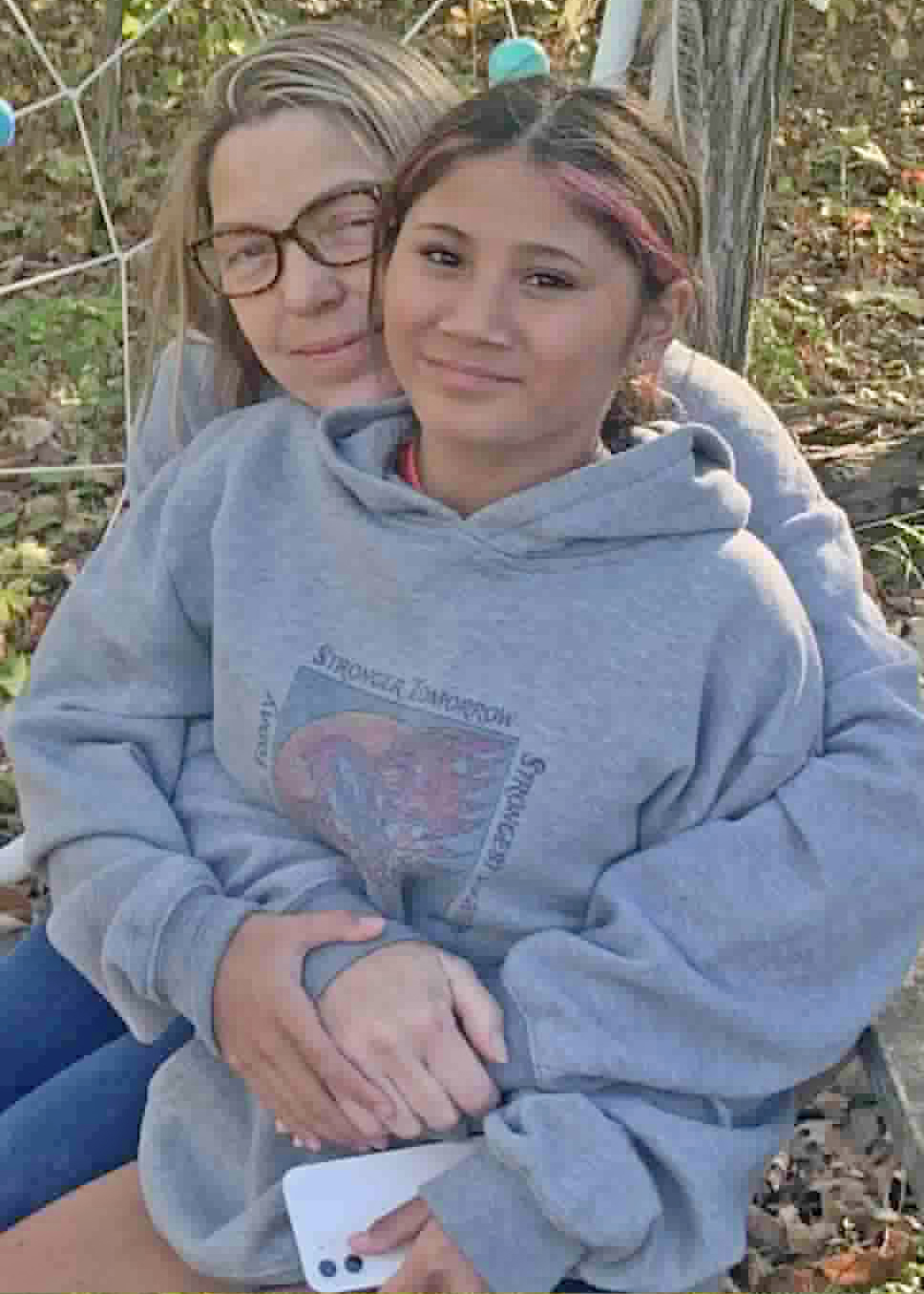
“It bothered me because I realized that she needed something – a group or something – that would make her feel OK in her own skin,” she said.
In 2024, the Thunderbird Girls was born – a group for Indigenous girls aged seven to 17 in the Southeast who could learn about Indigenous culture and feel good about themselves.
The girls chose the name Thunderbird Girls because the Thunderbird is a powerful animal that symbolizes strength. The girls’ motto is, “Strong today. Strong tomorrow. Strongest together.”
“If we’re going to do anything and we’re going to do truth and reconciliation and we’re going to join forces and everything that everybody talks about, then we need to actually do that. You need to step forward and you need to start making that change. So, this is just me, this is my one small way to try and make that change as best we can,” said Gross.
But to make her group a success, Gross needed a knowledge keeper, which she found in Melissa Johnson.
It was while working at a daycare as an inclusion worker for kids with high needs that Gross met Johnson. Johnson, zs an Indigenous knowledge keeper promotes, teaches, and celebrates First Nations teachings.
“I needed her to teach the girls to be prideful of their culture,” said Gross.
Johnson, whose ceremony and Indigenous name is Spring Eagle Women, is a mother to three children herself. She teaches her children about Indigenous culture and in the summer her family follows the powwow trail.
Johnson studied psychology in university and has worked with youth since she was a teen. She works as a culture worker and does a lot of youth programming for Roseau River Anishinabe First Nation.
“I want the girls to learn that being Indigenous is a beautiful thing and despite the stereotypes that people have heard, our culture is beautiful and that it’s a beautiful way to live and to be proud of who they are,” she said.
So far, Johnson has taught the girls the Seven Sacred Teachings (love, humility, wisdom, truth, respect, honesty, and courage) and the Medicine Wheel (physical health, mental health, spiritual health, and emotional health). The girls have also learned about smudging, how to make ribbon dresses, cooking traditional food with elders, sharing sticks, Metis jigging, and traditional First Nations dancing. All their learning involves crafts and games.
“Everything in the Seven Sacred Teachings you can use in your everyday life so when we learn about them we learn about the different ways we can be a better person,” said Johson. “We also learn about the Medicine Wheel and how we can live in balance with (our) life using the Medicine Wheel.”
This year, one of the main focuses for the 12 girls in the program will be drumming. Each girl will receive her own drum and will decorate it and learn to play traditional songs.
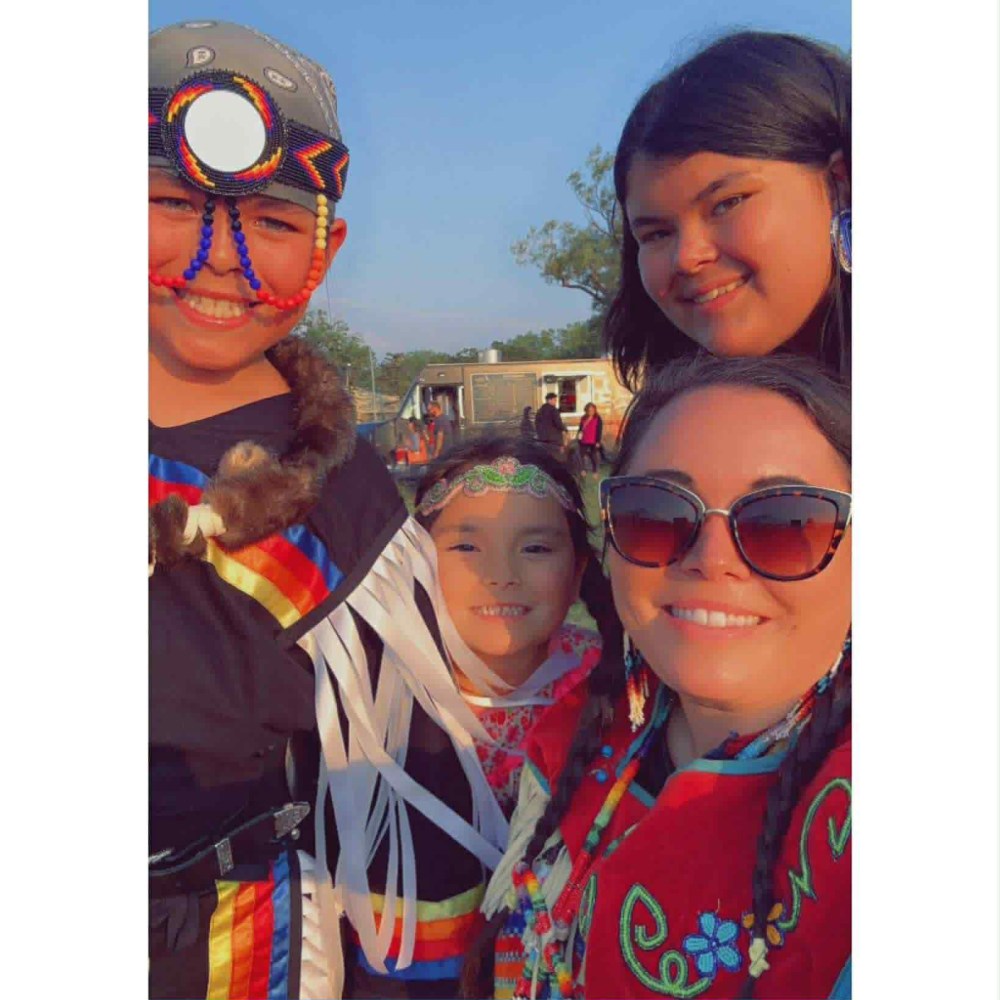
Gross said Thunderbird Girls is like “Girl Guides but Indigenous.”
“We have girls coming from Grunthal, we have girls coming from Steinbach, we have girls from Landmark. So they don’t go to the same school and when they come in they’re shy because we’re talking about girls from seven to 17. So, they’re shy and they’re usually quiet and that’s just their culture and it doesn’t take long…they build such good bonds.”
Both Johson and Gross would like to see the knowledge they teach these girls passed down to future generations.
“Let’s face it. Some kids don’t get any culture and then it’s lost. If you don’t continue it, it becomes lost. Strictly from a foster parent point of view it shouldn’t be lost and that is why we get so much grief because we don’t take the time to make sure they are learning what their ancestors learned,” said Gross.
Johnson said her father and partner come from residential schools so reclaiming that lost culture is important.
“Just to keep teaching the little ones and then to keep teaching the youth, so that they grow up in that way of life. And then they can keep teaching it when they grow up to their little kids and the youth in their lives,” she said.
While Gross and Johnson make it sound easy it has been a struggle. For the first year, Gross paid for all the supplies and expenses herself. After Kismet Creek closed and the girls had to find another place to get together, Gross rented space at Trailblazers in Steinbach. She implemented a registration fee of $395 to pay for the rent and supplies. She said she would like to have a low registration fee but she doesn’t know how to go about applying for grants and is currently interested in finding a volunteer who has experience in applying for funding.
“I’m proud of what we have built and how far it’s gone in a short period of time and I think it will make a difference, and I think it is something we can offer to those in the community who want to join,” said Gross.
For those who would like to join Thunderbird Girls call Gross at 204-320-5571 or visit the group’s Facebook page, Thunderbird Girls. The group meets every Thursday between 6 p.m. and 8 p.m.