
COLUMN: Carillon Flashback January 31, 1990 – Four weeks in Japan opens doors for Loewen Windows
Advertisement
Hey there, time traveller!
This article was published 25/10/2025 (213 days ago), so information in it may no longer be current.
A Steinbach company with a yen to do business in Japan will find that time takes on a new meaning and that patience is definitely an asset.
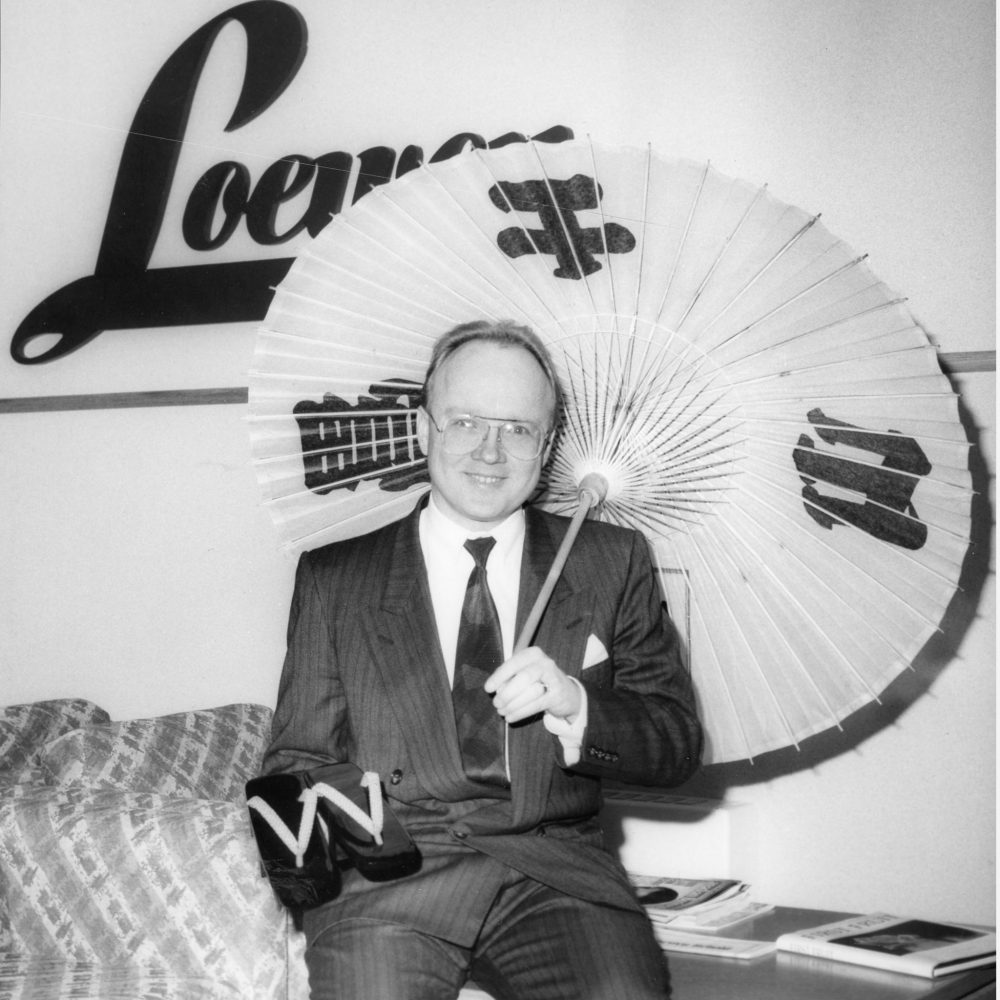
Loewen Windows president Charles Loewen got an insider’s view of Japan recently during four weeks spent with the Japanese Institute for International Studies. The four-week study session was an all-expense-paid junket with the Japanese picking up the tab for hotels, receptions and meals along the way for 50 businessmen from eight countries.
Lesson Number One was the concept of time: at home half an hour spent with a supplier may be best. In Japan, if half an hour is good, an hour or two is even better.
The seriousness with which the Japanese consider any business decision is reflected by the sense of loyalty that extends to all aspects of day-to-day living, Loewen explains. A bad judgment call leads to “losing face” and that embarrassment is a terrible thing.
The same fierce loyalty carries through from employee-to-company-to supplier and is reciprocal. A man will select a job for life. If he leaves the company later, he will be seen to be disloyal and will find it difficult to get another job elsewhere.
On the other hand, one of the Japanese industrial giants will “lend” their employees to another company, feeling a responsibility to keep staff working when diversification causes the shutdown of a factory or industry.
The diversification of industry, loyalty in the workplace, and a glimpse of the average Japanese lifestyle made an indelible impression on the Loewen Millwork president.
“That particular style of doing business is repeated at home as well as abroad. A great deal of emphasis is placed on away-from-the-office sessions, where business plans are discussed in a social setting.”
In fact, the success of an executive is measured to a certain extent by the number of after-hours meetings he is invited to attend. In an urban setting, a husband coming home too early at night is looked upon as a failure. It means he is not important enough to be invited out to help plan the future of his company.
Loewen is quick to point out, however, that other opposites to accepted western ideas of home life are also evident. The Japanese wife controls the family budget, gives her husband an allowance, and often makes most of the family’s investment decisions.
Everywhere they went, Loewen was struck by the friendliness, organization and efficiency of Institute staff members and the Japanese people.
During his stay, Loewen learned firsthand the subtle difference between the two levels of business discussions in Japan.
The official level, where everything is fine and good is tatemae and means about the same thing as “How are you?” and “I am fine.”
The more informal level of talks involves the honest answer or honne, where a supplier will be told there is no chance the company will do business.
The Loewen Windows executive said it was evident that a loyal and growing base of customers was viewed as a greater security for the company than a balance sheet.
That type of thinking is further demonstrated in the way Japanese companies treat suppliers. Suppliers are called “partners” and once a deal is struck with a particular supplier, it is for keeps.
Presently, American window manufacturers based in Minnesota have practically cornered the Japanese market for wood windows. Loewen’s is just edging into the market and are manufacturing their first order. Windows for three average-sized homes will be shipped to Japan shortly, Loewen said.
While sales are expected to increase in the near future, Loewen describes his company’s prospects in the Japanese market as “modest” for 1990. He says exports to Japan could mean two more jobs at the Steinbach plant this year.
“I would say that is modest … unless, of course, you are one of those two people looking for work.”