
COLUMN: Grey Matters – The origin of Remembrance Day and Saint Martin
Advertisement
“Always consider others as more holy and more worthy than you, at the same time strive to be as holy as you can be.” Saint Martin of Tours.
Did you know Remembrance Day has a rich origin story that precedes the armistice that was signed on Nov. 11 in 1918? Nov. 11 was already a significant day in Europe because of a reluctant soldier named Martin.
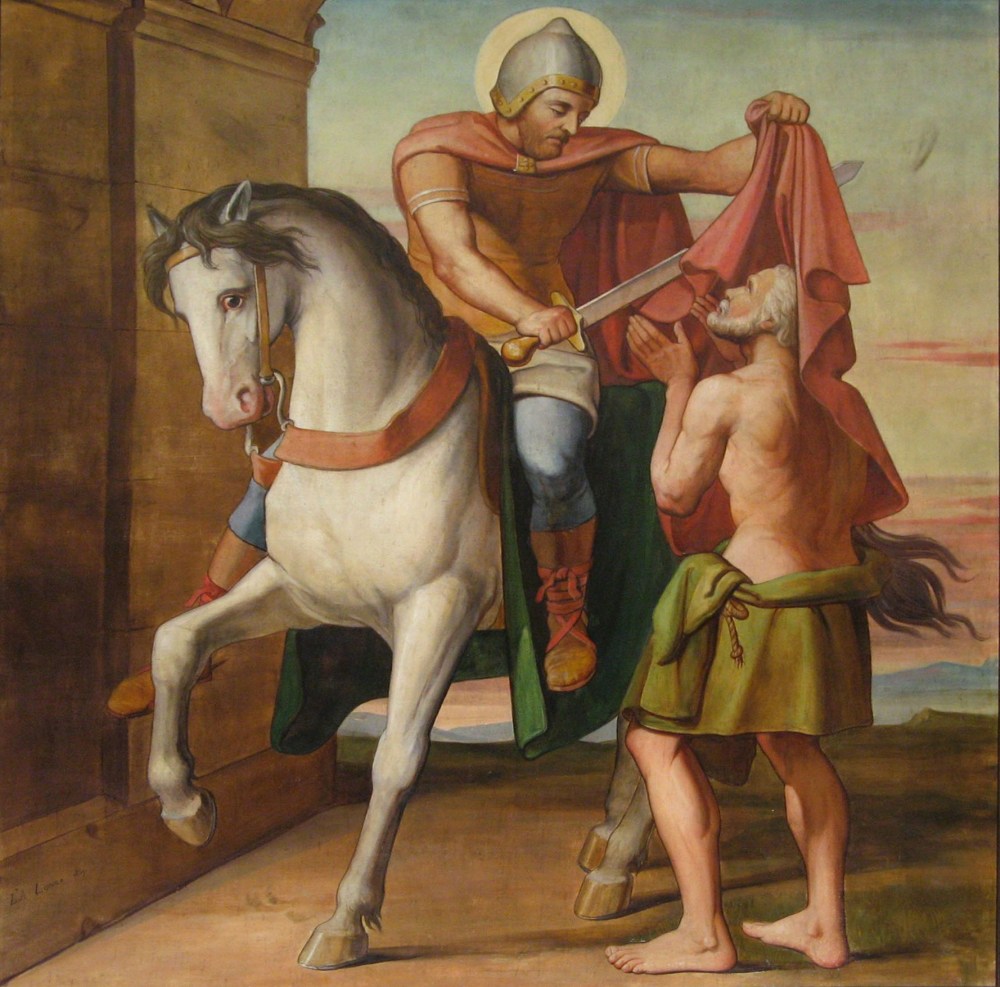
Martin was a 4th-century Roman soldier who despite his father’s fierce objections, became a Christian, left the military, and devoted the rest of his life to peace and charity. One of the most enduring stories about Martin is his encounter with a beggar during his time as a soldier. While others ignored the man in need, Martin acted with compassion, dividing his cloak in half and sharing it with the freezing stranger. This moment exemplified his commitment to charity and empathy, values that would define his life.
Martin’s growing faith convinced him that his duty as a soldier conflicted with his Christian beliefs. He eventually chose to leave the army and pursue baptism in the Catholic Church. His path led him to a period of solitude as a hermit, before founding a monastery in Ligugé, Italy which remains to this day. “For those of us removed from the life of Saint Martin in time, place, and station of life, we can compare his times to our own and take inspiration from his handling of challenges that may be similar to our own” (The Catholic Company).
St. Martin’s feast, known as Martinmas, was widely celebrated across Europe for centuries (in Germany the feast traditionally starts at 11:11 a.m). It marked the end of the harvest and the beginning of winter, a time for thanksgiving and reflection. In many regions, Martinmas was associated with peace, charity, and the transition from war to peace, echoing St. Martin’s own journey from soldier to peacemaker.
The primary historical account of Martin’s life comes from Sulpicius Severus, a contemporary associate who wrote the book The Life of St. Martin. Severus recounts that when formally judged of cowardice, Martin volunteered to face battle unarmed at the frontlines. Remarkably, the opposing forces unexpectedly surrendered before conflict ensued. After leaving the military, he was captured by robbers. When asked if he was afraid, Martin expressed confidence in God’s presence and concern for his captor’s soul. His confidence and compassion ultimately influenced the robbers to faith.
As for the time when Martin gave the beggar half of his cloak, Severus notes that at that moment Martin realized “that a being to whom others showed no pity, was, in that respect, left to him. Yet, what should he do? He had nothing except the cloak in which he was clad, for he had already parted with the rest of his garments for similar purposes. Taking, therefore, his sword which he was girt, he divided his cloak into two equal parts, and gave one part to the poor man, while he again clothed himself with the remainder.”
Severus goes on to describe the reaction of onlookers: “Some of the bystanders laughed, because he was now an unsightly object, and stood out as but partly dressed. Many, however, who were of sounder understanding, groaned deeply because they themselves had done nothing similar. They especially felt this, because, being possessed of more than Martin, they could have clothed the poor man without reducing themselves to nakedness.”
St. Martin’s actions and values resonate through the centuries and make him a fitting symbol for Remembrance Day. An inspiration for all those seeking to foster peace in the world.