
Former South Sudanese refugee shares inspiring story with South Eastman Rotary
Advertisement
Rebecca Atet Deng was just 12 years old in 1987 when she was brutally taken by rebels during the Second Sudanese Civil War. She was playing with her younger sister when the rebels came and took her and 26,000 other children from their homes and marched them in a three-month trek through difficult terrain and random attacks by government forces. Many children didn’t make it and for those that did, what awaited them was a harsh life consisting of malnourishment, disease, and uncertainty. They became known as The Lost Boys and Girls of Sudan.
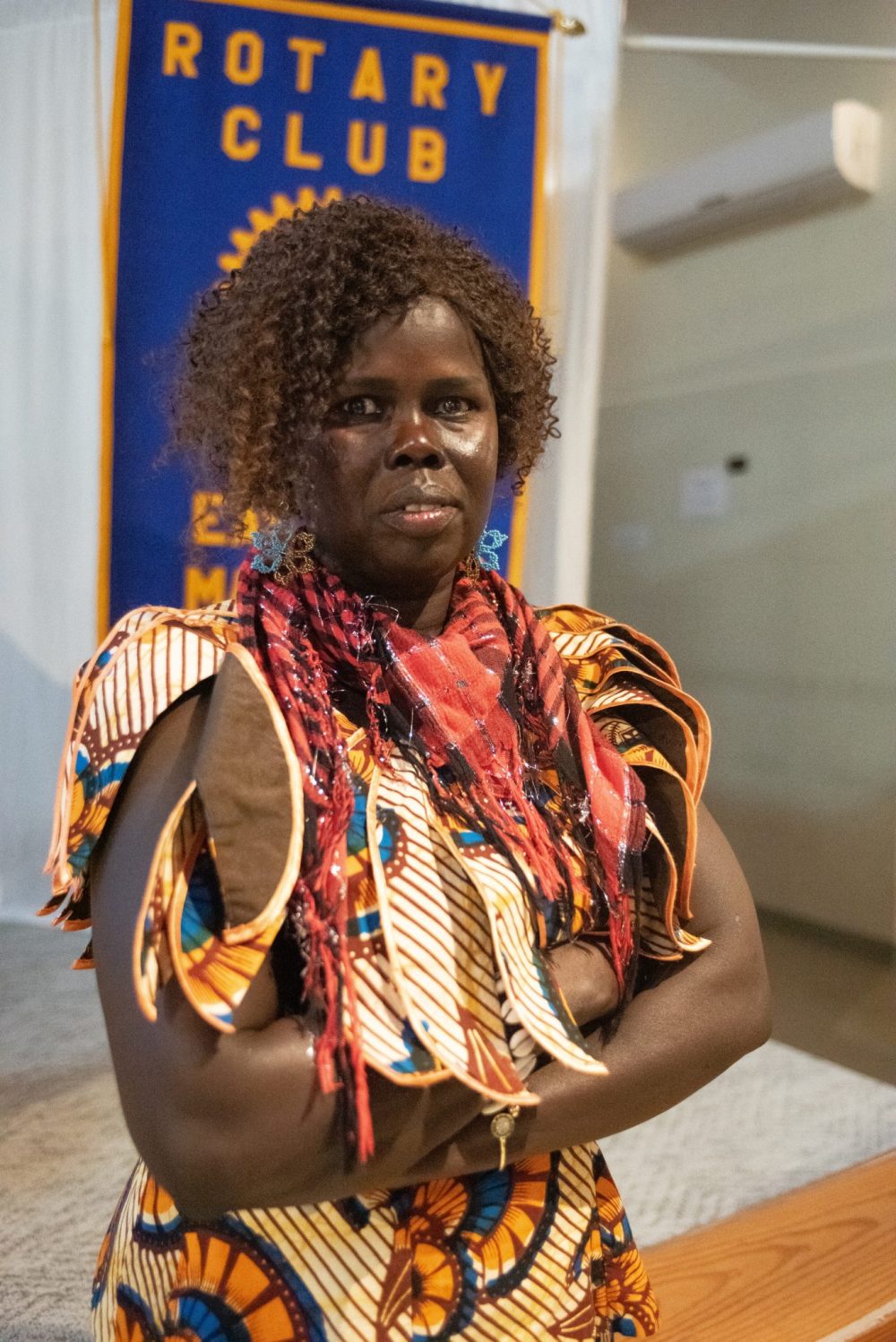
“My life was beautiful. Amazing life playing at home, happy kid and then suddenly (I was taken),” she told the crowd at the South Eastman Rotary Club gala on Nov. 19 where she was keynote speaker.
Deng came from the City of Bor in what is now South Sudan. Her father was the chief of police who was involved in politics and her mother was a nurse working in a hospital. When the Second Sudanese Civil War broke out in 1983, her father was captured and held prisoner in Bor, where he remained until a peace treaty was signed in 2005.
In 1984, following her father’s imprisonment, Deng, her mother, and her four siblings went to the nearby village of Duk. In 1987, her mother died leaving her and her siblings to be looked after by their grandmother. It was during this time that Deng was taken by rebel forces after the leader of the Sudanese People’s Liberation Army Movement gave the order to zone commanders to move young people aged 10 to 15 to Ethiopia. While the order was to take boys, in two towns girls were taken as well.
“We (don’t know) till today there is no answer why we were taken away,” she said
The children walked three months to a refugee camp in Pinyidu, Ethiopia, under the pretext that they were going there to get an education. “Most of the kids were walking without shoes,” remembered Deng. When they arrived, they saw that there was nothing there.
After one year in Pinyidu, the United Nations came to distribute clothing for the children as well as rationing out lentils, beans, maize, grain, and oil. In the second year, the Red Cross joined the U.N. in providing aid to the refugees. Deng said the aid provided didn’t take into account the needs of the girls at the camp. There was a lack of personal hygiene products for the girls such as soap and menstrual products.
“It was very difficult. It was a difficult to survive… (Living in a refugee camp) is crazy. Very, very crazy. And getting rationed food is twice a month. And then people line up and you get one of like five to ten kilos of maize and then that is (it) for the month. Yeah, it’s the surviving life.”
The children and the rebels lived in Ethiopia until 1991 when civil war broke out in that country. They went back to Sudan to a refugee camp in Pochalla before finally going to a refugee camp in Kakuma, in northwest Kenya, in 1992. At that point, Deng had been a displaced person for five years. She was only 17.
“It was like if one person die beside you, you thought you would die tomorrow so you don’t know where to go. There’s people keep running, running, until we come to the (refugee camp)…we just running because there was shooting behind so most of the people were why are we going around? There was also bodies laying left behind me,” she remembered.
“We also crossed the river called the Gilo River (in Ethiopia) and when we crossed that river as children we crossed the river by a rope. And some went into the river because if you didn’t hold it well and the wave is too big you just go like that and nobody would follow you because everybody was running desperately for their life.”
While at the refugee camp in Kenya, she married a rebel who was now also a refugee. She said she got married because she felt she was ready and because she wanted to have someone to support her and so she wouldn’t be lonely.
“So, being a child in a refugee camp, being a child struggling in the woods without a father, without relatives, when I had my first daughter it was so difficult because it was so hard. I don’t know how to take care of a baby. And I was underaged at the same time. It was not a forced marriage. It is a poorly choice marriage, but I chose to get married because there were no women to get (advice for) myself, the needs of the girl.”
Kakuma refugee camp is still active, housing over 270,000 refugees, according to the UN.
In 1997, Deng moved from Kakuma to Dadaab refugee camp in northern Kenya.
Starting at the age of 22, for three years she worked in the camp as a community health outreach worker for the International Rescue Committee. While she was working there she was leading public health education on disease prevention, hygiene, immunization, and nutrition. She said diseases, such as cholera, were prevalent in the refugee camps as was malnutrition. She had two children who died months after they were born due to malnutrition and a lack of health care.
In 2000, the U.S. government came to the camp offering to take some of the Lost Boys and Girls to America. Deng was told she couldn’t go because she was with child. The American government took 3,400 Lost Boys and some girls to the U.S. Canada took 2,000. In 2001, she reconnected with her younger sister and went with her to apply for the Canadian government’s refugee resettlement program, which she walked to in the dark to another camp in order to gain that acceptance. She was 30 years old.
“To me when I arrived (in Canada) I asked myself where was the right of the baby and my right that I have (when the U.S. rejected me). Where there is the war, women and children are always the target. They are the ones who is suffering a lot.”
Now divorced, Deng said her life in Canada for herself and her children was one of calm and certainty where she didn’t have to worry about her children going to school, getting health care, or food as she was gainfully employed. It was a peaceful life.
But being a refugee and living in camps for 18 years did take a toll on Deng. She said one day, while visiting Rwanda, she realized she was carrying her own trauma and that she needed to deal with it.
“Very, very emotionally, because I turn it positive to talk about it. It helped me a lot when before, when I did not turn it to talk about it, it was affecting me and it was affecting my kid’s future because there was so much emotional inside where I feel upset and maybe beat up my kid without even meaning to do that. I got strength on it. I get very strong compared to other women.”
Deng has been living in Canada for 20 years now and she has not sat idly by. She went and got her GED and is only nine credits short of completing her bachelor’s degree in human rights and conflict resolution at the University of Winnipeg. She is a single parent of two adult children.
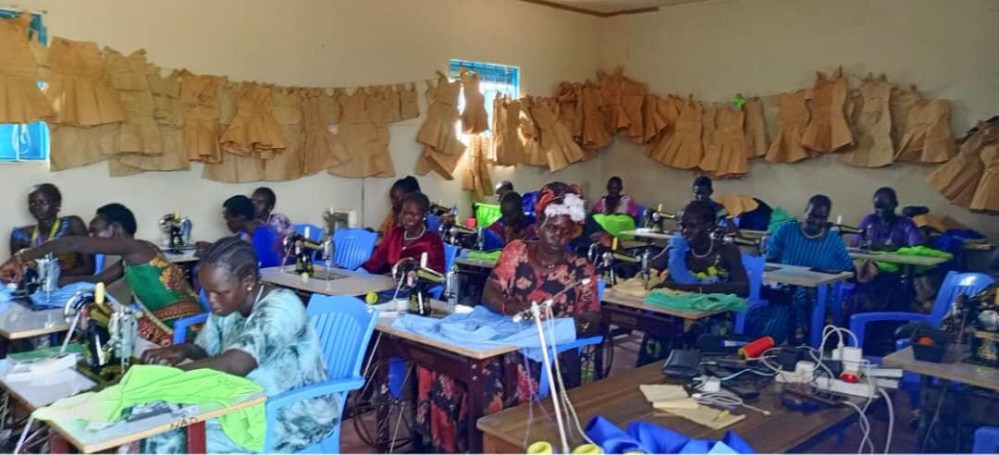
She founded The Excel Empowerment Centres (TEEC) located in Winnipeg and Bor, South Sudan in 2014. The centres strive to empower, educate, and reintegrate vulnerable war effected immigrants and refugees, particularly women, children, and girls, through a variety of programs that provide job training, English language study, and computer and financial literacy. The Bor centre also has a shelter for internally displaced persons and refugees where they can stay for three months, wherein they receive food rations and health care from a mobile clinic. The registered charity is funded by provincial, federal, corporate, and individual donors.
Deng estimates about 300 people come through the centres every day.
“I feel so grateful and thankful to some individuals and to God for connecting me with people of compassion, who have love of humanity. The willingness to faith and caring about others women, youths and children,” she said about helping women and girls in her centres.
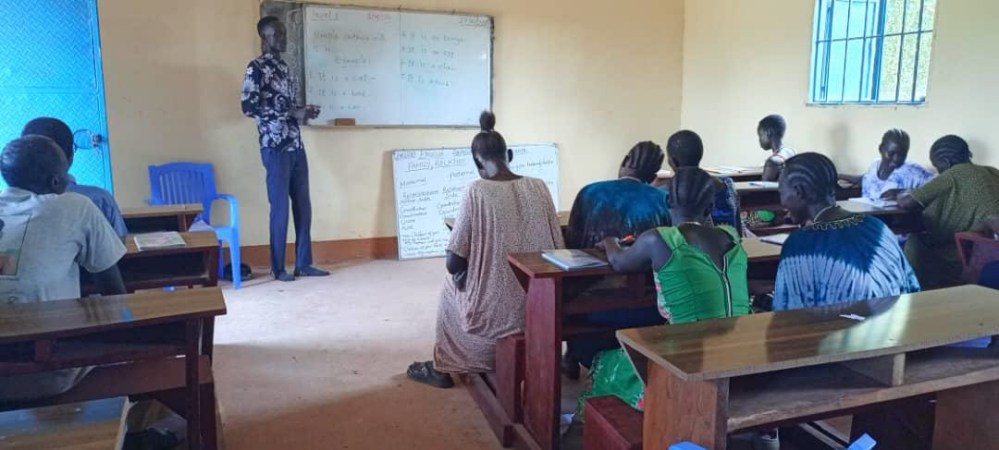
Deng said education for girls and women in South Sudan is difficult to obtain. While there are foreign agencies in the country that teach girls, usually girls remain in the home and cook and perform household chores while boys are sent to school.
She said a woman who used her Bor centre and got a sewing certificate, opened her own sewing business and now doesn’t have to rely on her husband to provide money to take her children to the doctor as she can do that herself.
Deng received the Queen’s Platinum Jubilee Medal in 2022 for having made exemplary contributions to her community and in 2025 she received the King Charles III Coronation Medal for her dedicated service to her peers in the community. She was surprised to receive the medals as she didn’t know that Manitobans knew of the TEEC centres.
She is a member of the Winnipeg Rotary Club. She joined the club because of three principals: peace, access to water, and access to vaccination. She believes the club should do more work at a grassroots level to help people in the world.
In 2019, she spent more than a month in Rwanda because she wanted to learn how the Rwandans were able to put aside their conflict and live together and how women became a majority in the nation’s parliament. What she found was the Rwandans owned up to their wrongdoings, they didn’t talk about the war, and they ended tribalism in the country. Deng thinks the South Sudanese can do the same and bring peace to their country.
“They just need to accept, leaders need to accept wrongdoing and then, you know, as the public, the resources for the citizens so that to limit, and build roads and build schools and build peace among the people…”
What Deng wants people to take away from her story is just to support women and empower them.
“So, what I want people to know is my story is just to support other women so that you know, to empower women around the world that’s what I want in South Sudan, also some other countries, because when we train more women we are building a peace because women are always the backbone of the family. They always act as a mother and husband belong to them and son is belong to them so we are building a peace the more we have women and youth that’s how.”