COLUMN: Grey Matters – Rembrandt’s two Simeons
Advertisement
Simeon: a name that comes from the Hebrew root word meaning “to hear” or “to listen”.
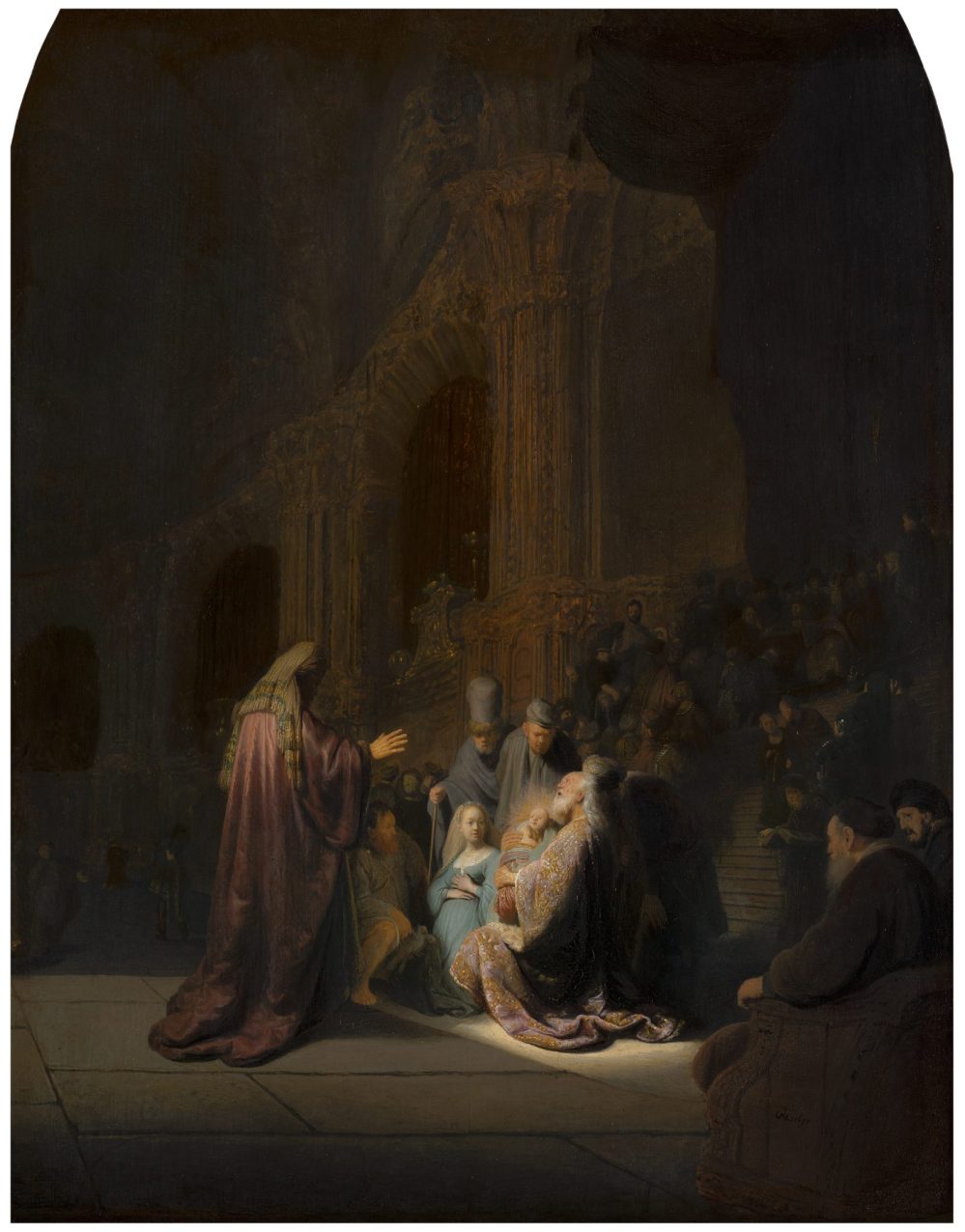
When Rembrandt painted Simeon blessing infant Jesus in the temple in 1631, he was only 25 years old. In 1669 (the final year of his life) at the age of 63, he painted a second version. The two paintings tell us as much about the artist himself as they do the subject matter.
The first painting is an ornate scene with the temple itself presented as a character in the story. Rembrandt’s early style is marked by meticulous detail, dramatic contrasts of light and shadow (chiaroscuro), and a vibrant, almost theatrical composition. “Rembrandt’s characteristic illumination shines like a spotlight coming down from heaven, making Jesus the brightest figure in the scene. Simeon holds the child as he gazes up to heaven. Another attendant in the temple looks on, hands raised in praise. Nearly two dozen other figures line the background, looking on. Here, young Rembrandt shows what he’s capable of” (The Rabbit Room).
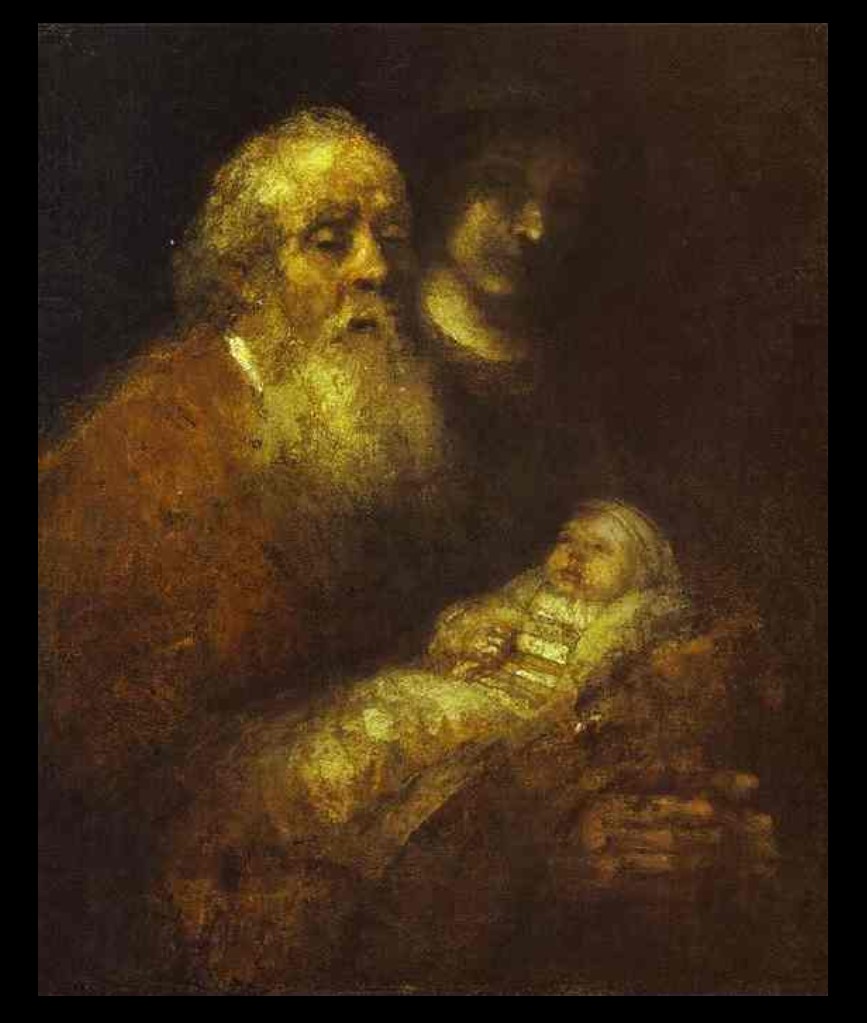
The second version from 1669, one of his last paintings reveals a profound change in his approach. “Gone are the crowds looking on. Gone are the columns, and filigree, and architecture. Gone is brilliant beam of light. The crisp brushwork of a steady young hand has given way to the shaky, mottled, impressions of the old master’s touch” (The Rabbit Room). The scene is pared down to its essence: Simeon, the Christ child, and a shadowed figure, all enveloped in warmth and simplicity.
This evolution in style—from ornate detail to profound simplicity—mirrors Rembrandt’s own journey. At age 63, he is no longer concerned about impressing the crowd and possible patrons and is more intent on conveying essential human emotion with spiritual truth. We see an old man beholding his Saviour. Rembrandt’s mature work delivers warmth over detail, individuals over a crowd, and simplicity over grandeur. Perhaps a good way for us to approach the Christmas season?
Simeon’s presence in the temple is a pivotal moment in the Gospel of Luke and holds deep significance in the Christmas narrative. In Luke 2, he is described as a devout and righteous man who had been promised by God that he would not die before seeing the Messiah. When Mary and Joseph bring the infant Jesus to the temple, Simeon recognizes Jesus as the fulfillment of God’s promise. Taking the child in his arms, he utters his ‘Nunc Dimittis’ (Song of Simeon): “Sovereign Lord, as you have promised, you may now dismiss your servant in peace. For my eyes have seen your salvation, which you have prepared in the sight of all nations; a light for revelation…”
Simeon’s belief in the young Messiah takes away his fear of death and helps him to finish with joy. His words echo the universal promise of Christmas: that Christ’s birth brings certain hope, salvation, and peace to the world. Simeon stands as a symbol of faithful waiting and joyful fulfillment, embodying both the anticipation the defines Advent and the elation of Christmas. By focusing on Simeon’s intimate moment with the Christ child, Rembrandt invites us to reflect on the fulfillment and peace in Jesus, reminding us that the heart of Christmas is found not in grandeur, but in the patient realization of hope fulfilled.