
COLUMN: Grey Matters – The calendar, life’s soundtrack
Advertisement
“One of the things that’s really helped me to the faith is this alternative sense of time that has been built into my very being from following the church calendar, and this rhythm of seasons through the year has made me more attentive to the stories of faith and taken me to places.” Diane Butler Bass
I’m not one for new years’ resolutions, but Diane Butler Bass in her recent interview with ‘The Bible for Normal People’ podcast has me inspired. Like many of you I have followed the Church calendar at points but have never followed it closely like our Western Roman calendar. I’m getting tired of the Roman calendar. Each month is named after Roman emperors, Roman numbers or Roman festivals. It is based on domineering imperialism and transactional economics, and our modern calendar still follows this model. Besides commercializing the sacred seasons of Easter and Christmas, we now even have days of greed (‘Black Friday’ and ‘Cyber Monday’). The calendar sets up the narrative structure of our life. We are not always conscious of it, which may make it even more influential.
The Church calendar, also known as the liturgical year, is a system used by many Christian denominations and a growing number of spiritually minded individuals at home to mark and celebrate significant events in the life of Jesus and the history of the Church. This calendar structures the year into seasons, feasts, and periods of reflection, guiding worship, teaching, and the spiritual life.
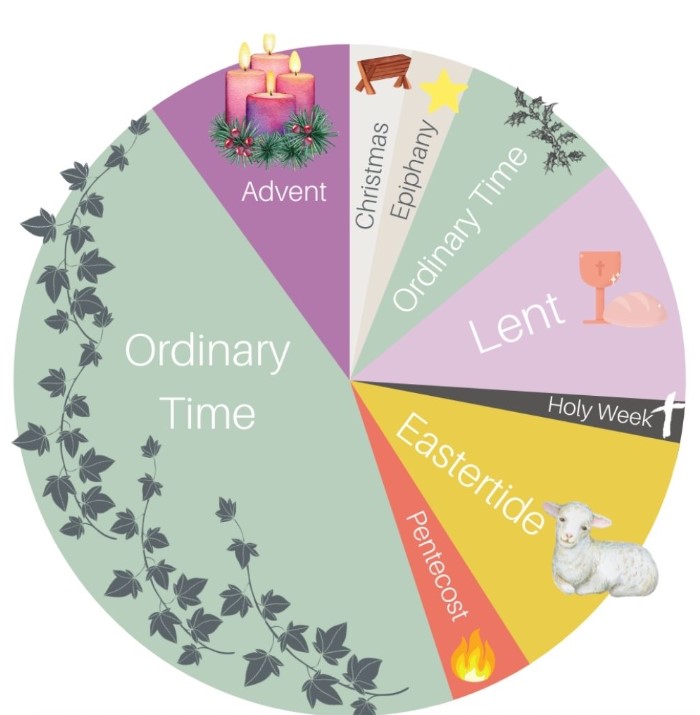
The Church calendar is divided into several key seasons, each with its own themes, colours, and traditions. While there are variations among denominations, the following outline represents the basic structure observed by most Western Christian traditions:
• Advent: Begins the Church year and includes four Sundays before Christmas. It is a time of anticipation and preparation for the coming of Christ with the weekly themes of hope, peace, joy and love.
• Christmas: Celebrates the birth of Jesus Christ, starting on Dec. 25 and lasting twelve days (ending with Epiphany). Yes, the twelve days of Christmas are after Dec. 25!
• Epiphany: Commemorates the revelation of Christ to all humanity, often associated with the visit of the Magi.
• Ordinary Time (First Part): A period of growth and learning, focusing on the teachings and ministry of Jesus.
• Lent: A season of repentance and reflection, lasting forty days, leading up to Easter. Begins with Ash Wednesday.
• Holy Week: The final week of Lent, including Palm Sunday, Maundy Thursday, Good Friday, and Holy Saturday, marking the passion and death of Christ.
• Easter: Celebrates the resurrection of Jesus, beginning on Easter Sunday and lasting fifty days until Pentecost. Considered the culmination of the calendar, it should be noted that there is much more to come in the calendar that includes us!
• Pentecost: Marks the coming of the Holy Spirit and the birth of the Church.
• Ordinary Time (Second Part): Continues until the end of the liturgical year, focusing on contemplating and living out the sacred to our edge of the world. This part is the largest and reveals that contemporary people are an active part of the calendar year, that the Church calendar is not just about looking at events from the past, but about bringing their relevancy into our present.
This ancient calendar remains significant in contemporary life for several reasons:
1. Spiritual rhythm and focus: The calendar provides a structured rhythm to the year, helping individuals and communities focus on different aspects of faith, such as anticipation, repentance, hospitality.
2. Connection to tradition: Observing the liturgical seasons connects modern believers with centuries of tradition, fostering a sense of unity and continuity across time and cultures beyond our own.
3. Teaching and formation: The calendar serves as a tool for teaching the core stories and doctrines, shaping the spiritual growth of children and adults alike.
4. Community and identity: Shared observance of feasts and seasons can strengthen community bonds and individual well-being.
5. Countercultural witness: In a world dominated by sports and commercial calendars, this calendar offers a way of marking time centred on spiritual realities and values instead of transactional capitalism.
Join me in going deeper with this ancient way of knowing Christ and following his sacred teachings throughout the year. Get a resource book, find a weekly podcast series or a church that practices the liturgical calendar as a community. I’ll let you know how it goes for me this year!