
COLUMN: Carillon Flashback January 10, 2000 – Milking on three farms a treat for Dutch family
Advertisement
Hey there, time traveller!
This article was published 11/01/2026 (188 days ago), so information in it may no longer be current.
Harm Sikennga and his wife Lini did not really plan for their family to have dairy farms in three countries when they contemplated a move to Canada, many years ago. Things have just worked out that way.
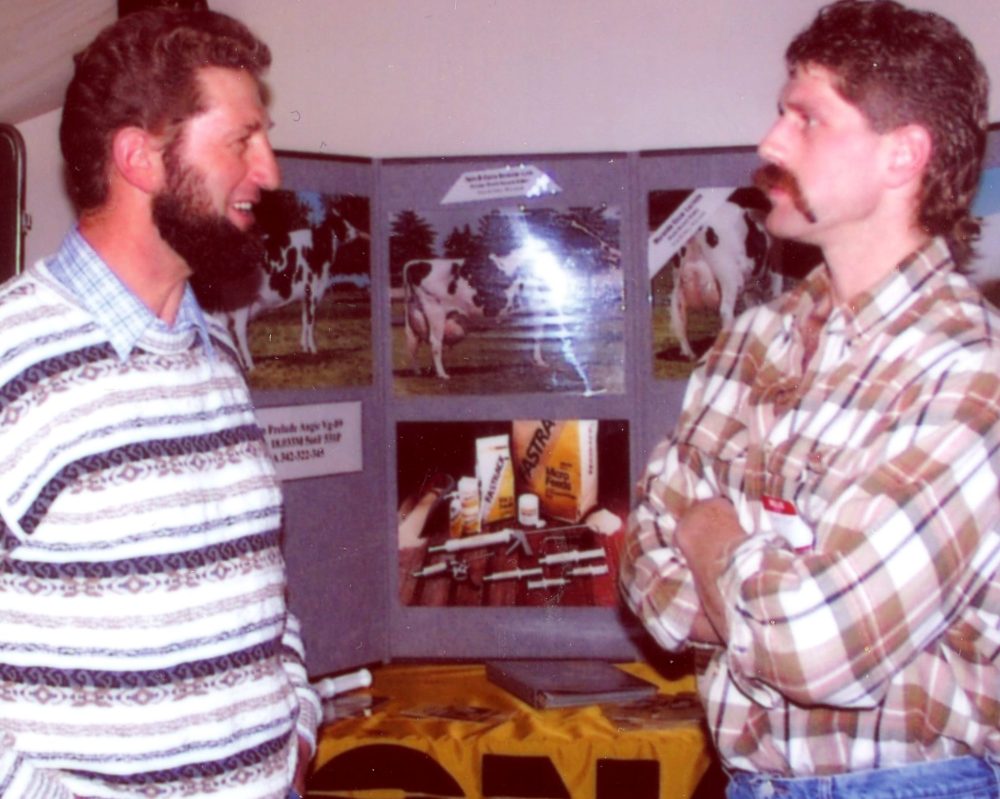
Sikennga told more than 200 dairy producers at the Eastern Manitoba Holstein Club’s Jan. 17 seminar at Friedensfeld Community Centre that dairy farm expansion is a hard cycle to break.
“When milk prices are good, you make so much nice money, you expand. Next time, when there is no money in milk, you must expand so you can pay the bills. It’s hard to get out.”
And farming back in Holland is not what it used to be, Sikennga points out. When he started in 1966, it was a highly regarded occupation, and the government was helping farmers. By the 1990s, farmers were becoming, for the most part, unwanted. Manure regulations have become more and more stringent and the cities are infringing on agriculture land more and more.
When the push came to move and they wanted to come to Canada, the Sikenngas found they were better off to sell part of their land and borrow against the rest to buy a dairy in Canada. The Holland farm is presently being run by a herd manager.
Their farm at Whitemouth is now home for the Sikenngas, who firmly believe the supply management system in Canada is the best route for the milk producer.
The Sikenngas first looked for a farm in Canada in 1979, but in 1980 milk prices in Holland suddenly collapsed and so did their plans to move. The introduction of a quota system improved the value of their Holland farm and seven years later, they were ready to reconsider, Sikennga said.
His wife’s main concern was they get a good house in Canada, Sikennga chuckles.
Her reasoning was that if the barn was no good, they would build something, but if the house was not good, she would never get a new house.
By 1996, the herd at Whitemouth had grown to 180 cows, but his son was getting restless and wanted to try something bigger, on his own, possibly in the United States.
Two years later, they struck a deal on land in Nebraska and started putting together the financing for a 700-cow freestall barn
While the Nebraska dairy started off well, it needs $12.50 a hundredweight for milk to break even, Sikennga said.
The first year, milk prices were over $13 and went up to $17.80 for a while, he noted. That got them thinking of expansion again, but in the spring of 1999, the price was $9.37 a hundredweight. (Milk weighs 8.6 pounds per American gallon, giving the dairy producer a return of approximately 80 cents per gallon. At the time, price of milk in American grocery stores was approximately $2.80 per gallon.)
Without supply management, a producer carrying the same debt load in the United States has to have four to five times as many cows as in Manitoba to ride out the highs and lows, Sikennga explained.
The farm pays its 11 employees between $8 and $10 per hour and makes housing available if the worker wants it, he said. When they started, the workers were all Americans, but most disappeared after a while, because they did not like milking. Today, all the workers are Mexican.
“Without Mexican workers, agriculture in the States would be in big trouble.”
Asked where he planned to retire when the time came, Sikkenga said Canada was the obvious choice.
In all other parts of the world, farmland is being taken back for nature. Here, there is nature all around and it needs to be advertised more, he said.
“This is the greatest place in the world.”
Coming from a country which would “fit into Lake Winnipeg with room to go around it with a boat,” Sikennga is enjoying the wide, open spaces.