
Daycare shortage hits home for Niverville mom
Advertisement
Hey there, time traveller!
This article was published 14/01/2026 (223 days ago), so information in it may no longer be current.
Dakota Johnston didn’t expect she would have to search for a daycare before she had her baby.
The 21-year-old single mother from Niverville began hunting for a spot when she was three months pregnant in April 2025. She called dozens of daycares, signing up for at least 30 wait lists in and around Niverville.
Johnston got the same answer with each call: there’s no room and she’d have to wait up to four years for a spot.
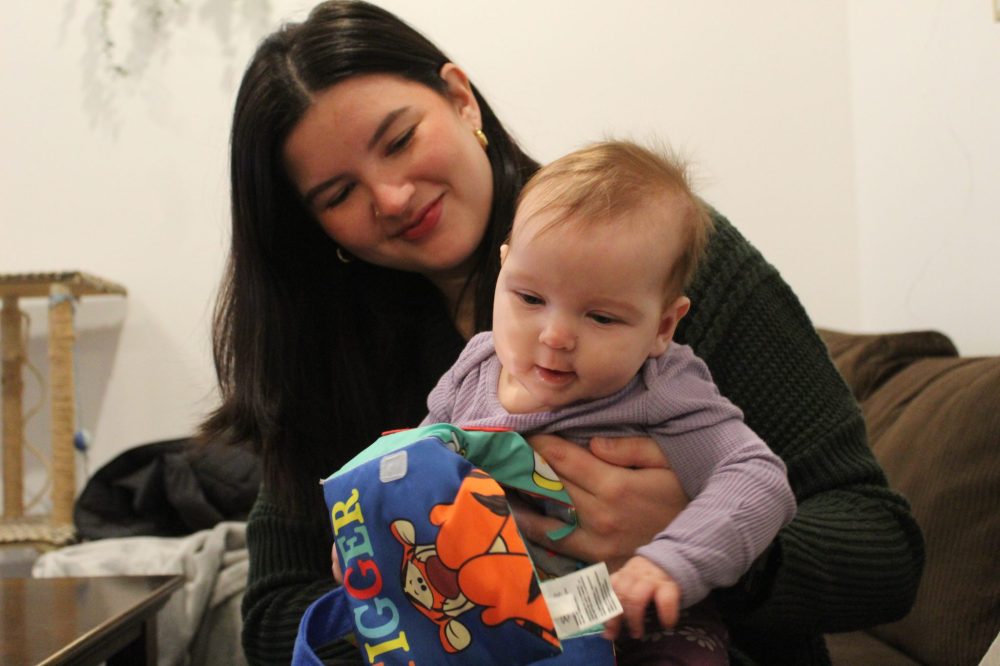
“I thought that was absolutely insane. Like, three to four years by that time she’s in school,” she told The Carillon. “As a single mother, there’s not a lot of support.”
Johnston was eventually able to find daycare in December for her now four-month-old daughter Raelynn in Rosenort, 33 kilometres southwest of Niverville, but the drive is difficult when trying to balance being a post-secondary student at the same time. She’s currently unemployed while pursuing a business administration diploma from RRC Polytech and relies on scholarship and student loans for income.
Some days, she would drop her daughter off at daycare, drive back to Winnipeg for classes, drive back to Rosenort to pick up her daughter and then return home to Niverville.
While securing a spot for Raelynn has given her some security, the travel distance and precarious financial situation has made life stressful, she said.
“I had a lot of breakdowns when my kid was asleep, and I’m like, I don’t know how I’m going to make this work,” Johnston said.
Johnston isn’t alone. Across Manitoba, wait lists for childcare have surged as available spots and the necessary staff haven’t kept up with demand. To address this, the Town of Niverville’s council launched a daycare strategy last month, promising to add a minimum of 300 daycare spaces by 2030.
The four-point plan includes working with the province on licensing requirements, expanding training opportunities for daycare providers, working with developers to provide land and space in buildings for daycares and a $2,000 grant to start a licensed daycare in Niverville, first launched in 2022. Besides an announcement on the Niverville website, a town spokesperson said no formal documents have been created yet.
Mayor Myron Dyck said businesses and community members have told council that child care availability is one of the main deciding factors when moving to Niverville.
“Council wanted to try and do something to ensure that people moving to Niverville for whatever reason would have the workforce that is needed to be able to, you know, continue to build their businesses,” he said in a December interview.
He said recruiting, training and retaining staff is crucial to growing childcare in the town. The council is open to partnering with post-secondary institutions and other municipalities to meet the need, Dyck said.
Rhonda Kenning, executive director for Growing Minds, said it’s “very disheartening” for parents to search and find no available daycare spaces in smaller communities. The non-profit daycare centre is Niverville’s only licensed childcare facility, with some smaller licensed home-based daycares operating in town.
“We’re getting phone calls day after day. People are desperate in this community,” she said. “There’s not a lot of options for them.”
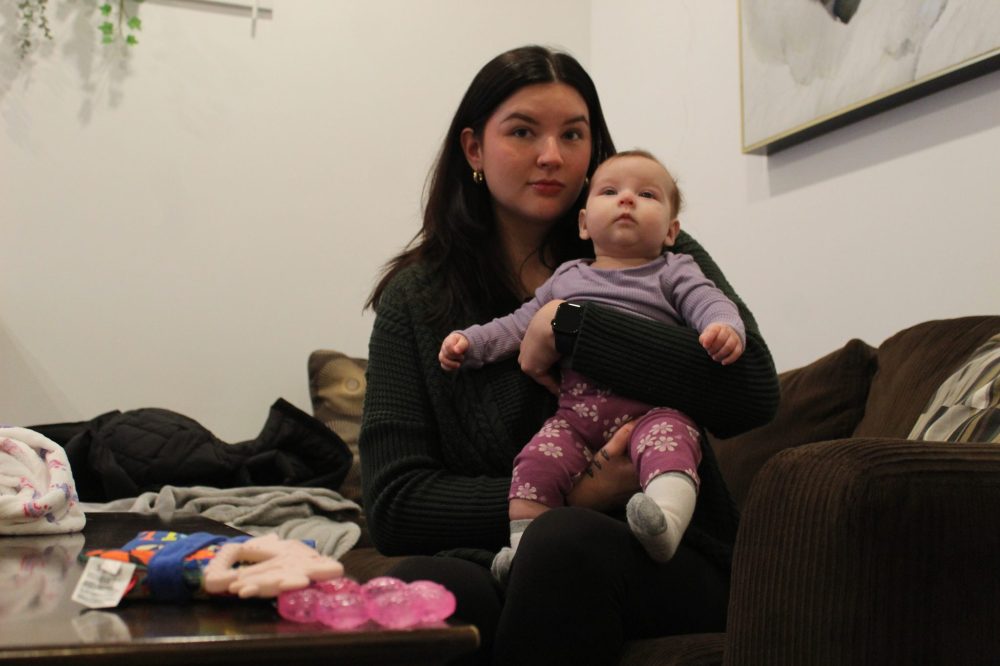
Kenning said the facility closed its wait list for preschool and school age children six months ago. When it closed, there were 800 children on the list, she said. Growing Minds’ max capacity is 203 children.
Niverville isn’t alone in having no spaces. Steinbach has five child care centres, all with no vacancy, according to the province’s child care database. All centres in Lorette, La Broquerie and Ils des Chene also have no room.
Child who are still infants are the most likely age to find a spot in childcare, said Kenning. That age group is the only wait list that’s still active, but only the centre can only have 44 infants at a time, she noted.
“It is shocking to most families when we phone and tell them ‘You’re never going to see a preschool spot,’” she said.
She said the town’s already strained childcare system may also be turning potential residents away. Niverville was the fastest growing municipality in Manitoba, with its population jumping by 29 percent from 2016 to 2021, according to Statistics Canada’s 2021 census.
“We’ve had calls in the past where people call and say they’re wanting to move to Niverville, but they can’t relocate unless they’re guaranteed childcare,” she said.
Kenning welcomes Niverville’s council strategy for daycare spaces and credits them for “thinking outside of the box,” but said simply adding more spaces won’t solve the shortages. She said there’s been longstanding issues when recruiting and hiring early childhood educators for rural communities, which have limited the centre’s ability to expand.
The province and federal governments attempted to address this issue in May last year when it announced ECEs would get a raise of up to $5 more per hour. Manitoba has also created $5,000 recruitment grants for ECEs who left the industry and decide to return.
While those measures are helpful, Kenning said the impact hasn’t fully been felt yet at a local level. There are still many challenges in combating the perception that early childhood education isn’t a career but rather a stop-over job for young women, she said.
Being rural doesn’t help either when trying to get applicants, Kenning added, pointing to many candidates relying on public transportation or not driving at all.
The long wait lists in Niverville and other communities are a symptom of the impacts from mandated $10-a-day childcare, said Manitoba Child Care Association executive director Jodie Kehl. The 2021 national agreement triggered more people accessing childcare in Manitoba, with many ending up frustrated because there weren’t enough spaces to meet the demand, she said.
She sees Niverville’s daycare strategy “checking a lot of the right boxes,” despite early childhood education falling under provincial jurisdiction. Building the ECE training capacity within municipalities is key to stabilizing the rural sector, but that won’t happen quickly, Kehl said.

Another contributor to delayed impact of provincial efforts is non-profit childcare centres are the main way spaces are being added rather than private firms, she said. While the non-profit system is beneficial long-term when providing high quality care, it takes longer to make decisions and growth is less rapid compared to its for-profit counterparts, Kehl noted.
“It’s going to take time. And that doesn’t help a mom or a dad or a family that needs space now, but it will help develop a system that will be entrenched into our communities for years to come,” she said.
Since the COVID-19 pandemic, offering affordable and available child care has proved vital for Manitoba’s economic growth because it allows parents to pursue post-secondary education and their careers, Kehl said.
“We’ve learned that childcare is not my problem, it’s not your problem, it’s all of our problems,” she said.
Manitoba’s Education and Early Childhood Education Minister Tracey Schmidt said she empathizes with the struggles parents go through when finding child care.
“I’m a mom myself. I’ve faced the challenge of struggling to find childcare. I’ve had the situation where I’ve had multiple kids in different centers, having to do that travel,” she said.
She said the province is looking to partner with school divisions, rural municipalities and non-profits to grow childcare spaces. Her department has been in close contact with Niverville’s mayor and are exploring options to address the need for space, but no updates can be given yet, said Schmidt.
“We are so grateful for communities like Niverville that are doing that type of proactive planning, and we absolutely welcome, and look forward to working with them through that plan,” she said.