
COLUMN: Carillon Flashback January 15, 1970 – Future looking bleak for St Pierre mink rancher
Advertisement
Hey there, time traveller!
This article was published 07/02/2026 (200 days ago), so information in it may no longer be current.
Imitation furs and high labour and feed costs are spelling doom for more than one of the remaining mink ranchers in Manitoba. A century after Manitoba became a province, the fur trade here seems to be winding down.
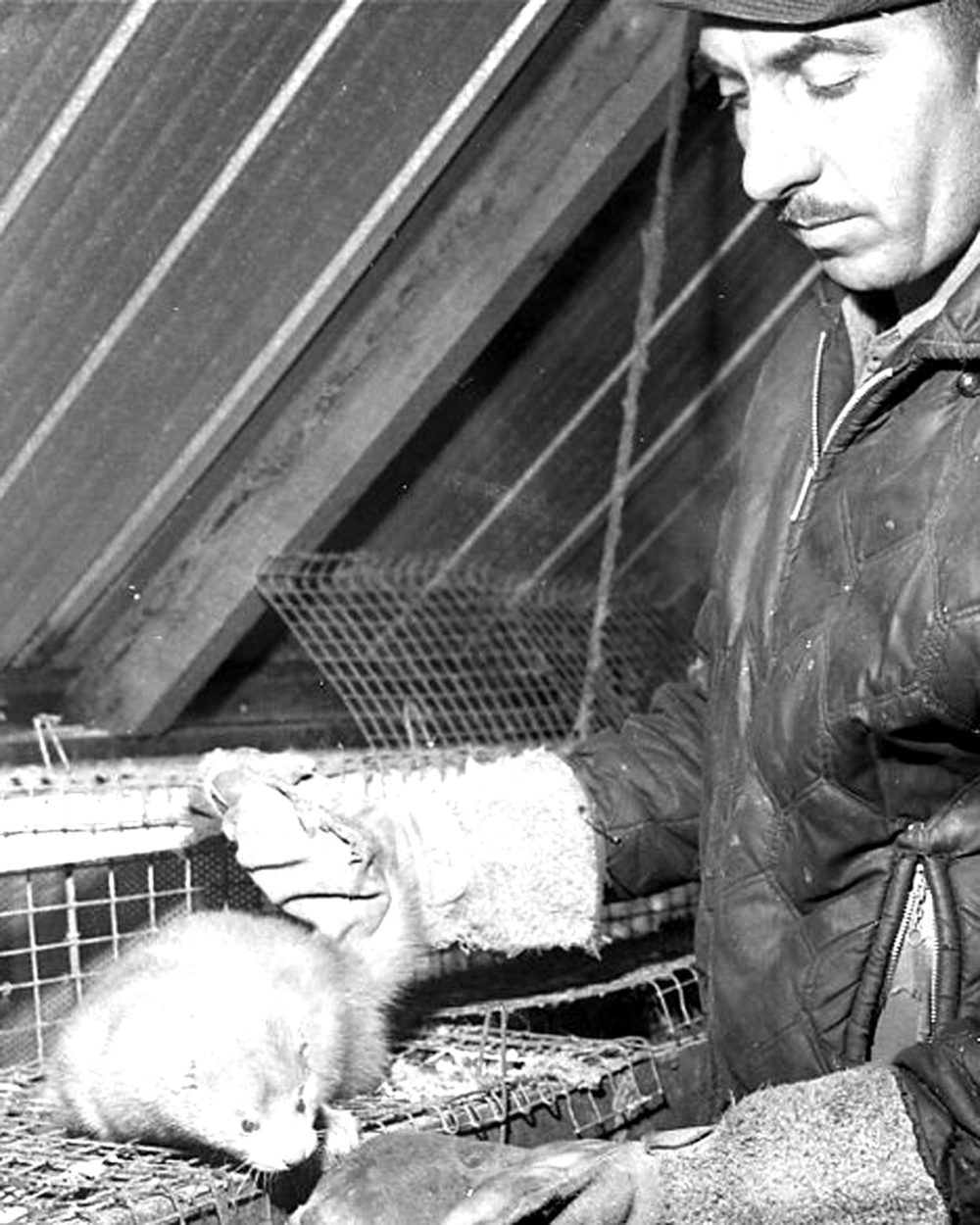
That, at least, is the opinion of Leonard Fuchs, who manages the St Pierre operation for St Pierre Fur Bearers, one of the province’s largest mink-raising operations with ranches at St Pierre and Carman.
Fuchs feels the future for mink ranchers is singularly unpromising and most mink ranchers that began their business within the last five years are now out of business or operating at a deficit.
“Artificial furs are really hurting the fur-raising business. They are so much cheaper and it’s becoming difficult to distinguish between real and some artificial furs.”
Another factor is the low market price for mink pelts. Fuchs said some of the finest pelts are only worth just over $20 and many ranchers are receiving $10, or even less, for lower grades.
The mink ranch manager estimated that a male mink could not be raised for under $9. St Pierre Fur Bearers produce all their own feed at a large plant in St Pierre and also supply to mink ranchers as far north as Flin Flon.
The list of ingredients going into mink feed makes bad reading for people with weak stomachs. The list includes fish heads, chicken hearts and rabbit and beaver carcasses. All these ingredients are frozen and ground up, mixed with water and then frozen again. The result is a pasty material resembling brown, granular sawdust.
Baby mink (kits) are only about an inch-and-a-half in length when born, but their growth rate is phenomenal and within 42 days they are as long as their mother, though not as heavy.
The January mink population at the St Pierre ranch is just under 500 animals, with 420 females and 75 males. All the females will be bred in a two-week period beginning in early March. All the males at the ranch are kept strictly for breeding purposes, while the females are pelted.
The 500 mink at the St Pierre ranch could easily multiply to 2,000 after the young are born and it is that number that will be pelted in fall.
After the pelts are dried, they are shipped by air freight to the fur markets in Montreal.
The mink, for all its sleek and gentle appearance, is a vicious animal and cannot be handled without thick, protective gloves. The average female mink will weigh upwards from three pounds, with males being slightly larger. One male at the St Pierre ranch last year weighed in at a whopping 12 pounds and measured 46 inches long.
St Pierre Fur Bearers, a subsidiary of Couture Fur Farms, is one of only a few Manitoba ranches that also specializes in raising top grade breeding stock, which is in great demand by smaller fur farmers. The crossing of various strains produces exotic color varieties, like pink and lavender, which are highly prized at fur auctions.
The first pink mink pelts were sold for $550 apiece, but the price is now well down, with the increasing number of pink and lavender pelts available.
The exorbitant price for a full-length, matched-mink coat is understandable, considering that up to 50 pelts, costing $20 each, may be used in making a single coat. Styling costs, middlemen and profit margins can further increase the price by 100 percent or more.
Fuchs says the unfortunate thing for the producer is that imitation coats have flooded the market and greatly reduced the demand for mink coats.
“Mink ranching is simply becoming economically unfeasible.”
– with files from Peter Dyck