
Ewasko’s ice shining on Olympic stage
Advertisement
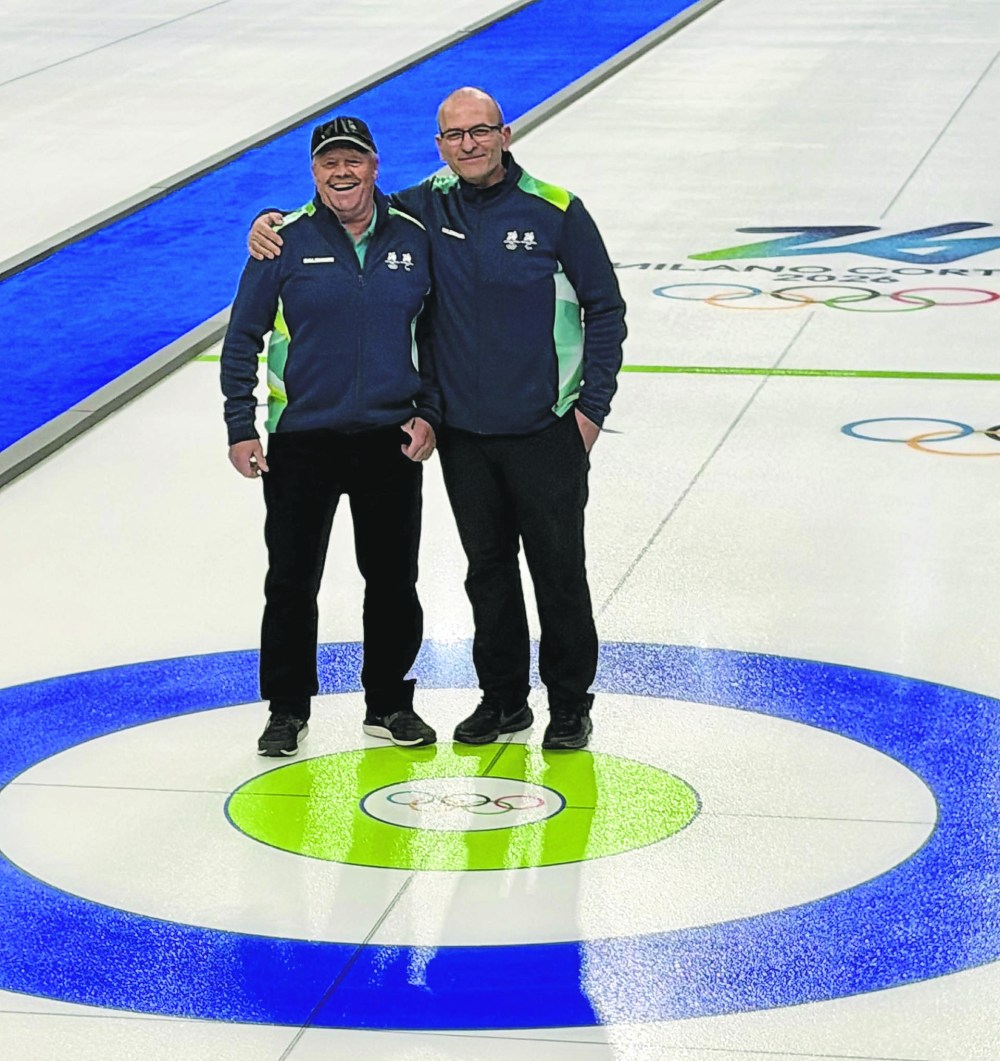
Greg Ewasko felt a rush of emotions Wednesday evening as the first rocks slid down the pebbled ice he helped create, officially ushering in the start of the 2026 Winter Olympics.
Pride. Relief. A brief moment of horror when a power outage plunged the venue into darkness. And, beneath it all, a deep sadness over what could have — and should have — been.
The Oakbank product had spent years imagining this day alongside his wife, Monique. Together, they mapped out what their first Olympic Games would look like. But not long after Ewasko received the call he’d dreamed of in the fall of 2023 — the World Curling Federation wanted him as an ice maker — Monique died of cancer.

“We didn’t really get to celebrate it,” he told the Winnipeg Free Press, his voice cracking.
And so he is here, alone and with a heavy heart, but one also filled with joy. Ewasko can officially say he is an Olympian.
“Top of the mountain, basically,” is how the 49-year-old describes the assignment. “You keep your head down, you work hard, and good things happen, right?”
Ewasko has been in Italy since Jan. 23, putting in long hours day and night to get the curling venue in Cortina d’Ampezzo — about 400 kilometres northeast of Milan — ready for high-stakes action.
The mixed doubles event began Wednesday, even though the opening ceremonies don’t take place until Friday night.
“Any time the first game starts in a competition I hold my breath until I see the first rock go down the ice. If I see it curl the way that I want it to curl then then I start testing for speed,” said Ewasko.
And his initial verdict?
“We had one of one out of the two,” he said. “So (Thursday) we’ll work on the speed part and still keep the same kind of curl. So little, little tweaks here and there, and we’ll get it dialed in.”
The eight-nation mixed doubles event wrapped up Feb. 10 with the bronze and gold medal games. That will be followed immediately by the men’s and women’s competitions, running Feb. 11–22.
Though he cheers for the Maple Leaf, Ewasko does so quietly while on the job. You won’t see him high-fiving the mixed team of Brett Gallant and Jocelyn Peterman Gallant or members of Rachel Homan’s or Brad Jacobs’ teams during or after games. Still, he appreciates the skill and finesse on display and especially enjoys hearing positive feedback from players.
“That’s always really good. A feather in the hat,” he said.
Ewasko also marvels at the tight-knit curling community in Manitoba, which showed up in force for Monique’s funeral. Among those in attendance were Jones, Jeff Stoughton, and Lawes with her entire team.
“It meant a lot,” he said, fighting back tears.

There was a time Ewasko believed he might reach the sport’s biggest stage as a competitor.
“All the way through high school, all I did was curl,” he said.
“But eventually the love of ice making took over from the love of actually playing the sport. Now, I only play like a few times a year with a couple of buddies. By the time I get my slide back, next thing you know we’re into the drinking event.”
Ewasko had a mentor most could only dream of: legendary ice maker Hans Wüthrich. Born in Switzerland, Wüthrich immigrated to Canada at 19, settling in Manitoba and becoming a fixture at major curling events such as Briers, Scotties, world championships and eventually the Olympics.
“I’d like to say I’m kind of following in his shoes,” said Ewasko.
“Studying under him, going to countless events, volunteering, getting in his ear, kind of getting in his face. And the next thing you know, I’m doing Curl Manitoba stuff, then over the years from Curling Canada events.”
A major opportunity arrived during the COVID-19 pandemic, when Ewasko was tasked with making ice inside the so-called bubble for what became a curling marathon: the Scotties, the Brier, and the women’s and men’s world championships.
“A long four months,” he said.
He got a taste of Italy last April at the world juniors, essentially an Olympic test event that helped iron out any kinks ahead of these Games.
“Everything went really well. We didn’t have to do too much tweaking. They did bring in some more humidifers, along with a new ice plant. So that’s all up and running and going really well, except for our little power outage,” said Ewasko.
Fortunately, the backup generators kicked in almost immediately on Wednesday and the brief blackout could quickly be laughed off by all involved.
“I was like, ‘Oh boy, oh boy. OK, phew, everything is coming back up,’” he said.
Ewasko believes he’s prepared for whatever curveballs may come next. His goal is simple: ensure the ice on the final day is as good as, or better than, it was on Day 1.
“It’s all about managing and consistency,” he said. “There are so many games, so many days. If we can do that as a team, we’ve got our own gold medal.”
He’ll leave Italy on Feb. 23 — exactly 30 days after arriving — and head straight to St. John’s to prepare the ice for this year’s Brier. His two sons, 21 and 19, plan to join him in Newfoundland.
He missed his oldest boy’s birthday last Saturday, but being at the Olympics is a pretty good excuse.
“I promised I’d make it up to him,” Ewasko said. “I’ve never been to Vegas. He’s never been to Vegas. So in April we’re planning to jump on a plane and go for a few days.”
He also hopes this isn’t his final Olympic chapter — not just professionally, but personally. When Monique was battling a rare form of sarcoma, the couple had mapped out what a future Games might look like for them beyond his obvious work-related responsibilities at the curling rink.
“The biggest thing was we were going to take in figure skating,” Ewasko said. “She always watched it and loved it, and then she got me hooked.”
After her death, he hoped to attend a competition in her honour. But that isn’t possible here in Italy, with figure skating taking place in Milan while curling is in Cortina at the same time. Typically, these would be happening in the same city.
“Maybe if I’m involved in the next Olympics,” he said, “I can make that dream come true.”