
Racially motivated attack on 11-year-old boy at Hanover school leaves victim with serious injuries
Advertisement
Hey there, time traveller!
This article was published 19/02/2026 (247 days ago), so information in it may no longer be current.
The vicious assault of an 11-year-old Indigenous boy last week at a Steinbach school is being called a racially motivated attack and calls have been made for Hanover School Division to take Indigenous students’ safety more seriously.
Theo Osborne, who attends Stonybrook Middle School, was assaulted during lunch hour on Feb. 11 by two boys from his class. According to his mother, Melissa Johnson, the boys had been bullying him since December 2025. She said the boys would body shame Theo and make comments about how “disgusting” his hair was and how he “looked like a girl.” They also threatened to post racial comments on his social media. She said Theo would defend himself by asking the boys to leave him alone and to stop being racist.
On Feb. 11, the bullying became physical when one of the two boys came up to Theo and threatened to pull out his hair if he didn’t cut it. The two got into a shoving match which ended with the boy leaving. Later, the boy came back with another boy and the two started yelling racial insults at Theo about his hair and calling Indigenous people “gross,” “disgusting,” and saying their rituals were really “f-d up,” according to Johnson. Theo ended up on the ground and one of the boys got on top of him and started hitting him in the head.
“It wasn’t just a punch,” said Johnson. “This kid was sitting on top of my son and hammer fisting him right in the mouth and in the eye. So, I feel that something needs to be done with these boys. This is serious.”
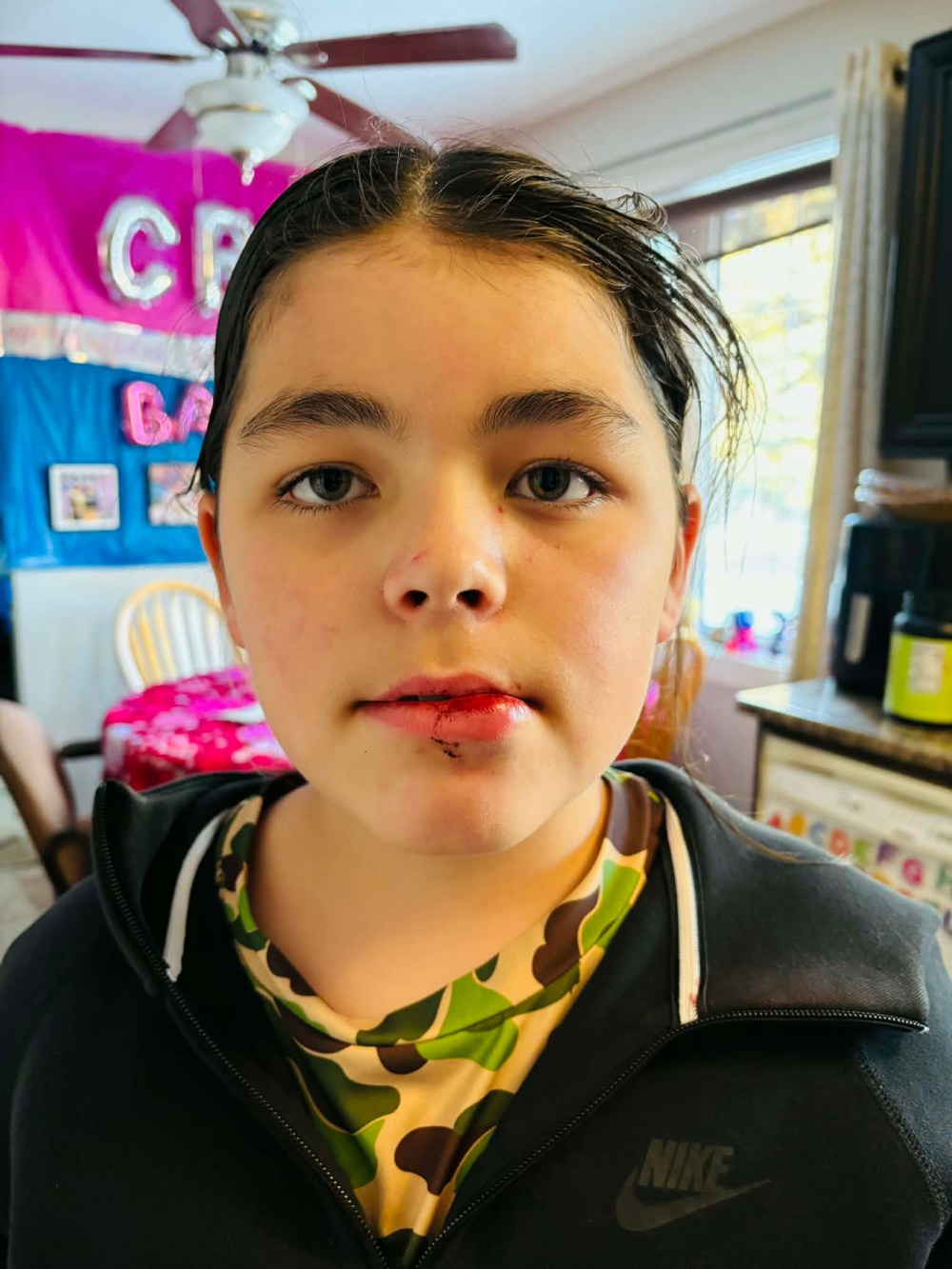
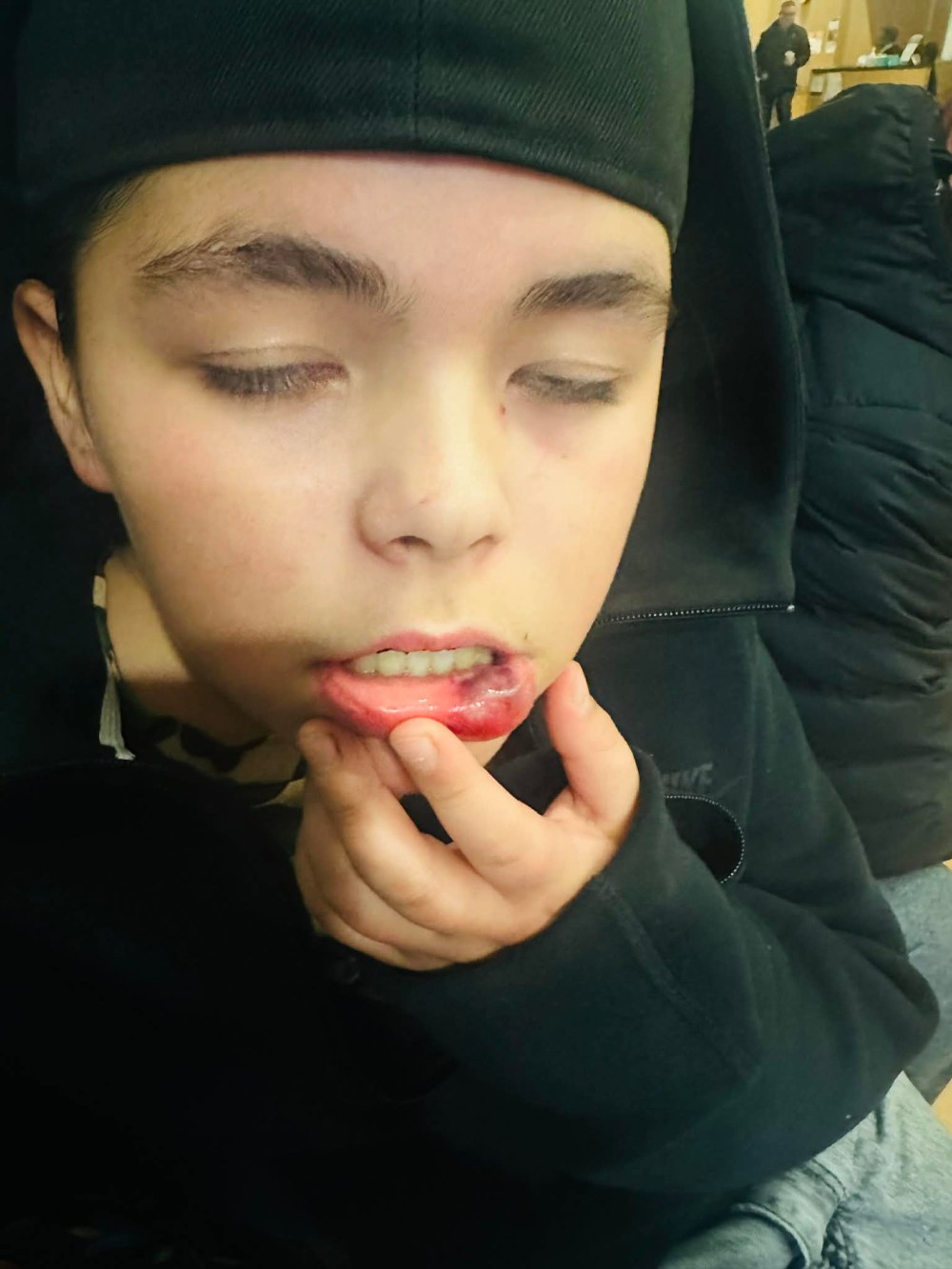
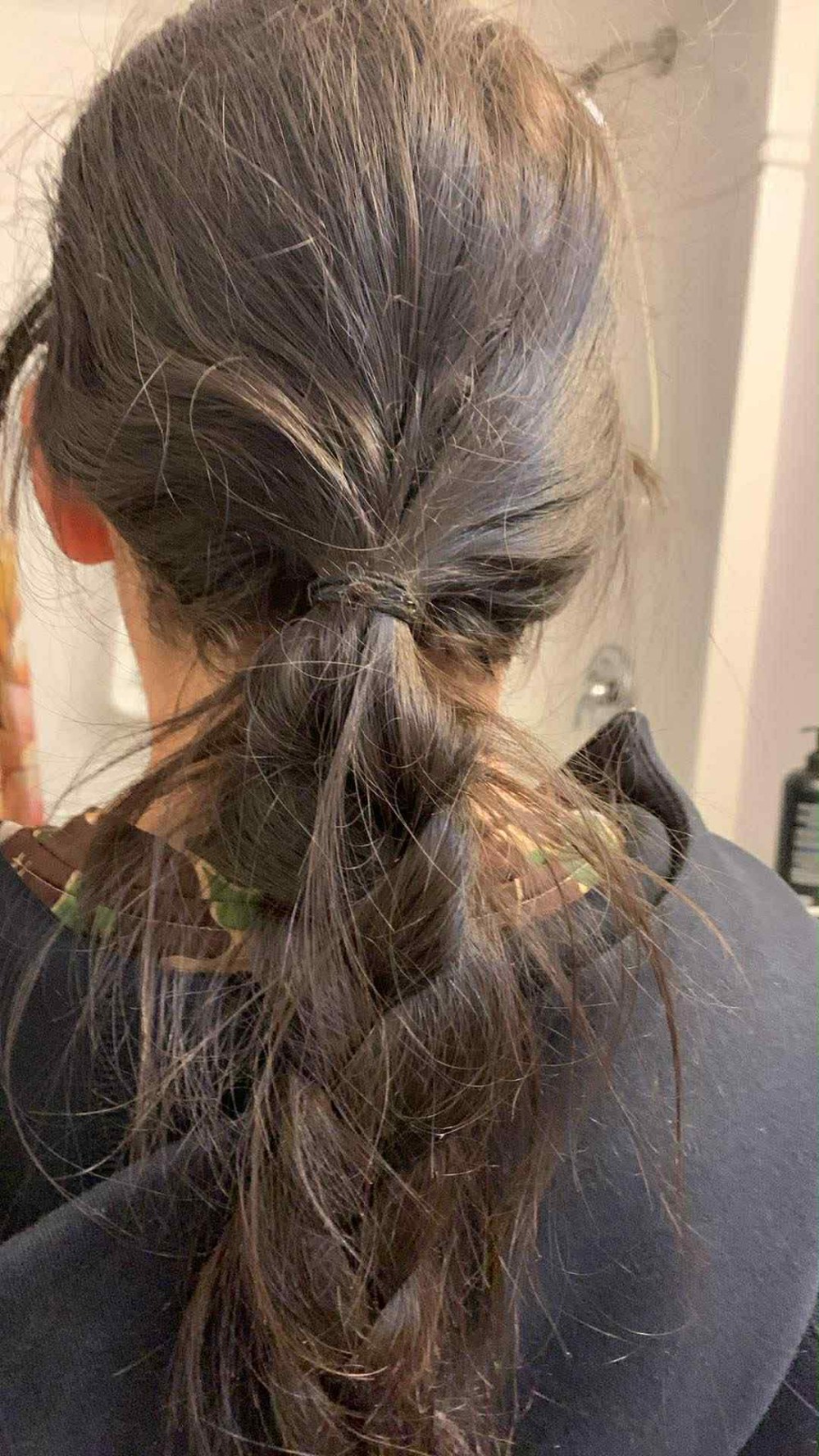
Theo’s hair had been pulled out during the attack, he suffered a concussion, the loss of a tooth, and received puncture wounds and scratches to his face.
“They’re 11 years old. What’s going to happen when they’re in high school? Like, how much more (violent) can you get when you’re already this violent at age 11?” said Johnson.
Johnson took her son to the ER that day and later went to the RCMP to report the assault. An RCMP spokesperson said the matter is not considered a hate crime based on what was reported and that charges cannot be laid as the boy who attacked Theo is under the age of 12, which is out of the scope of the Youth Criminal Justice Act.
Johnson was told the boy who pushed Theo was suspended for three days and the one who caused his injuries was given a five-day suspension, but she said in reality the boys only got two-day suspensions, one of which was spent in the school office. She said one of the boys kept leaving the office and coming into Theo’s classroom which made him feel unsafe.
“I just don’t think that a light little tap on the hand of a two-day suspension doesn’t really align with what actually happened,” said Bambi Bertholet, spokesperson for Mino Odewin, a local Indigenous group that issued a call to action requesting the school division conduct an investigation into the assault and implement measures for Theo’s safety.
On Tuesday, Johnson met with the school principal and she said she was not happy with the meeting. When she asked the principal why there was only a two-day suspension she said she wasn’t given a reason. She said the boy who assaulted Theo has been removed from Theo’s class, but the boy who started the bullying incident is still in his classroom.
“I want the other boy removed too…They said that they need to do more investigating (before they pull him out), and they’ll let me know when they find out what they’re going to do,” said Johnson.
Bertholet, who was with Johnson at the meeting, asked the principal if expulsion was on the table and he replied that it was not.
“I go, okay, what actually constitutes expulsion? Like, how bad does someone have to be assaulted before you’re willing to look at expulsion? And they said, oh, we can’t decide that. That has to be done at a school division level, which I was kind of surprised about.”
According to Bertholet and Johnson, the school had a Violence Threat Risk Assessment (VTRA) meeting with two social workers and a school trustee prior to meeting with them. A VTRA assessment is done with school administrators, police, and mental health professionals on youth who have violent tendencies towards others or themselves.
Bertholet said Johnson has been dealing with racism against her children in the division for a long time.
“Melissa has gone to the teacher, the principal, the school board many times in the past, and it all kind of blows over. So, that’s why I asked the question, like, how bad does someone need to be assaulted before you’re willing to expel someone? Because she’s gone through those proper channels before, and yet the bullying continued and even escalated.”
After the meeting, Johnson sent an email to the education minister detailing her and Theo’s experience regarding racism in the division and the response she got from superintendent Joe Thiessen regarding the assault.
In an email, Thiessen wrote there are Indigenous supports in place in the division, including cultural learning, which can be directed towards Theo.
“But that’s not what I meant when I said that the school needs more Indigenous education. I meant the other students need more Indigenous education, not Theo, because Theo knows a lot about being Indigenous…I meant that the school itself needs to educate the non-Indigenous kids so that they don’t become racist, like how they have been,” she said.
Johnson received a response to her email from the minister’s Indigenous Excellence division.
“I just forwarded (Thiessen’s) email to (the representative), and he said that it was a very generic response, and he said in there that Theo’s safety is the first and main concern, but that really isn’t the case if they only were suspended for two days,” said Johnson.
Johnson is considering taking legal action.
The division issued a statement to The Carillon saying action was taken immediately by Stonybrook to address the situation and that the matter is currently under review, including its lunch-hour supervision practices. The statement also noted trauma supports will be made available to Theo.
“We recognize the broader impact this incident may have on Indigenous students, families, staff, and community members,” read the statement. “We remain committed to ensuring safe and supportive learning environments, and to advancing truth and reconciliation, equity, and safe schools for all.”
Since the attack, Johnson said her son’s spirit has been really diminished. She said he has anxiety and he doesn’t want to go to school because he is worried about what is going to be done to protect him and if the boys will continue to be in his class.
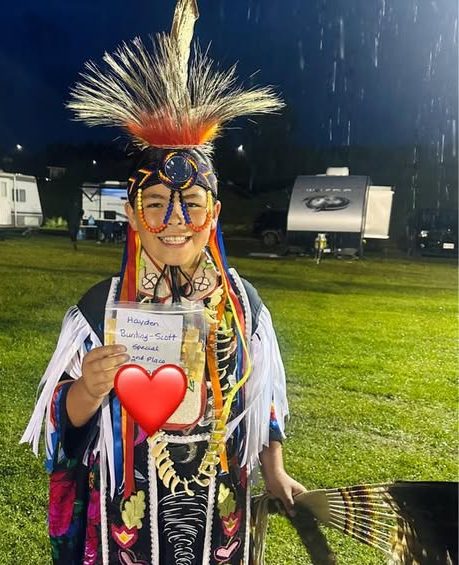
Theo is a traditional grass dancer and he was proud and excited to perform for the first time publicly in Steinbach during Mino Odewin’s Orange Shirt Day last summer. Before his performance he gave a speech welcoming non-Indigenous people to learn about Indigenous culture and history and invited them to attend gatherings and ceremonies.
“I know his culture means everything to him. From the time he wakes up, he wants to smudge, he sings, he dances every day,” said Johnson.
“And he really takes pride in who he is. So, I think that’s why (the bullying) hurt him, and it just really diminished his spirit so much, because he respects everyone’s culture. And I think it’s just so heartbreaking to him that people don’t respect his.”
Johnson, who is a knowledge keeper, wants to see more Indigenous-led education in the school division. She said during Indigenous People’s Day, Theo’s class was taught about the round dance through YouTube and that after the video Theo told her many kids were mocking the singing and disrespecting the dance.
“I think that they need to do more to reach out to the right people, to knowledge keepers, to teach these kids the right way, like, the right truth and the right education about our people, not just learn on YouTube how to do a round dance,” she said.
Theo’s assault is not the first time Indigenous people have felt disrespect in the Hanover School Division.
In April 2024, Grade 9 social studies students at Steinbach Regional Secondary School were given outdated provincial course material that asked in part for students to list two positive effects of residential schools. Many parents and community members were upset about the question, which led to Bertholet contacting the province about the matter and getting the education minister involved. It also prompted the school division to issue an apology.
On May 7, 2024, the school board addressed the issue of inclusivity of LGBTQ and Indigenous students in schools after a parents group sent a letter to the education minister claiming the board was discriminating against these two groups based on policy changes it had made regarding hiring practices of teachers. Then chair Brad Unger read a statement from the board saying children need to feel love and that they are valued and that every child should feel safe in school.
Statistics Canada reports nearly 10 percent of the 17,589 residents in Steinbach identify as Indigenous. The 2021 census reports there are 1,410 Indigenous people in the RM of Hanover. It is unknown how many Indigenous students there are in the division’s student population of about 9,000.