
Southeast fire departments amongst first to roll out new first aid model
Advertisement
Three municipalities in the Southeast are amongst the first to train their firefighters under the new advanced firefighter first aid model that rolled out March 1 across the province.
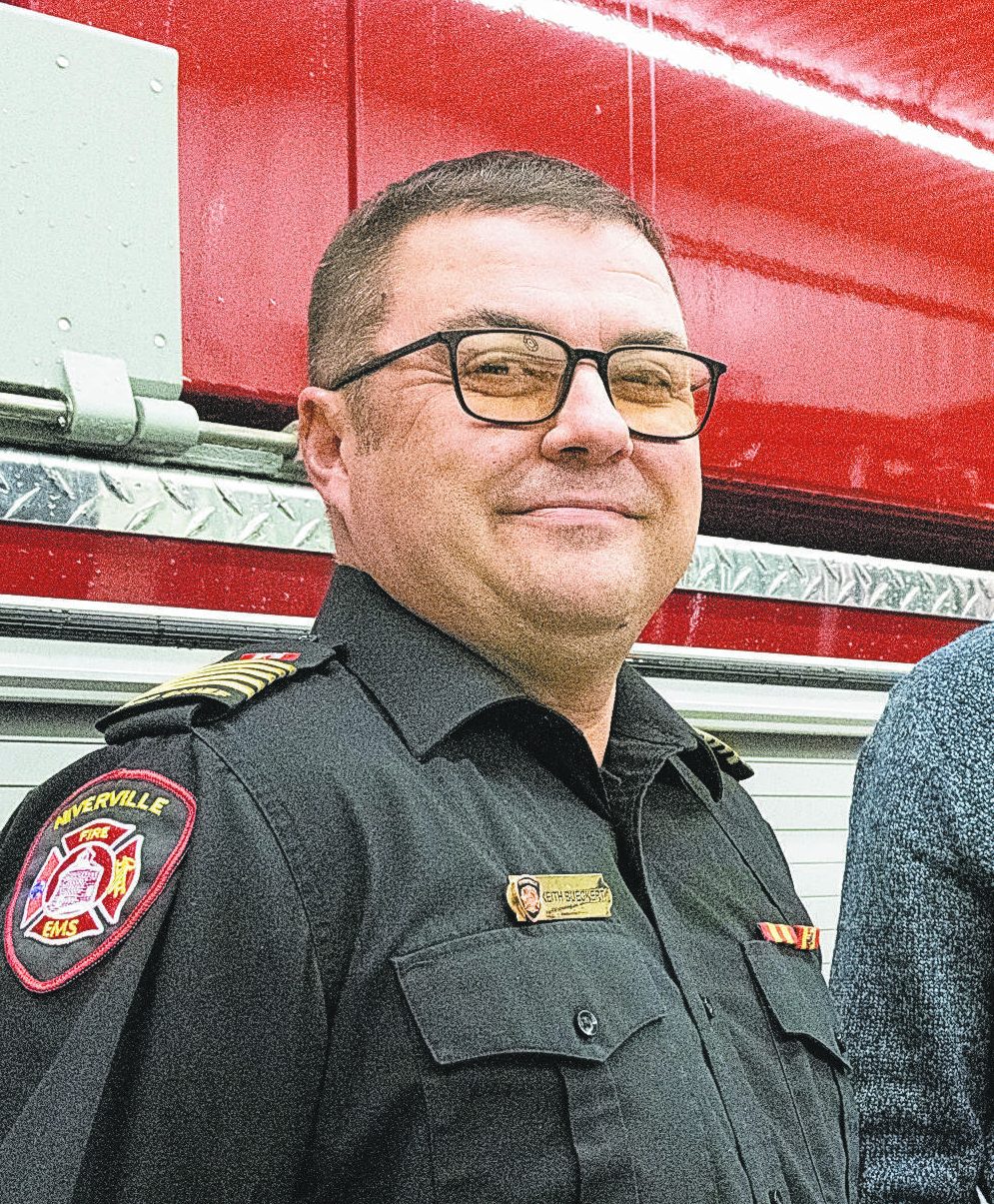
“We had lots of people that were pushing for something to change because they saw that the model that we were currently doing was not sustainable,” said Niverville Fire Chief Keith Bueckert.
Niverville is one of three municipalities that has implemented the new training model, the other two being Dominion City and the RM of Emerson-Franklin.
Work on the AFFA model began about four years ago with a working group consisting of fire chiefs, Shared Health, Association of Manitoba Municipalities, the College of Paramedics of Manitoba (CPM), and the Manitoba licensing and compliance branch, among others.
Previously, firefighters could be trained and licensed as Emergency Medical Responders (EMR) through the CPM, which meant they were able to administer first aid that included administering medication.
Under the new model, firefighters are designated as Firefighter First Responders (FFR) and are trained in AFFA, meaning they can still administer the same level of care as an EMR, but they will now be required to contact the province’s Virtual Emergency Care and Transfer Resource Service (VECTRS) for approval before administering four regulated drugs: epinephrine (for allergies), salbutamol (for asthma), acetylsalicylic acid and glucose both of which are used to treat cardiac issues.
Oxygen and naloxone (for overdoses) are deregulated and can be administered by FFRs without prior approval.
VECTRS is a centralized virtual service that provides support and consultation with first responders. It was launched in 2023 and consists of emergency physicians, advanced care paramedics, and advanced practice respiratory therapists.
Under the EMR model, firefighters are licensed under CPM and have to pay an annual registration fee of $575 and undergo 350 hours of training.
Under the new AFFA model, FFRs will only need between 70 and 120 hours to get trained, but they won’t be licensed by CPM instead they will be licensed directly through the province. The AFFA registration fee is $300 and training would need to be renewed every three years as opposed to annually.
“I feel for what we’re doing in our community, I feel that (those hours) is more than adequate,” said Bueckert.
For rural volunteer firefighters, the cost and time involved in getting licensed as EMRs would have discouraged some from getting advanced first aid training. With reduced hours and a more affordable cost, the new AFFA model will make it more attractive for firefighters to get advanced first aid training.
Bueckert noted from a total of 40 firefighters in his department, only 14 are licensed EMRs, but under the new model he expects the number of advanced first aid trained personnel to grow to 30.
Emerson-Franklin has about 35 firefighters of which eight are licensed as EMRs. Under the new model, the number of advanced first aid trained firefighters should increase to 12 or 20. This gives Emerson Fire Chief Jeff French a sense of relief as there will be more medically trained firefighters answering calls for service.
“I mean, and you’re looking at having no medical service in the future if we keep going down the road we’re going (before). This way, we can keep medical response in the RM of Emerson-Franklin,” said French. “I think for us it was a really good positive change. I can’t speak for all the departments, but for our municipality and the trends that I’m seeing as a chief when I’m doing succession planning, it was almost a must for us to go to this.”
Dominion City Fire Chief Barry Gushuliak, who is in his 51st year as a firefighter, said his department of 20 firefighters have always been licensed as EMRs and the new changes are welcomed.
“It’s good (to see this implemented). I mean, there were a lot of guys that were responders in the past, and now they’re, you know, they can just review their skills and become active again. So no, it’s good,” he said.
Dominion City has amalgamated with Emerson-Franklin fire department in providing service with Gushuliak and French acting as co-chiefs.
On the first day that the new model was rolled out, Emerson-Franklin was the first department to answer a call and French said all went well. And although the call didn’t require the use of VECTRS, he said he doesn’t think accessing the service will hold back the department when administering aid.
“I mean, there’s going to be learning curves and stuff to work out through this process, but I don’t think it’ll be too bad. We just have to make the call, obviously.”