
1946 – 2026 Watching Steinbach grow: Nothing was ever halfway for Carload Frank Reimer
Advertisement
People who used to drive their horses and buggies around the little village of Giroux paid little attention to one little barefooted boy who used to tote groceries around for the general store there.
Peter B. Reimer, after all had seven boys, all just as barefooted as Frank and all busy carrying groceries, feeding chickens, carrying water or hauling wood. Barefooted boys like Frank Reimer were as common as wagon-wheels those days and few youngsters wore shoes in the summer time, except to church on Sunday.
Had people realized that young Frank would be a millionaire 40 years later, perhaps they would have paid more attention to the way he carried those groceries.
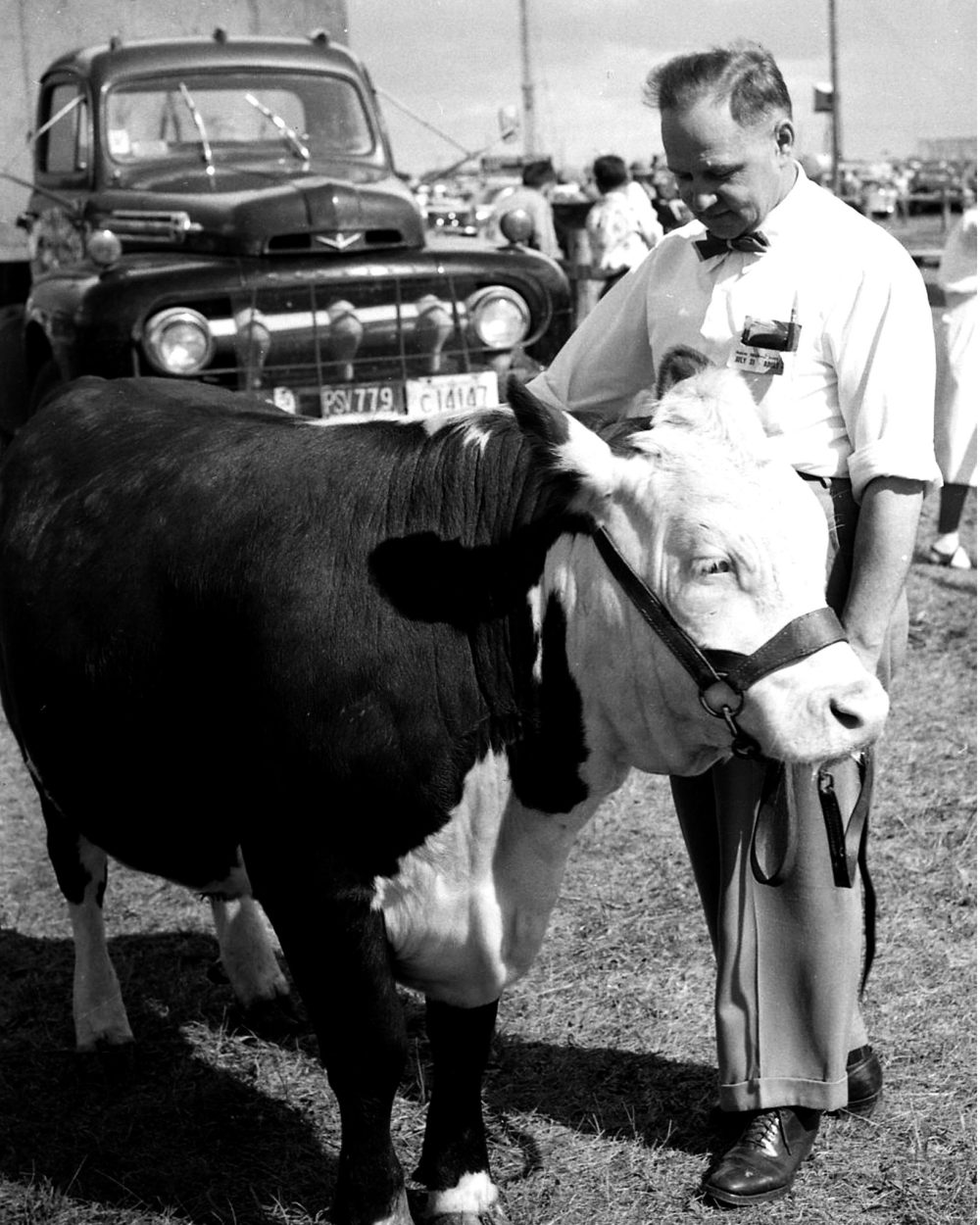
By 1959, “Carload Frank” Reimer no longer went unnoticed. Government people in Ottawa and leaders of industry in both Eastern and Western Canada listened respectfully to his opinions across the conference-room table.
Trucks bearing his name threaded their way across the country, every hour of the day, and every day of the week, as Reimer Express Lines became one of the largest independent trucking companies in Western Canada.
“Carload Frank’, at 51, had the controlling voice in Universal Holding Company, in Reimer Foods, in the Steinbach Feed Service Mill and in Steinbach Broiler Farms, which were all growing companies at the time.
But not many people, even back in the early 1960s, had any idea of the number of 14-hour workdays the man had to put in to get to where he was. Most people would rebel at the idea of putting in that kind of toil and sweat, especially for so many years.
To go back to the beginning: Frank Friesen Reimer was the oldest of 13 children, growing up in a household where no-one was ever allowed to sleep in and all were required to work hard. By his own admission, Frank said he was never afraid of work, and hard work never bothered him.
“Hard work never killed anybody.”
Frank was only 10 years old when the family’s Giroux grocery store burned down and the P.B. Reimers moved to Steinbach to open another one.
Upon the move to Steinbach, the Reimers kept their meat business and eventually Frank became their main butcher. His record for killing and dressing a steer single-handed from the time it was standing in the chute until it hung on the rail, washed, cleaned, and ready for the cooler was 35 minutes. In a 1959 interview with Carillon News feature writer Gerald Wright, he did admit he had slowed down somewhat since then.
That record-breaking steer-butchering was just another example of Reimer’s approach to dealing with any task at hand. Finish it in as little time as possible, making way for the next one, he would say.
The Reimer family was born into business. Frank’s ancestors as far back as his great-grandfather were all businessmen. He himself was raised behind the counter of the grocery store, where work was the rule and work was the law. Little time was available for anything else and unlike his brother-in-law A.D. Penner, Frank had zero interest in sports.
“At our house, we believed the words of the Fourth Commandment. We believed that when it said six days, it meant six days, not five. When it said thou shalt labour, it didn’t mean that thou shalt fool around. All the work meant there was no quitting with the job half done.”
While Reimer spent most of his life at the butchering and grocery business, it was the growth and expansion of Reimer Express Lines which was responsible for his rapid rise to business renown.
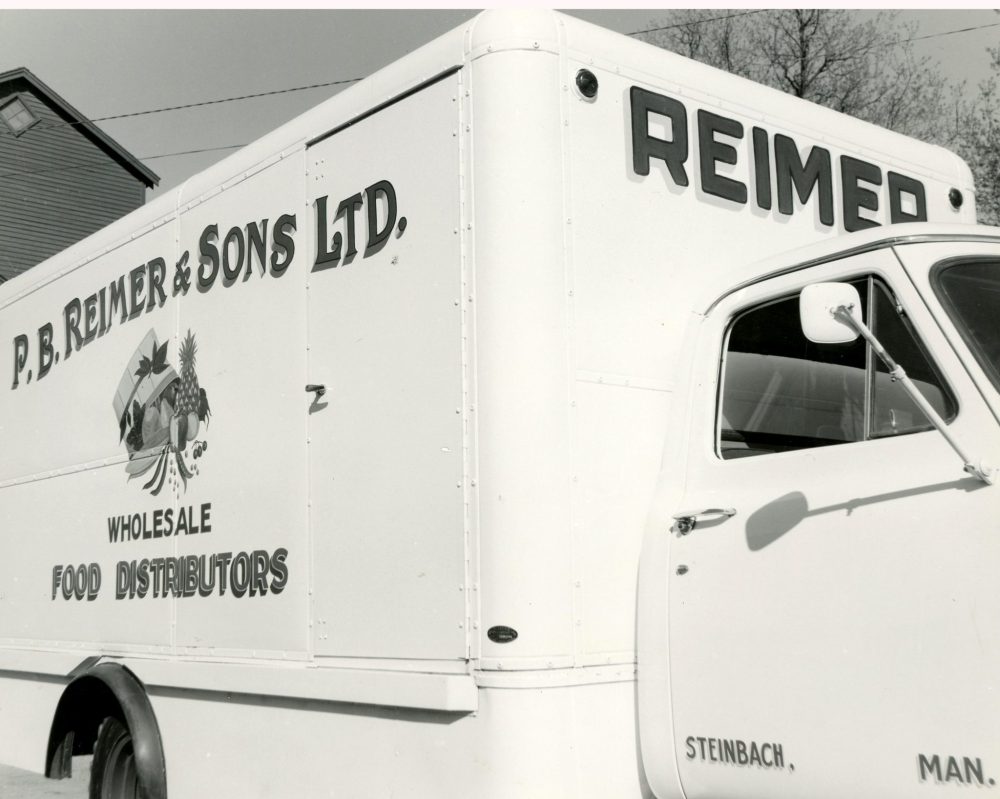
His interest in expanding his trucking business went back to a time when P.B. Reimer and Sons bought their first truck, used to haul goods from the railway at La Broquerie or Giroux to their Steinbach store.
As the years went by, Frank became the trucker for the P.B. Reimer store. Typically at 5 a.m. he would be on his way to Winnipeg with a load of eggs and other farm produce, which he would peddle all over the city. Then he would reload the truck with freight, drive home and unload it by himself.
Reimer never hired a driver or a helper and when he hauled up to 10 loads of feed a day from La Broquerie, he unloaded the 100-pound sacks by himself.
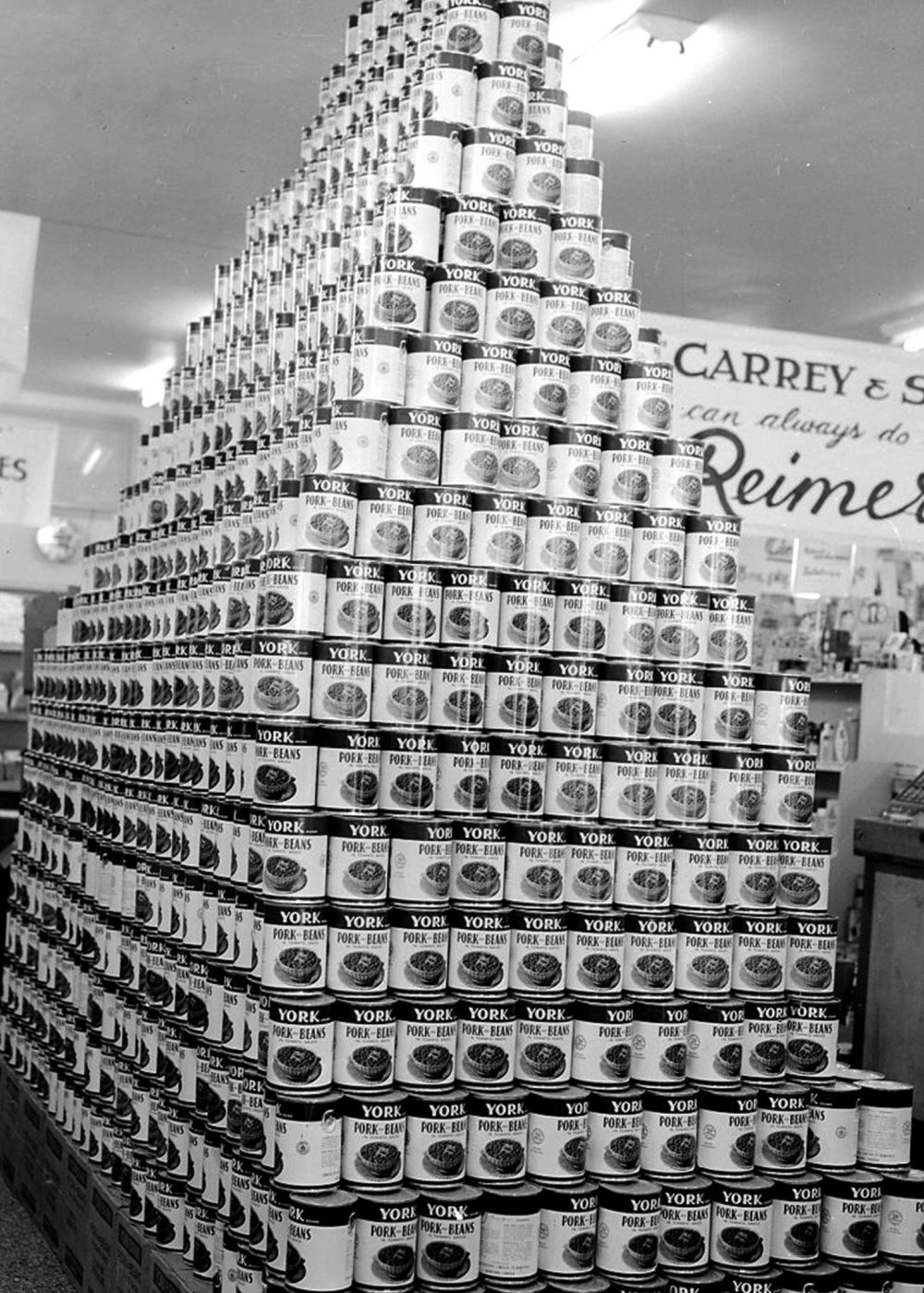
It was during these years Frank Reimer became widely known as “Carload Frank”, a name derived from his practise of buying everything by the train carload and passing on the savings to his customers. People began to come from miles away, even from Winnipeg, to buy groceries at the Steinbach store.
In 1950, Frank and his son Don became convinced that saving as much money as they did by trucking their own groceries meant they could earn a great deal more by trucking freight for other people.
In June of 1958, when Reimer Express built a new head office, terminal and maintenance depot in Winnipeg, the company had more than 100 trucks on regular routes and operated offices and warehouse facilities in Toronto, Windsor, Port Arthur, Dryden and Kenora.
But even when a business venture didn’t appear to be flourishing as quickly as “Carload Frank” believed it should, he remained optimistic.
The bottom appeared to have dropped out of the broiler market shortly after the Reimers went into the business in a big way with barns equipped to raise 20,000 birds at a time. Despite the setback, there was still hope for the future of the industry, Reimer said.
“Our operation is so efficient; we feel as long as anyone is raising broilers in Manitoba, we will be raising broilers.”