
‘I see hope’: RRC Polytech health care aide program on First Nation sees 8 students graduate
Advertisement
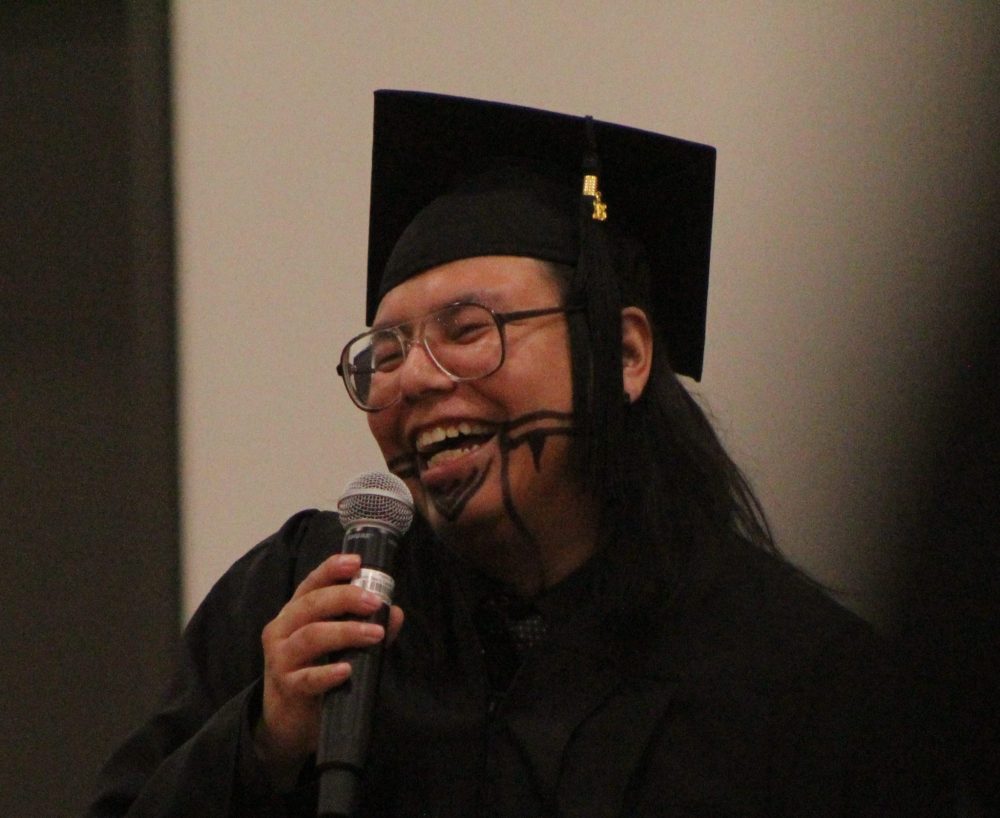
As Sydney Murdock crossed the stage to receive his diploma, he was flooded with emotion and filled with hope.
The 32-year-old and seven other Roseau River Anishinabe First Nation students graduated from RRC Polytech’s health-care aide program on March 22. The five-month program was run on the southeastern Manitoba reserve, a first for health-care aide education in Canada.
“When I see Indigenous people graduating, when I see them pushing their hardest to get somewhere outside the rez, I see hope,” Murdock told The Carillon.
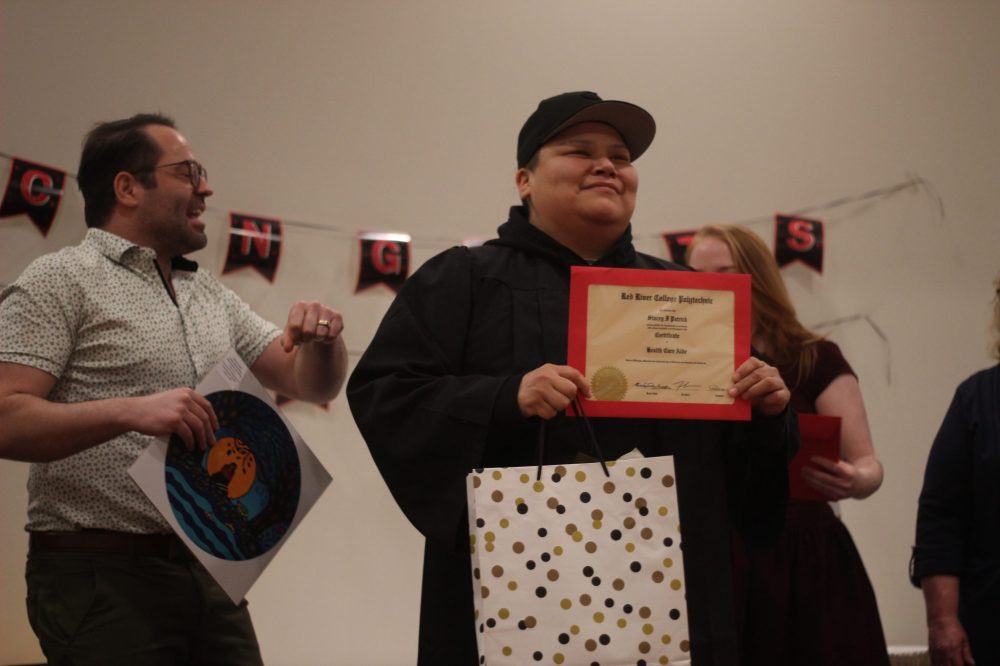
Murdock grew up off-reserve and returned to the community with little money after he struggled to pay rent in Winnipeg. When he arrived back home in August 2025, he saw a RRC Polytech trailer outside the band office and grew curious. After sitting in on a few classes, he officially enrolled in the program.
Murdock didn’t consider post-secondary education because of the difficulty affording life in Winnipeg or elsewhere. But by having the classroom a short walk away from his home, it made getting a diploma a reality. With his health-care aide training, Murdock hopes to make elders and Indigenous people feel safe when accessing care.
“When you have someone coming from that culture, talking with an elder who lives from that culture, there’s a better connection than someone who’s missing the point,” he said. “You have to be in-sync with the person.”
He hopes to be an inspiration for youth on reserves that they can achieve higher education and destroy the stereotype that Indigenous people are seen as high school dropouts who don’t succeed.
Coun. Evan Roberts has been interested in growing on-reserve education opportunities for at least 10 years.
When he found out about RRC Polytech’s mobile training lab program, a series of trailers connected to create classrooms and training spaces, Roberts reached out to the college about what a health-care aide program could look like. Talks on setting up the program began in 2024.
The First Nation received roughly $550,000 in funding from Indigenous Services Canada and distributed by the Assembly of Manitoba Chiefs.
Roberts said the health-care aide program was chosen to address staffing gaps on reserve and to help prepare for the planned elders care facility expansion.
“It means a lot to the people right to see their own working in those areas. If we’re able to do that more for our community, I think that’s a worthwhile investment,” he said.
Roberts hopes the graduates will find jobs on and off reserve and seek more post-secondary education. While a second cohort isn’t planned yet, he wants to continue growing the health-care training opportunities available.
Other communities have already reached out about the program in hopes of replicating it on their reserves, he said, but he didn’t say which First Nations.
“It’s a win for our community and a win for the provincial health-care system because we’re adding more people to help address some of those challenges that the province and our communities are facing,” Roberts said.
Skyla Sellner, the reserve’s post-secondary coordinator, said the new program breaks down the barriers community members face when accessing education. Many students have to travel long distances and need to secure stable housing in Winnipeg or elsewhere to attend programs, which is difficult for people who’ve never left the reserve before, she said.
When the program graduated eight students, Sellner said it was “mind blowing” because she didn’t expect to see that many finish. Having health-care aides who understand the elders in the community and understand their needs are crucial, she said.
“I feel like they (elders) would feel more comfortable with somebody that they grew up with,” she said.
The program has funding for one more fiscal year, and the reserve is hoping to run an electrical training program, Sellner said. Trades development are a priority, along with training emergency medical responders, she added.
Justine Hill, a RRC Polytech instructor, taught the course for the first time. She previously worked as a health-care aide and nurse in Northern Manitoba prior to taking on the teaching role.
She labeled the teaching experience as “turbulent” because she didn’t know what to expect for the inaugural program and was given freedom as to how she would teach.
“I was able to kind of take a little bit of tender love and care and add a little extra consideration when it came to some of the areas of the course,” she said, noting relationship building with students was priority.
Hill said the cohort became a family, which assisted in helping build trust throughout the program.
“Having it in their own area, in their own home, I feel like opened them up a lot easier than it would have been to bring them onto an enormous campus,” she said.
At least four of the graduates have already secured jobs.
Adam Nepon, a business development manager for RRC Polytech, said the program can help address systemic racism in health care and improve Indigenous representation.
“We know there’s marginalization. We know there’s lower access, and it makes all the difference when you have a familiar face,” he said.
The key for the program’s success wasn’t using a set program, but being flexible to the community’s needs he said.
Treaty One Nations executive director Jason Whitford represents seven First Nations in Manitoba, including Roseau River. He said the new program and graduates offers an avenue for more Indigenous representation in health care.
“There are well-paying occupations where our people can be caring for our own people, and health-care aides are an entry point into the healthcare system,” he said, noting it could lead to pursuing a nursing career.
The norm for First Nations reserves accessing education is to pack their bags and relocate to an urban centre, he said. But this opportunity allows community members to stay connected to their family and support systems.