
1946 – 2026 Watching Steinbach Grow: Gerhard Derksen picks printer’s ink over plow
Advertisement
Gerhard S. Derksen created more than just a printing and newspaper publishing business when he changed career paths in 1932. He brought home to his family his enthusiasm and his love of the role of the community newspaper to people’s daily lives.
His strong and positive example led to family businesses covered in printer’s ink for all five of his children.
Derksen had found it difficult to adjust to farm life on the Saskatchewan prairie. Nine years after immigrating to Canada, he moved his wife Maria and young family to Steinbach, where he began work as a writer with the German-language community newspaper, The Steinbach Post.
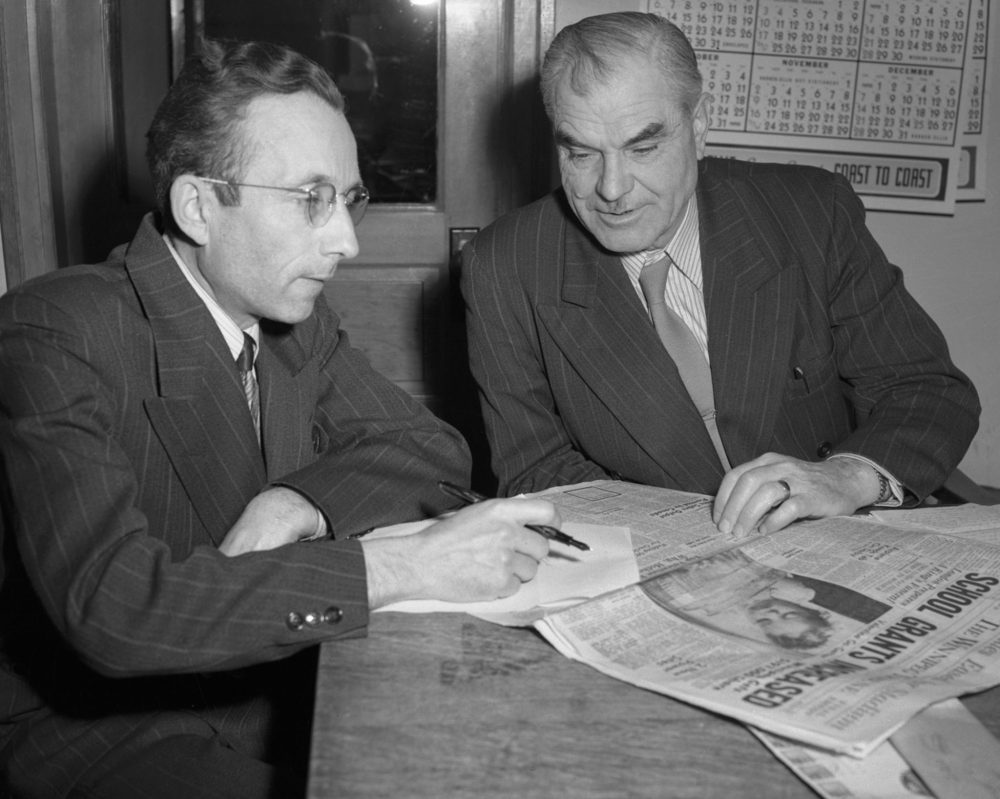
At the time, the German newspaper and its small commercial printing shop was operated by Arnold Dyck, a friend and former colleague of Derksen’s in Russia.
By 1936, Derksen reached a position where he was able to buy the business. An accountant with the firm that audited the company’s books expressed amazement that a man of 48 would have the ambition to take on a business and expect to make a success of it.
A decade after buying the business, the Derksens made a decision that would be a key to the future of the company. While continuing to publish the Steinbach Post, they realized there was a need for an English language newspaper to serve all of the Southeast.
The Carillon News made its debut Feb. 21, 1946 and became an instant success.
In the printing and publishing business, Derksen had found his calling, and by 1948 was able to establish a modern printing plant. The Carillon News had become a force in the community beside its parent publication, The Steinbach Post.
The firm contracted printing jobs of a hundred various descriptions. And the rest, as they say, is history. The Gerhard S. Derksen who started it all 90 years ago would be amazed to see all the changes new technology had wrought.
Derksen Printers and The Carillon News were always very much a family affair. Derksen’s sons, Eugene, George and Bruno, and his son-in-law Peter Rosenfeld (husband of Anna) were all part of the early operation. Ernest Neufeld, a brother-in-law, also became a partner and worked as a typesetter and sports reporter while his wife Irene was the office manager.