
Local leaders slam Manitoba budget for slim Steinbach funding
Advertisement
Both Steinbach’s deputy mayor and MLA are critical of the NDP government’s proposed budget for the few funds flowing to Steinbach and the Southeast.
The only funding targeted towards Steinbach in the budget is a $32,000 grant for the Steinbach Arts Council. The province has set aside $2.4 million for recruiting doctors and clinical assistants at the Boundary Trails Health Centre and the Bethesda Regional Health Centre. Five new school projects, including Ste Anne Regional High School, will get $6.5 million for design work.
Steinbach’s Deputy Mayor Michael Zwaagstra said the province takes the Manitoba’s third largest city and the region for granted.
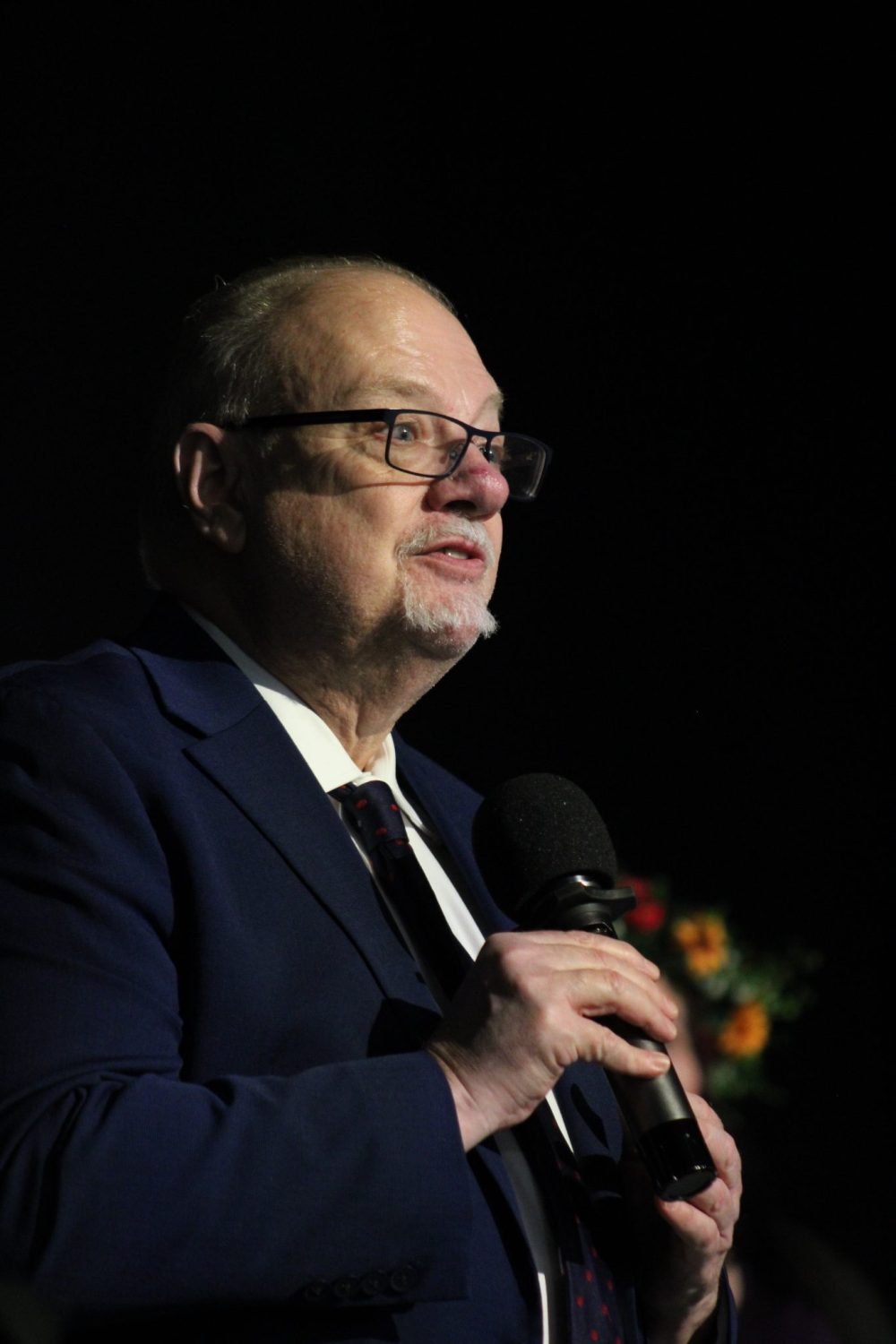
“We are the economic horse, but more and more is being put on us,” he said. “It just seems to be assumed that we’re just happy to keep on pulling and more and more gets added, and the government isn’t doing anything to actually help us to grow and help our economic horse become stronger.”
Wastewater funding is a top concern for Steinbach as it continues growing, and the budget didn’t reflect that need, Zwaagstra said. The 2025 budget included $22 million for the Red-Seine-Rat (RSR) Wastewater Co-operative, which would serve 13 communities. But Steinbach isn’t part of the plan, and there’s no funding in the 2026 budget for the city or any other wastewater projects in southeastern Manitoba.
The city is approaching its wastewater capacity and needs a wastewater treatment plant to prevent growth and development from halting. If the issues isn’t addressed, the economic impacts wouldn’t be isolated to Steinbach and spread across the Manitoba, Zwaagstra said.
“I would really hope that the province would signal that they are prepared to contribute in a significant way (for wastewater treatment projects) and we certainly didn’t see anything in that regard to this budget,” he said.
The Carillon reported in September 2025 that the province will pay half of the $7.3 million price tag for the forcemain twinning project and upgrades to Lift Station 1.
Also included in the budget was a two percent increase in municipal operating funding, bringing 2026-2027 dollars up to $473.5 million. The Manitoba Water Services Board will give $24 million to rural and northern municipalities for water and wastewater projects, but no specifics on how the funds were allocated were given in the budget.
Manitoba promised a public inquiry into the former Progressive Conservative government’s handling of the Sio Silica’s environmental licence. The terms of reference and a commissioner will be named this year.
The province continued its Crown land leases freeze for the third year in a row. The budget includes $143.7 million in risk-management funding, AgriInsurance, AgriStability, AgriInvest and wildlife damage compensation.
Manitoba also increased the eligible loan amount for the young farmer rebate from $400,000 to $425,000, with the maximum individual lifetime limit rising to $42,500 from $40,000. Roughly $572,000 in funding was dedicated to help veterinary recruitment and support across Manitoba.
The budget includes removing the provincial sales tax in grocery stores on prepared ready-to-eat food, such as sandwiches and soups, and carbonated drinks by July 1. Manitobans already don’t pay tax on basic groceries, such as fruits and vegetables.
“We know that Manitobans are continuing to face challenges and the pinch when it comes to grocery prices,” Finance Minister Adrien Sala told reporters on March 24.
Progressive Conservative MLA for Steinbach Kelvin Goertzen said the touted affordability measures in the budget were underwhelming.
“I think for Manitobans, who are living through an affordability crisis and a lot of concern about their personal safety and also health-care concerns, there was a lot of sizzle, but not a lot of steak when it (the budget) was actually shown,” Goertzen said.
The NDP government has continued a pattern in its three budgets where there’s little mention of Steinbach, he said. Investments into Steinbach pay for themselves because it increases the tax base and boosts the provincial economy, he noted. The former NDP government under Gary Doer and Greg Selinger dedicated investments in Steinbach and valued its economic power, Goertzen said.
“Past NDP governments have seen, at least notionally, some importance of the community. This particular NDP government under Premier Wab Kinew seems to be willfully ignoring the current needs of the community,” he said.
Goertzen was disappointed but not surprised to see a lack of funding for flood relief measures in Steinbach, after the city experienced record high rainfall in 2024 and 2025. The province denied disaster assistance dollars for both floods, with Steinbach Mayor Earl Funk at the time calling the reasoning and criteria “too vague.”
The budget estimates a $498 million deficit.