
COLUMN: Carillon Flashback October 28, 1992 – ‘No boundary for Anishinabe’ – Natives make a point during demonstration
Advertisement
Red flags flying from antennas and side mirrors identified vehicles of more than 200 First Nation protestors moving towards the American border on Highway 75 at a snail’s pace, where they continued to demonstrate their disdain for the “white man’s boundary.”
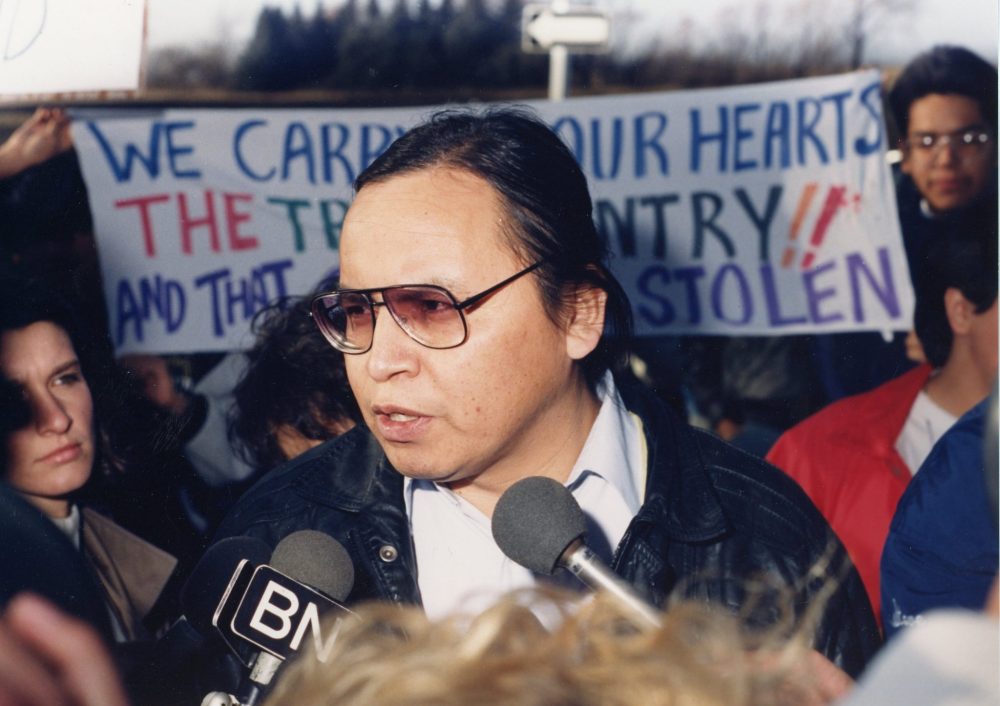
Native leader Terry Nelson, who organized the peaceful demonstration to spotlight what he termed “an invasion of sovereignty” during a recent RCMP raid on the Roseau Reserve, said the Roseau River Anishinabe were not afraid anymore.
“We are subject to economic apartheid and economic blackmail. We are taxed without representation. We will not be meek in defending our fundamental human rights and our right to peaceful coexistence.”
Highway tractors fell in line behind the convoy of Roseau River Reserve residents and drivers had to wait patiently until RCMP officers cleared a lane to allow traffic into the United States at Emerson.
The demonstrators, in buses, four-by-fours, half-tons and cars, managed to slow traffic to less than 15 km/h by occupying both southbound lanes of the highway, as well as the shoulders.
The group was met at the border by Steinbach RCMP Inspector Chris Lee and after agreeing to a demand of one open lane, the demonstration was allowed to continue uninterrupted. RCMP officers and American state troopers watched from both sides of the border as banners were unfurled and protest signs were raised.
No attempt was made to stop the group as they marched through American Customs, around the building, and back into Canada to demonstrate their disdain for the “white man’s boundary.”
In warning the RCMP not to stage another raid on the reserve, Nelson told a crowd of reporters the Mounties could come back to negotiate an agreement, as long as they did not bring guns. As long as the RCMP officers were armed, there could be no negotiations.
Canada Customs had seized more than 300 cartons of cigarettes in a home on the Roseau Reserve October 15, in what RCMP termed “a crackdown of a smuggling operation.”
Nelson denounced the move, saying it was not up to him to collect taxes for the government.
Verne Kulyk, of the operational services division of Canada Customs, fielded media questions at the border. He said Nelson had delivered the peaceful demonstration he had promised. There had been a ‘contingency plan’ in place, had the demonstrators gone ahead with any attempt to purchase goods at the duty free store.
The RCMP were also ready for trouble, with dozens of officers and police dogs on standby at a location near the border crossing.
The extra troops were not needed, as the demonstrators pounded drums and chanted on Highway 75 as traffic trickled by in one southbound lane.
RCMP Cpl. Wyman Sangster said an earlier show of guns on the Roseau River Reserve did not affect what occurred at the border, where the majority of RCMP were located. Dakota Ojibway Tribal Council police confiscated a rifle from a man guarding the bridge near the entrance of the reserve at the start of the demonstration.
Sangster said RCMP officers police all Canadians the same way and there is no law against someone standing with a gun on private land.
There is no different law for Indians when it comes to the Excise and Customs Act either, Sangster said, and until exclusions are granted and taxes lifted, cigarettes leaving the Roseau Reserve will be subject to taxes applied elsewhere.
Charges are still pending as a result of the Oct. 15 seizure and will be laid as soon as approval comes from Ottawa, according to RCMP policy in all smuggling cases, Sangster added.