
Rural care homes benefit from Manitoba Mobile Music
Advertisement
A mobile music troupe is bringing professional concerts back into long-term care homes throughout southeastern Manitoba.
Manitoba Mobile Music, a non-profit seeking to make live music accessible for under-served communities, has brought performances to care homes in Grunthal, Steinbach, Ste Anne and Vita. The songs can range from classical concertos to foot-stomping fiddle tunes.
Co-founder Trevor Kirczenow, who plays violin, was joined by a cellist and two other violinists, all musicians for the Winnipeg Symphony Orchestra, to perform at Grunthal-based care home Menno Home For The Aged on March 31.
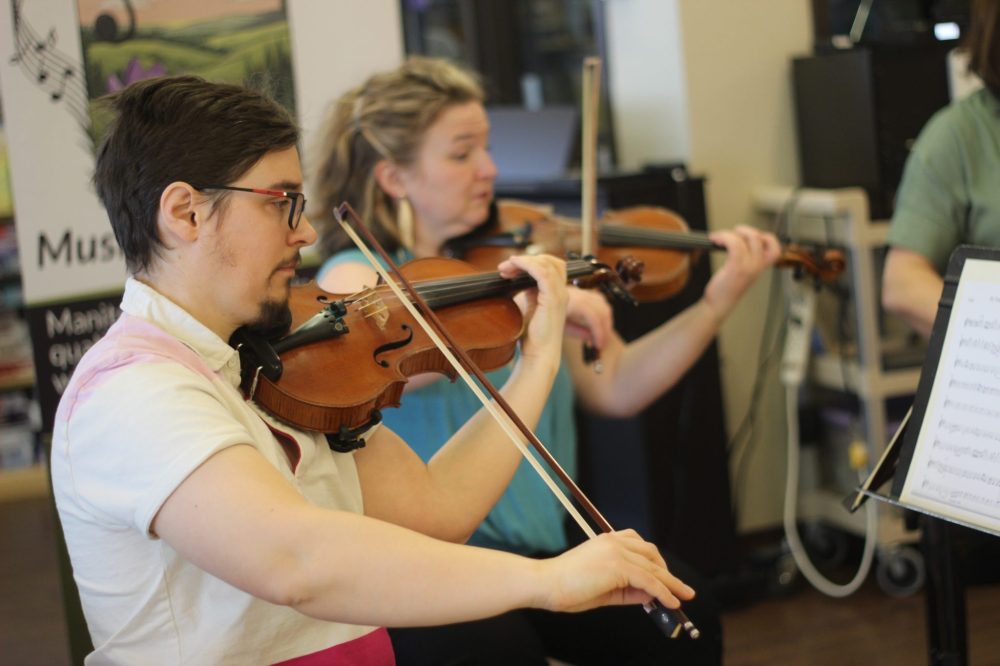
The string quartet’s set list went from “Spring” by Antonio Vivaldi to “Nowhere Man” by the Beatles. A captive audience of residents took in the concert, nodding or tapping along.
Kirczenow identified a need to play professional music in rural communities and improve the access to live music.
“We know that people do play sometimes in care homes in Winnipeg, but it just hasn’t seemed to be happening outside of Winnipeg. So that was something that we wanted to address,” he told The Carillon.
The performances are rewarding for Kirczenow when he sees how the residents are connecting with the music, with some tearing up or singing along. He said residents have already been requesting different songs to play for the next performances.
“They (residents) were asking, ‘When will you come back? We never get this.’ So that’s kind of heartbreaking, too, and it does make me want to be able to schedule more of this type of concert,” Kirczenow said.
The non-profit received a $5,000 grant through the Manitoba Arts Council and $5,000 from union Music Professionals of Manitoba to offer the concert series.
David Unrau, 77, was among the residents in Grunthal who came to hear the group. He said the music was “very good” and liked all of the songs played.
Unrau’s favourite type of instrument is the fiddle and he said he likes all types of music. As the musicians played, he said it made him and the other residents feel happy.
Dave Claringbould, CEO for Menno Home For The Aged, said the musicians are the first professional group to visit the care home since the COVID-19 pandemic. Concerts in Care, through the Manitoba Arts Network, previously would do performances in the facility. But when the pandemic happened, it shifted online and stopped visiting the Grunthal care home, Claringbould said.
“Any time we can get music in, we do. Unfortunately, budget wise, we can’t afford to pay lots of people to come in, and that’s always a challenge,” he said. “So the fact that this is all through grants, which is paid for, is massive.”
The care home does have faith-based groups come and do church services and singing with residents, Claringbould said. Listening to live music can help people with dementia, because songs and tunes are memories they can still recall, he noted, adding it often helps calm people and gets residents moving and dancing.
“Song is something that can still reach into people. So it’s really important that we can offer this kind of thing within the care homes, because it’s much more meaningful…even if somebody doesn’t appear to engage that much with it,” Claringbould said.
The facility looks for music that residents can relate to, rather than modern music, which includes classic tunes from Frank Sinatra, The Beatles or classical music.
Pandemic isolation made it difficult to have any type of music played for residents, forcing care home staff to get creative, he said. Staff pumped songs through the facility’s public announcement speaker system and brought pianos on a rolling cart to the residents’ doorways.
Claringbould said he noticed residents would deteriorate “much quicker” when they didn’t have any interactions. But by now having the performances in communal spaces, it draws the residents together and helps them engage more with each other and the music, he said.
“You know you have something good because people automatically kind of congregate and come watch,” Claringbould said.