
Ritchot maintains mill rate, mayor said lowering rate “not a good thing”
Advertisement
The RM of Ritchot approved its 2026 budget last Wednesday with the mill rate remaining steady for the ninth year in a row at 7.95 mills, despite property value reassessments by the province last year that saw some residents’ values increasing.
“I don’t think we should ever see a lowering of the mill rate. It’s never a good thing in anything,” said Mayor Chris Ewen. “You don’t see your groceries ever go down. They continue to stay up or they stay the same. I think the same should apply for mill rates.
“We continue to keep that line. And we just take advantage of the assessment value going up and how we can implement that for a positive outcome for the municipality and the residents that are participating.”
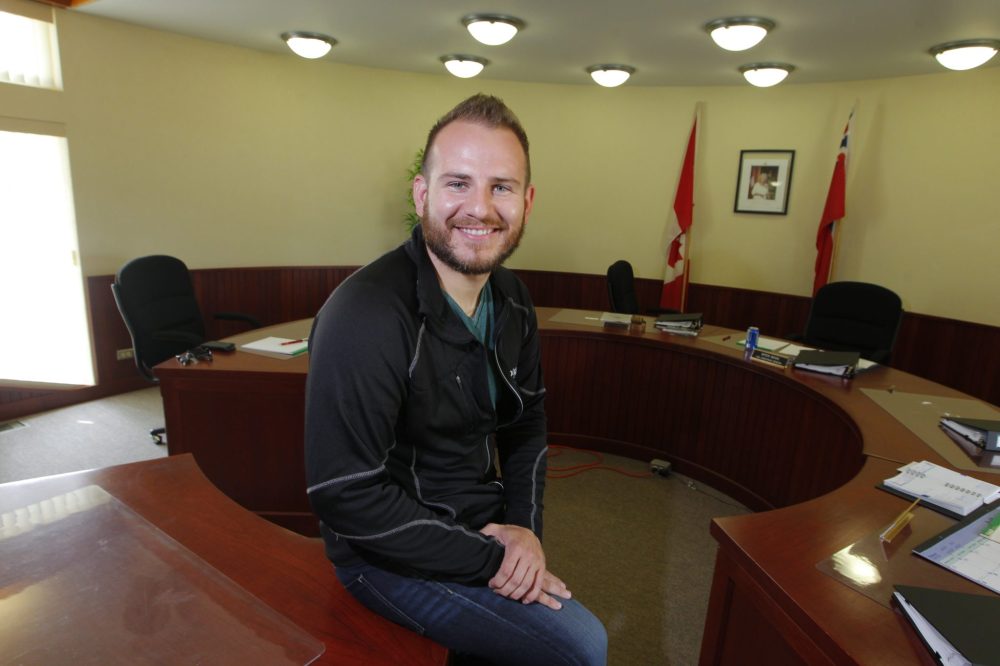
Ewen said as the municipality continues to grow with residential, industrial, and commercial properties moving in, increased taxes collected through the increased property values will fund projects that need to be done in the RM. He said by keeping the mill rate the same, residents shouldn’t see their taxes change “dramatically.”
There are close to 9,800 people living in Ritchot with about 2,700 private dwellings in a land area of about 332 square kilometers.
According to chief financial officer Muhammad Zaman, assessment values are currently based on 2023 and 2024 market values. In 2025, the assessed value of all properties in the RM was $879 million whereas in 2026 that value went up to $903 million, which is about a 2.8 percent jump.
For this year, the RM is collecting property taxes of about $6.4 million compared to $6.2 million last year. Over the last 10 years, total revenue collected through property values have gone from $446 million in 2017 to $903 million in 2026, according to Zaman.
“It is important to know that this increase in assessment is due to growth in the municipality and keep in mind that assessment is done by the province of Manitoba, not by the municipality,” said Zaman.
The annual assessment of residential property classes has increased by 3.4 percent, agricultural property classes have reduced by 5.4 percent, commercial property classes have increased by 4.6 percent, and other property classes have remained the same from last year. Overall growth has increased 2.83 percent for 2026.
Chief administrative officer Shane Ray said the assessments will not have a big financial impact for the RM’s coffers this year.
“It’s next year’s tax bills where you would see a greater increase as a result of that assessment value,” he said.
The next property value reassessment will be in 2027.
For those who didn’t see a change in their property assessments, there might still be an increase in taxes as school mill rates have gone up by an average of 9.34 percent for a total of $13.7 million that will go to the five school divisions in the RM.
Regarding the school taxes, the province has increased the homeowners affordability tax credit from $1,500 to $1,600. This credit replaces the school tax rebate and education property tax credit for residential properties. Some properties will continue to receive the Manitoba school tax rebate, which is maintained at 50 percent.
Overall, the RM is collecting $21.6 million in taxes this year of which 37 percent, or about $7.9 million, will pay for operations and 63 percent, or about $13.7 million, will go to school divisions.
Expected revenue will hit $22 million for the operating budget, which is divided into three sources of revenue: 37 percent from municipal taxes, or $7.9 million; 40 percent from other revenue sources (i.e. permits, sale of services, and grants), or about $8.7 million; and transfers from reserves at 23 percent, mainly for capital projects, at about $5.4 million.
Operational revenue from utilities is about $5 million with utility reserves coming in at about $2.2 million.
Operational expenses of $22 million will see the largest increase going to government services at about $1.98 million, or 14 percent, due mainly to the upcoming election and community strategic planning.
Protective services will hit $1.37 million, a decrease of 2.6 percent; public works will receive $3.5 million, a 12 percent increase; environmental health services will receive $889,000, which is three percent more than the last year; economic development has budgeted $873,000, a six percent decrease; the recreation budget is $1.6 million, a seven percent increase; fiscal services is budgeted at about $11.3 million for municipal and utility capital projects; and about $10.3 million, before capital projects expenditures, will go into reserves.
The RM’s debenture, or loaned long-term debt, of $2.2 million will go down by $287,700 by the end of the year. Three projects are slated on the debenture: Sarde #2 – SALCO a 10-year loan that will be paid off this year with a final payment of about $113,000; the loan of $488,000 for the Ile Des Chenes Community Centre will see $75,000 paid this year with a deadline for loan repayment by 2032; and the Ste. Agathe fire hall, a $1.7 million loan, will pay less than $100,000 this year towards the debt with a deadline of 2038.
Council has allocated $10.9 million for municipal and utility capital projects for 2026. Part of that allocation includes nine general government capital projects totalling $1.2 million, of which 85 percent is grant funded. Some of those projects include the housing needs project under the housing accelerator funding stream ($566,369); car (EV) share project ($300,000); and the EV charging project-Phase III ($100,00), all of which are completely grant funded. The balance of the projects are funded through grants and the general reserve.
The RM will spend $3.2 million for six protective services projects including a new $3.3 million fire hall in Ile Des Chenes, which is funded through municipal reserves and $1.3 million in provincial grants.
The transportation services capital budget is around $2.86 million for seven projects mainly focusing on upgrading, maintaining, and/or replacing existing infrastructure that needs immediate attention and are important for community growth, including the construction of a new landfill site at $1.5 million, according to Zaman.
Three utility capital projects are budgeted at about $2.6 million, which is cost shared equally with the Manitoba Water Services Board. The most expensive project is a $1.7 million upgrade to the Ritchot water treatment facility.
After all capital projects are complete, there will be a balance of $5 million left in the general operating reserve and less than $1 million left in the utility reserve.
“I’m quite confident that council’s on the right track (with this budget) and will continue to be on the right track once I’m gone this year, and next year, and the year after, and the year after that,” said Ewen.
The RM offers a discount of 1.5 percent for early payment of taxes in July and one percent for early payment in August. The tax due date is Oct. 31.