
1946 to 2026 Watching Steinbach Grow: Working together key to Steinbach’s growth
Advertisement
The Steinbach Credit Union was only one of any number of co-operative efforts that have helped mold Steinbach into the close-knit, ever-growing, community it became over the years.
Urban met rural at the Steinbach fairgrounds a number of times every year. Every June, all of Steinbach’s school children would march down Main Street to spend a day with parents at an end-of-the-year school picnic at the fairgrounds. The end-of-the-school-year event was so important that businesses downtown closed their doors for the afternoon to give their employees a chance to spend the day with their children.
The Steinbach Board of Trade (later the Steinbach Chamber of Commerce) organized a Dominion Day celebration every July 1, including baseball, a midway and wrestling in the evening, which drew thousands of visitors from all over the Southeast every July 1 for more than three decades. The tradition continued long after the fairgrounds became an industrial park. Today, multicultural festivities reflecting the diversity of the still-growing City of Steinbach are held on the grounds of the Mennonite Heritage Village every July 1.
An annual Hanover Fair was revived in 1946, with the organization of the Hanover Agricultural Society and a parade down Main Street, business displays, agricultural exhibits, garden produce and mouth-watering efforts by the area’s best bakers, all blended to give the multi-day event a real ‘Town and Country’ flavor.
While the Hanover Agricultural Fair continues today as a highlight on the fall calendar at Grunthal, Steinbach’s edition of the fair evolved into Pioneer Days, which still features the area’s largest parade, a popular pancake breakfast to kick things off, and a full agenda of activities at the Mennonite Heritage Village Museum, every August long weekend.
But by far the most significant examples of a combined, co-operative effort leading to the benefit of all residents of Steinbach and the Southeast has been in the area of health care.
Realizing it would take years for the private hospital, operated by A.A. Vogt and his sister Maria, to grow to the point where it could provide service like a Winnipeg hospital, the Steinbach Board of Trade called a meeting of local church hospital aid committees and The Mennonitischer Verein fuer Krankenhilie (Mennonite Society for the Aid of the Sick) was organized in 1930.
Five years later, construction began on Steinbach’s second hospital, according to plans drafted by a hospital board of directors elected by the Society.
Plans were for a two-storey building, 36 feet wide and 72 feet long with a capacity of at least 15 beds.
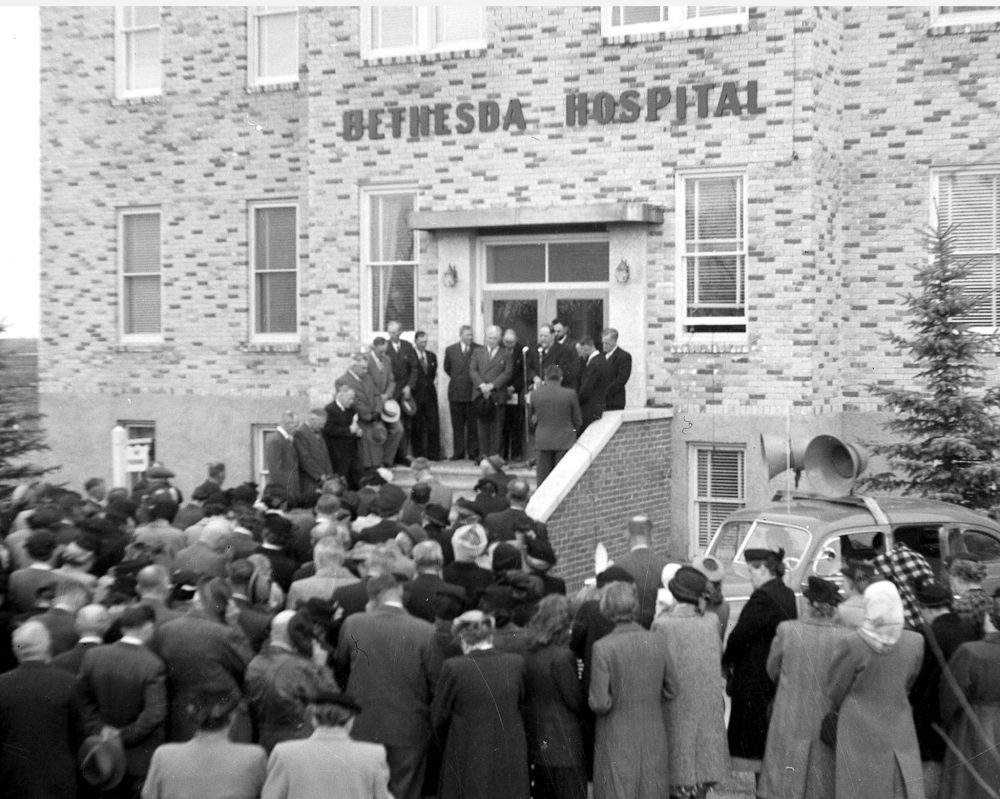
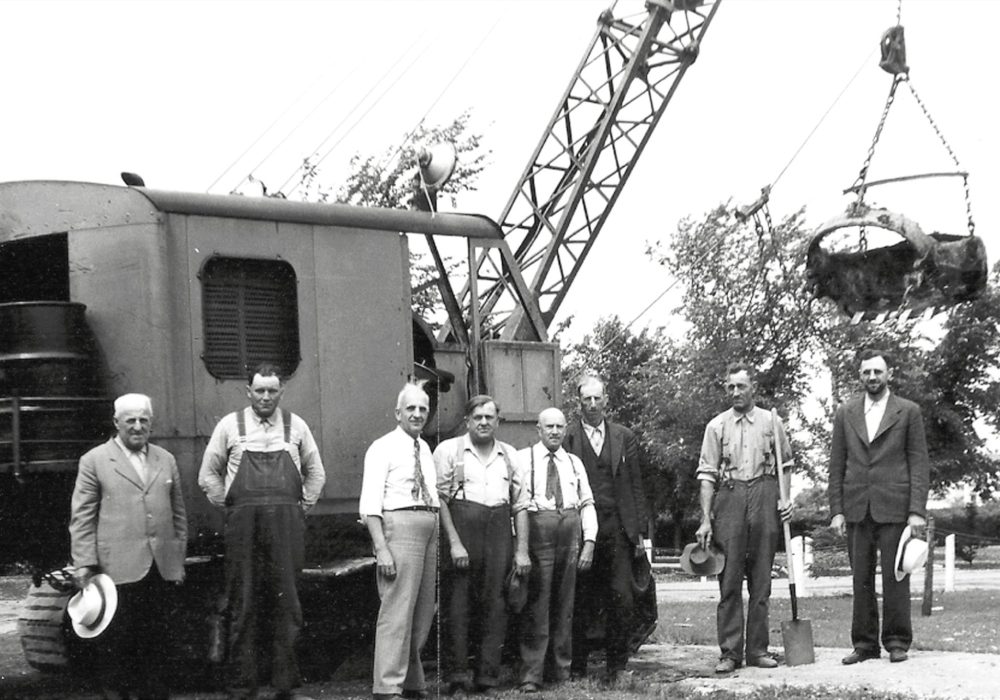
The hospital was built on a free-gift donation plan and during the Depression it proved difficult to collect the money needed. Many men, who could not help financially, donated their labour.
Whenever money and materials ran out, construction had to be halted until more donations could be collected. The hospital was not ready to open until January of 1937. The patients and staff were moved from the old hospital to the new one immediately. It was another year before the second storey was ready to use.
Carillon editor Abe Warkentin, in his 1971 book Reflections on our Heritage, chronicled years of remarkable growth of the Bethesda Hospital, from those beginnings to when Steinbach ratepayers voted in favor of a $1.1 million bylaw to build a new 65-bed hospital in 1962.
In 1937, the hospital had 326 patients and 145 births. Sixty-three operations had been performed. By November that year the hospital had a sterilizer and waterworks. In 1946, there had been 859 patients and 297 births.
In 1951 there were 1,403 admissions to the hospital; 323 babies first saw the light of day, and 23 people drew their last breath there. There were 113 major operations and 532 minor operations performed.
Among the additions to equipment during this time, were an x-ray machine, operating table, laundering equipment and furnace and stoker. The amount of money charged patients did not nearly cover the cost of maintenance, so the rest was collected from the public through voluntary donations, the ladies’ hospital aid, and municipal and government grants.
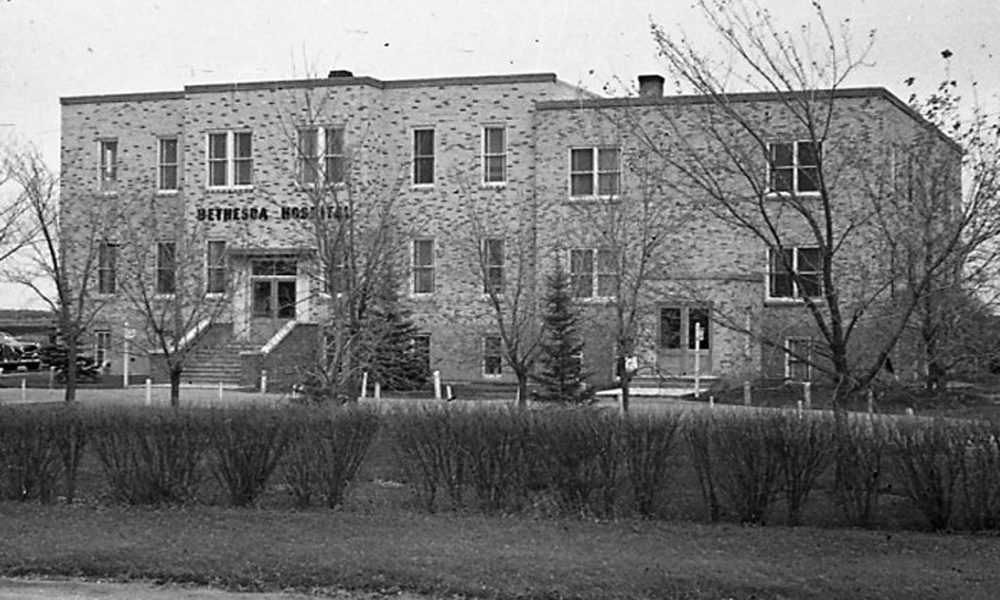
Hospital officials, in 1946, realized the hospital was too small and at the 1947 annual meeting made plans for an addition. A $50,000 fund-raising effort began in May of 1948 and work on a 28-bed addition began in mid-July.
At the time, the federal and provincial governments announced a new health plan which would cover two-thirds of the cost. This was to be the first project of many at the Bethesda Hospital that would involve a funding partnership between government and the Bethesda Hospital Society and later the Bethesda Foundation.