
Steinbach left with more questions than answers on province’s disaster relief denial: mayor
Advertisement
Steinbach councillors say they’re left with more questions than answers after the province responded to council’s request to clarify its denial of disaster relief funding for last year’s flood.
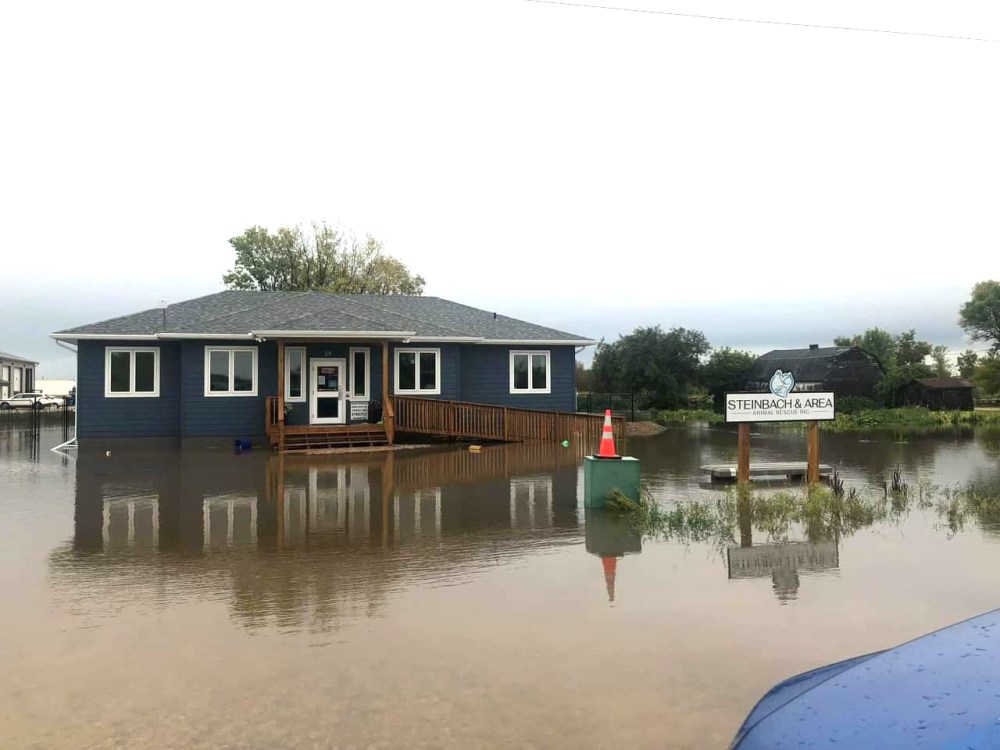
The city saw wide-spread flooding in September 2025 after 134.6 millimetres of rain fell overnight, flooding homes and businesses. City administration applied to the province for disaster relief assistance (DFA) program funding, but were denied. The province also denied a previous request after flooding hit Steinbach in 2024.
Mayor Earl Funk called the criteria for how the relief funding is granted “vague”.
“It leads me to believe that there’s probably not that much policy and that this actually ends up being a political question or answer every time, and obviously we were just on the wrong side of politics,” he said on April 21 after a council meeting.
A Feb. 27 letter to council signed by Erin Robbins, provincial director of recovery and mitigation, addressed council questions on how it determined its denial.
To qualify for DFA, the event must disrupt essential assets and services in the area, the letter said, and Steinbach’s flood didn’t interrupt essential services. But the widespread damage assessment, which includes the disruption of essential services, is still secondary to the insurability assessment.
It said despite two floods happening in consecutive years, it wasn’t factored into the insurability evaluation. The province’s emergency management organization follows the federal guidelines for determining judging insurability, it read.
“In both 2024 and 2025, feedback from regional and local insurers was that homes in Steinbach are generally insurable for the types of damage that were incurred by property owners,” the letter said.
It said the province has no criteria for determining severe financial impacts on residents when a disaster happens, the size of the assessment area or how many residents are being assessed.
“When you have back-to-back (flood) events like that, and your insurance is limited, then how insurable is it? Right? And that’s not taken into consideration,” Funk said.
The province’s response shows that Steinbach is on its own when addressing flooding assistance for residents, Funk said.
“What we’re saying is, fine, we’ll do it ourselves, because at the end of the day, we still have to take care of our people,” he said.
Steinbach approved budgets dedicating $9.3 million for capital projects, including improvements to twinning the force main. It also laid out the Millwork Drive Sewer replacement and an upgrade to one of their lift stations, which would double its capacity.
Coun. Michael Zwaagstra told council the province’s response was “disappointing” and echoed Funk’s concerns that the decision was made on a political basis.
“What this is telling us is that the program is highly subjective, and it’s really up to the whim of the government to decide whether or not they’re going to provide disaster financial assistance because the answers are vague enough that it really does come down to looking like a political decision rather than one based on actual evidence,” he said.