
Nephew donates uncle’s peatland to national conservancy organization
Advertisement
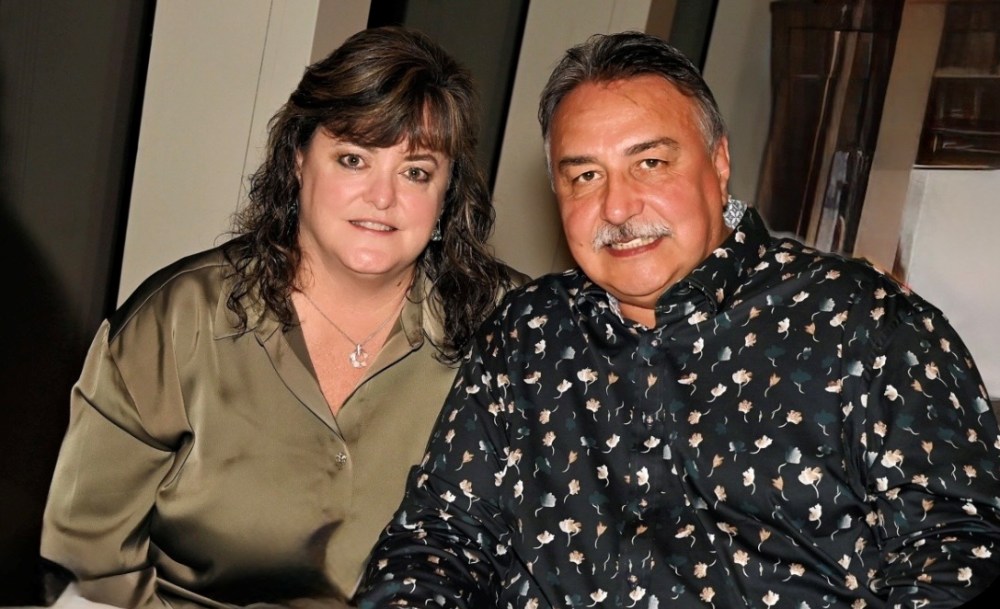
The nephew of an Elma man has donated land he received as an inheritance to the Nature Conservancy of Canada in memory of his late uncle.
“My Uncle Bill spent his entire life caring for Manitoba’s forests and wetlands, whether he was working as a fire ranger, out on the trapline, or simply watching the birds at his cabin. He had a deep respect for the land and believed strongly in protecting these places for the people who would come after us. Donating this land in his memory felt like the most meaningful way to honour that belief. Knowing the Monk Creek peatlands will be protected forever is exactly what he would have wanted,” said Vince Proceviat, North’s nephew in a press release.
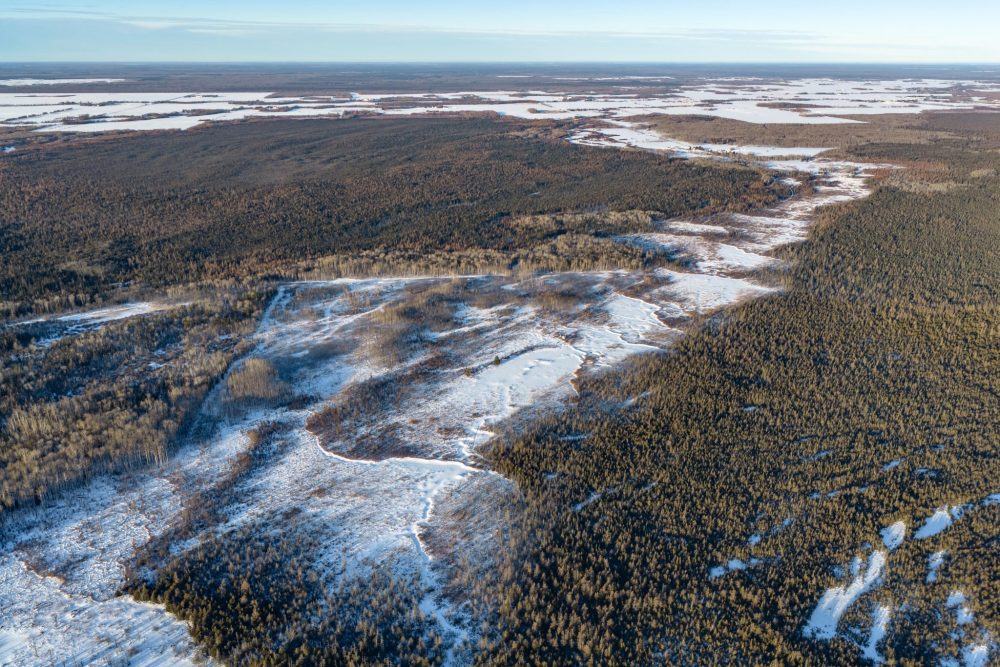
William North owned the 636 acres (257 hectares) of property known as the Monk Creek peatlands, located 10 kilometres southeast of Elma, for decades.
The peatlands are the convergence of the boreal coniferous forest, eastern Superior mixed forest, and extensive peatland.
The property supports the water quality of Monk Creek, which runs through the land and into the Whitemouth River that flows into the Lake Winnipeg watershed. The Whitemouth is nationally recognized for its unique fish assemblage, including the endangered Carmine Shiner.
“The protection of (North’s property) fills a donut hole in an area of provincial Crown lands (composed of black spruce bogs and shrubby fens), so it’s one of those remaining private lands and its protection builds on the resiliency and connectivity of that natural landscape,” said Tim Teetaert, a natural area manager for NCC’s prairie region.
He noted it takes 1,000 years for a meter of peat to accumulate as the sphagnum moss that it’s composed of decomposes slowly. It was calculated by NCC that North’s property stores more than 340,000 tons of carbon, which is the equivalent to the annual emissions of more than 380,000 passenger vehicles.
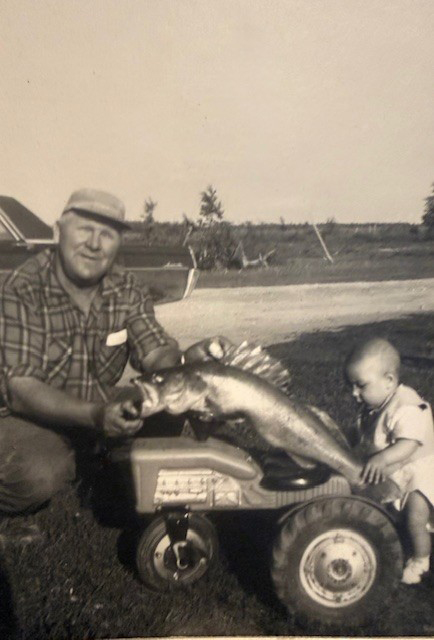
North was born in Elma in 1912 and spent his life there, which is located in the RM of Reynolds, until his death in 2003 at the age of 91.
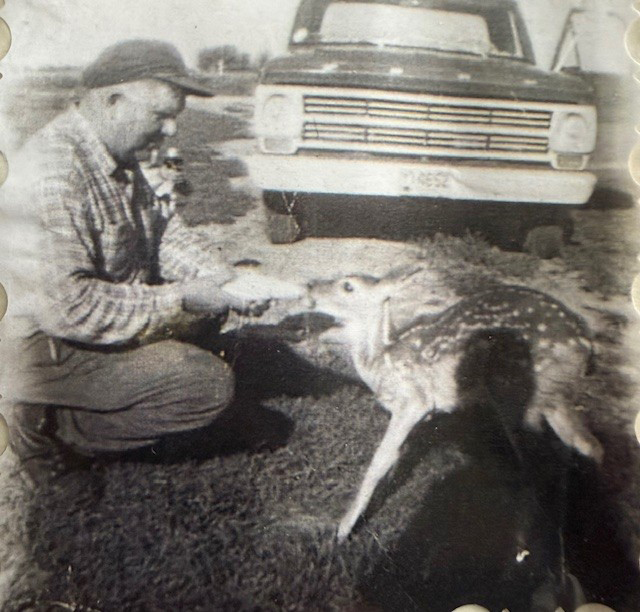
He had a career as a forest ranger with the Department of Natural Resources and was an avid trapper, fisherman, hunter, and outdoorsman.
Proceviat’s wife, Karen Antle, who spoke on behalf of the family, said that although North wasn’t related to her husband by blood, he was considered a part of Proceviat’s family having known Proceviat’s grandfather for years after the family immigrated to Elma.
“I’ve also called Uncle Bill, Uncle Bill forever. And he was more of like a grandfather figure to us,” said Antle, who knew Proceviat and North since she was 10 years old.
She describes North as a little rough around the edges and that he loved to have a good laugh and a good chat.
“He liked to impart his knowledge on you. You know, he would spark a conversation with just about anybody, whether it was in the restaurant or at home or anywhere. So, he was very friendly. He was very generous,” she shared.
Antle reminisced that North taught her husband everything he knows about the wilderness and wildlife, periodically taking Proceviat to his property where the two would hunt, fish, and trap.
“So, they did have a very close relationship,” she said.
Having no children of his own, North left the land to Proceviat and his brother, Mark, with the wish that the land remain in its natural state and within the family. When Mark died the land went to Proceviat.
Since Antle and Proceviat have no children, they were looking to sell the land and preserve it at the same time. Their realtor reached out to NCC about purchasing the peatland and after the non-profit got a third-party evaluation on its value, it decided to buy it. Proceviat and Antle donated 20 percent of the land and sold the remainder at market price, known as a split receipt transaction, to NCC.
The conservancy paid more than $350,000, which was acquired through fundraising.
“And the thing is, had we sold it to anybody else, then it’s possible that it could be developed in one way or another and we didn’t necessarily want that to happen,” said Antle.
Established in 1962, NCC is a charitable land conservation organization whose approach is science and community knowledge-based, collaborative, and focused on long-term stewardship, according to Teetaert.
Since its founding, NCC has conserved more than 50 million acres of land across Canada. In Manitoba, it has conserved more than 90,000 acres, including peatlands which cover about a third of the province (and three percent of the Earth) in the boreal ecozone from the Hudson Bay lowland area up north, along Lake Winnipeg, and then down into southeastern Manitoba.
Although it is fairly inaccessible, Teetaert said the next steps for NCC is to do a study of North’s land by mapping out habitat types and doing an inventory of plant and animal species, which will be used to develop a property management plan for long-term stewardship and monitoring.
A life-long member of Ducks Unlimited Canada, North had dug a small lake for ducks and geese to land on as the Monk Creek flows through the property, supporting wildlife such as beavers, deer, moose, and porcupines, according to Antle.
Teetaert said the donation of North’s property is a “conservation success story” that will last generations.
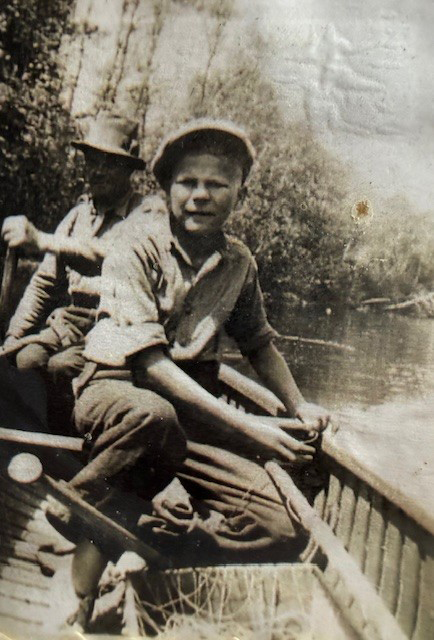
“The land mattered deeply to William North and his family. They have that connection to the land. By choosing to protect it, they’ve turned that lifetime of care for Manitoba’s lands into a legacy that will continue to benefit people and nature into the future.
“So, we’re profoundly grateful for William North, kind of that foresight (in) keeping that land natural, as well as Vince and Karen for their leadership and stewardship and working with Nature Conservancy of Canada.”