COLUMN: Tales from the Gravel Ridge – A canoeing adventure beyond Rosengard
Advertisement
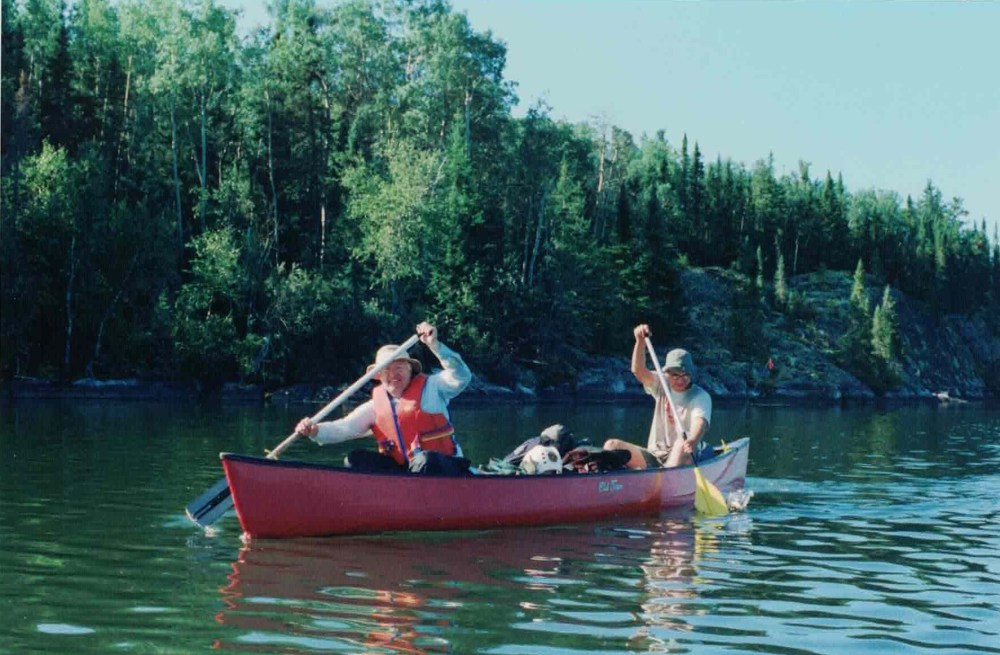
I could not possibly have imagined while I was a student at the Rosengard School #2168 that someday in the distant future I would be participating in a canoe trip down the historic Hayes River in Manitoba. Indeed how could I? The creek that meandered lazily through woodlands and pastures in our community was the closest we came to having any waterway whatsoever. Our creek did not represent even remotely something akin to navigable waterways. The Hayes River on the other hand is a premier Canadian Heritage River, and the longest naturally flowing waterway in the province.
During the winter of 1998, Andrew, the eldest of our children, suggested that he would like to take us on a wilderness canoe trip, as a gift to us for our upcoming 25th wedding anniversary. We would not be alone on this adventure. Rather, three of his wilderness-experienced tree-planting friends would be joining us. It would be fun he assured us. It took some time for the idea to resonate with us. As children tend to do, our horizons had stretched far beyond what we had anticipated 25 years earlier when we got married at the end of December in 1973. What we have experienced, and indeed continue to learn day by day, is that for us being a family with three children has exposed us to all sorts of new ideas and experiences, and countless adventures we would not have dreamed of on our own.
Canoeing down the historic Hayes River gave us a new perspective on Manitoba’s waterways. Maps have long held a significant hold on me as we crossed the prairie provinces over the years visiting our children and their families living west of the prairies as we know them. While Alberta may well qualify as a prairie province, Calgary, where our younger son lives, is decidedly closer to the Rocky Mountains than those of us who call Manitoba our home. As for the West Coast, we have had occasion to visit our daughter, son-in-law and grandchildren repeatedly over the years in various locations both at the coast as well as in more northerly interior regions of Canada’s most westerly province.
My early childhood education exposed me, along with the rest of the students at Rosengard, to two very important maps. Memories of these roll-down maps, one of Canada and the other of the entire world, remind me to this day of that so important step of my formal education. And while much of the learning at the Rosengard School was part of a full academic curriculum, the imprint of those huge maps has never stopped shaping the trajectory of my life. Again and again, innumerable place names on those maps that point back to my early childhood education, have become part of the actual adventures of my life, and more specifically life experiences I could not even remotely have imagined so many decades ago.
How can we ever forget the wonder of the canoe trip down the Hayes River that we experienced some 27 years ago, in the company of one of our sons, and his three young friends. The four young people patiently included us in their adventure, and by extension introduced us to the lives of others whom we met along the way.
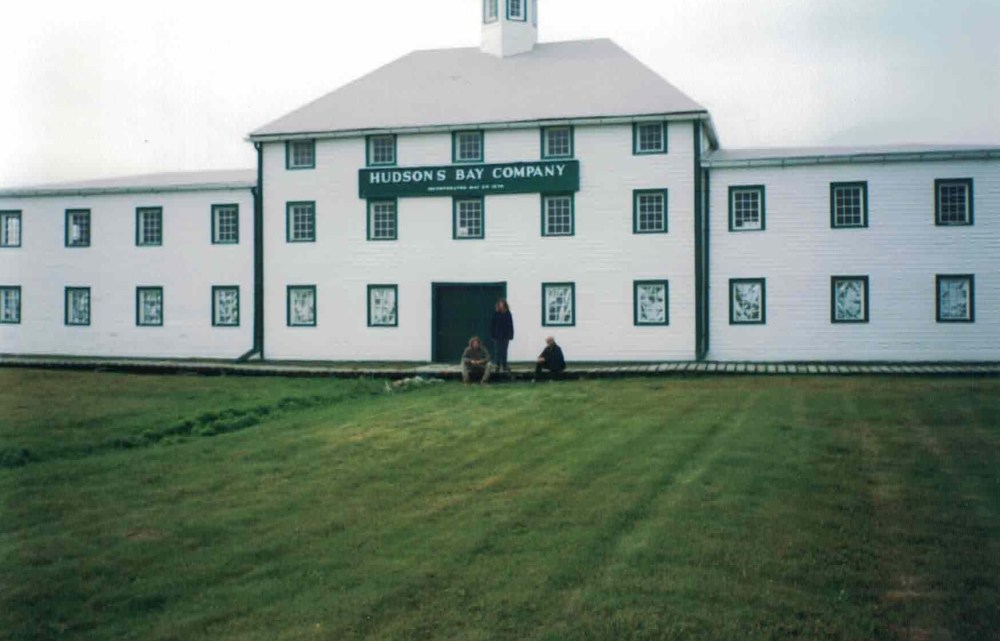
My ideas on what lay beyond my childhood in Rosengard had long since expanded in numerous ways. The Hayes River experiences, and in particular the people we met continue to surface in my memories. We could not have been welcomed more warmly than the way we were received by Betty and Jim Settee who were official Parks Canada custodians at York Factory on Hudson Bay when we arrived at noon on August 27, 1998, after a 17 day paddle. We had arrived!
Being welcomed on shore, included Jim helping me to my feet when I promptly fell into the miry clay on the shores of Hudson Bay. Jim assured me that getting stuck in the clay, meant that I “had truly arrived at the Bay.” His deft handling of the water hose also helped to remove some of the clay from my rain pants.
Betty, welcoming us in her own kind way, kept on offering us chocolate chip cookies, which seemed to vanish the minute she removed them from the oven. Mrs. Settee must have felt comfortable with us. She shared a bit of her own story with us when she had returned to the trap line, saying “The Lord knew what I needed.” It is truly humbling for us to remember that Mrs. Settee was sharing such a powerful personal chapter of her own journey.