Jobs and trade minister shares economic update at chamber summit in Steinbach
Advertisement
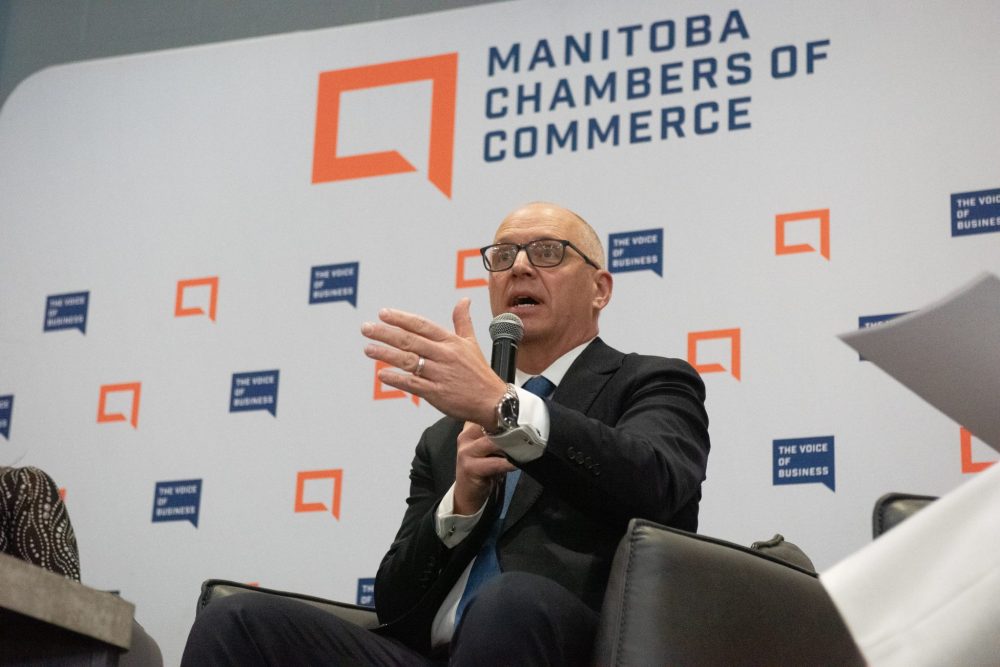
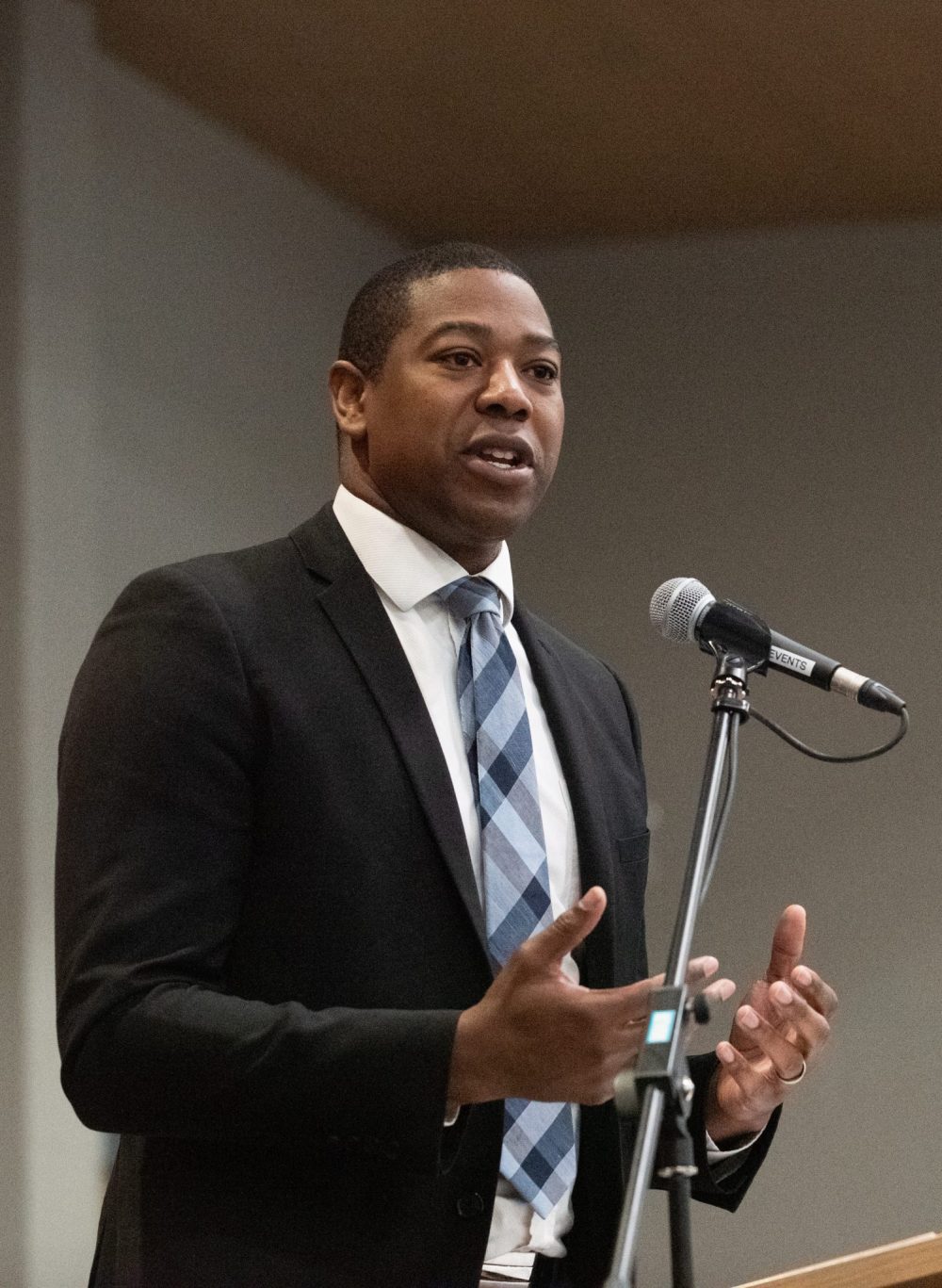
During the Manitoba Chamber of Commerce’s economic summit in Steinbach on May 1, Minister of Business, Mining, Trade and Job Creation Jamie Moses shared some of the changes to the economy and initiatives the government has undertaken since last fall when it launched its economic development strategy.
“I also want to say that every person’s success in our province is really important to us as a government. We understand that the challenges we’re facing, both to grow your individual business, to support the different regions of our province, only gets more challenging when we see the national framework of competitiveness, international conflicts when it comes to trade and tariffs…” he said.
“As well as when we look at global conflicts, which restrict supply chains, make things more expensive, put pressure on Manitobans and put pressure on businesses as well. And so we spend a lot of time as a government in understanding how we can support business communities through all of these broad challenges.”

Moses highlighted certain government initiatives, such as doubling the export support program funding so businesses can reach new markets, having a trade envoy in Washington, creating a $50 million trade growth investment financing program (TGIF), doubling funding for the export support program, taking the PST off of manufacturing equipment, building trade ties with Mexico while also looking to reach markets in Asia and India, and signing an interprovincial trade agreement in November 2025.
One initiative Moses highlighted was improvement of the small business venture capital tax credit, which had its cap increased for small businesses and investors.
“I love that the minister is talking about investing in small to medium-sized businesses because the majority of our businesses here are SMEs,” said Steinbach Chamber of Commerce executive director Tessa Masi. “And it’s really important because that’s what our economy is run on and we really need to be supported by them. When they’re successful, we’re all successful and then it helps attract even more big businesses, but also small and medium businesses. It just really keeps that wheel turning.”
Moses also pointed to the approval of mines in Thompson (a $210 million investment) and Lynn Lake ($1.3 million investment) to exploit the province’s critical minerals, such as zinc and gold. Other investments in the province included Bayer CropScience which has committed more than $45 million for a new canola research and innovation facility and the funding of the Port of Churchill in order to reach international markets, such as Europe which needs a stable source of energy.
“In March, the Stats Canada numbers came out and said that we were actually number one in all of Canada for job growth…With just under 11,000 new jobs created in a single month and I think that’s an incredible sign,” said Moses.

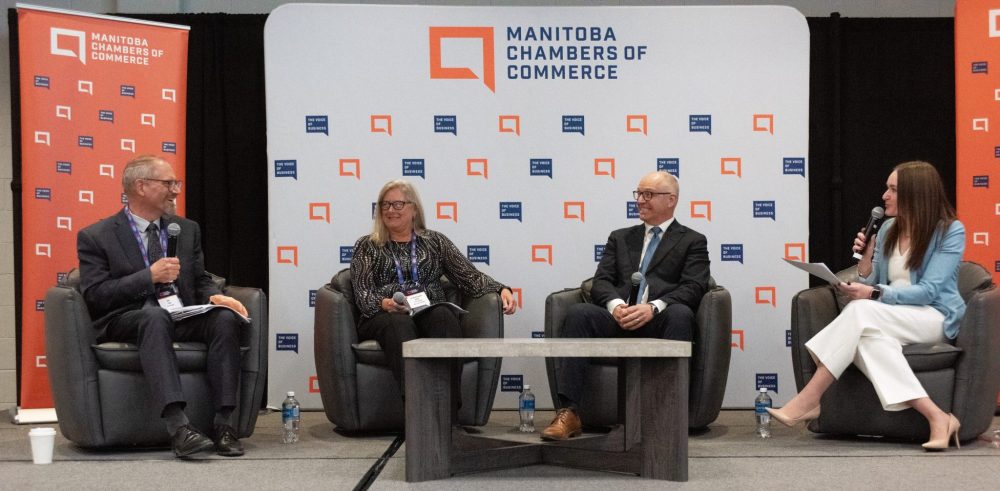
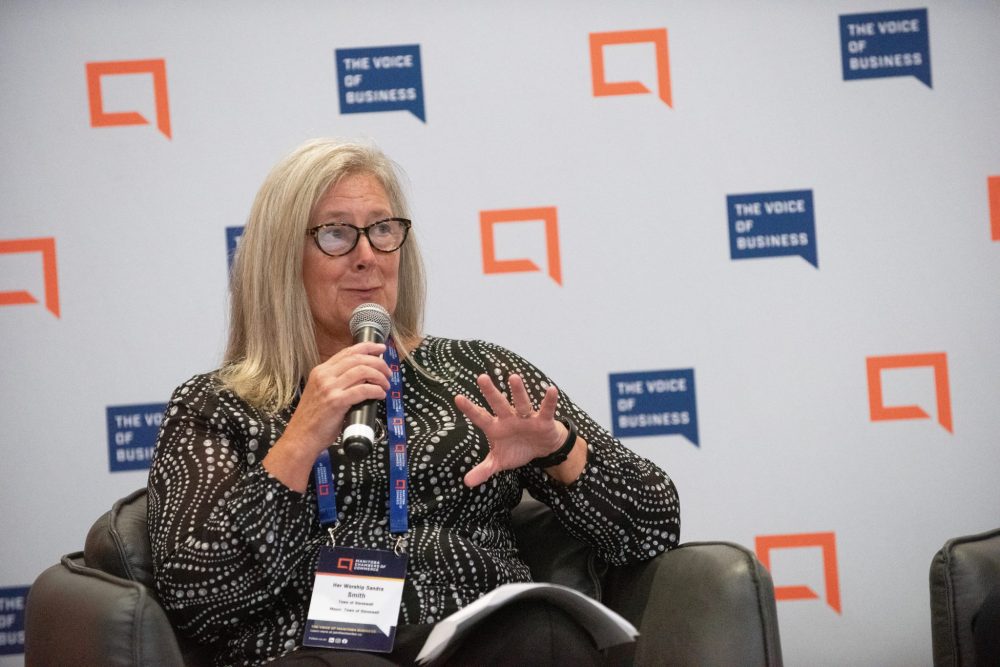
Labour was a topic much discussed at the summit. The mayors’ panel shared what the councils from Steinbach, Winnipeg, and Stonewall are doing to attract labour and retain it.
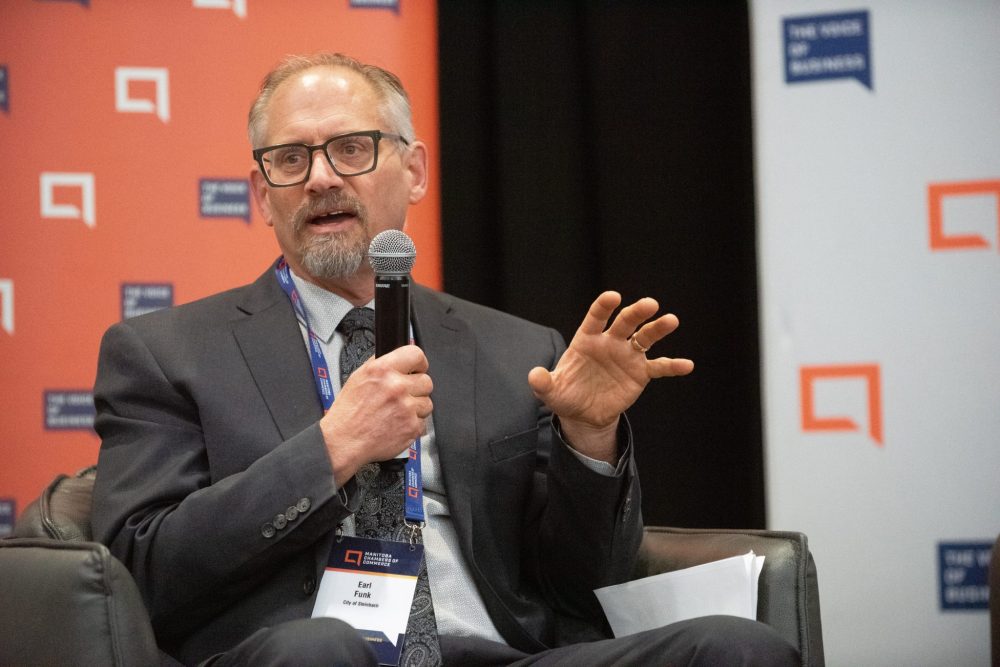
Steinbach Mayor Earl Funk said the city has been promoting its amenities and diverse industries to get skilled labour and retain it. Some of the labour initiatives the city has begun include going to Steinbach Regional Secondary School and offering students $1,000 bursaries from the Bethesda Foundation for those who are looking to enter the healthcare field and will return to Steinbach to work. The city also holds residents’ night for medical students to attract doctors to Steinbach.
“I think it’s showcasing your community. I think that is what brings people to your community and helps them stay,” said Funk.
One of the business leaders who attended the summit was East St Paul business owner Kyle Romaniuk, who is president of Frakxion, a headhunting company that provides fractional employment for C-suite executives for small to medium sized organizations.
Romaniuk was the past chair of the Manitoba Chamber, a board he sat on for about 10 years. He also sat on the Winnipeg Chamber of Commerce and the Canadian Chamber of Commerce boards.
In his experience, Romaniuk said the biggest change he’s seen in the business community is the slow migration towards more collaboration between companies and organizations in different communities across Manitoba and nationally, whereas before there was more isolation.
“I think since COVID happened, it created a lot more opportunity for a lot more remote collaboration than what used to be. And chambers of commerce and other organizations like that, they help keep that momentum going and create more connections to keep it moving forward,” he said.
Manitoba Chamber of Commerce president and CEO Chuck Davidson also noted trans-provincial trade barriers being lifted as an economic benefit, but he said the benefits that will come from it haven’t yet been realized as this is a work in progress. He said Manitoba needs to focus on promoting itself nationally.
“I think this is going to be a key year, kind of moving forward, in terms of where we’re going to start to see some of the results from that,” he said.
In the past year, since the United States tariffs were introduced against some Canadian products, it has impacted Manitoba exports by dropping them to 67 percent. Davidson said now is the time to look at other countries to do business with.
“It’s something that needs to take time, but it’s something we need to continue to focus on because this notion that we’re going to go back to the way that we had it in the past with the United States is not coming back. It’s just not. So, this is a key focus for us as an organization, as well is really helping businesses to navigate what that’s going to look like in the future.”
The advantage Manitoba has compared to other provinces is in its economic diversity, according to Davidson. He said Steinbach has great companies from many different sectors and that needs to be promoted, as should the amenities and supports what the city has to offer. All of this will attract and retain workers, especially in regards to young people who are looking to build a career.
Funk noted other advantages of living and working in the city is it’s a large economic hub in the Southeast that provides services to 150,000 people, has affordable housing, its businesses have advances in technology, and its proximity to Winnipeg,