
‘Everything fades away’: Piney officials say cell service gaps hamper emergency response
Advertisement
Lost fire crews, delayed emergency response times and communication black-outs.
Those were just some of the issues that Joel Grenier faced when he battled last year’s wildfires in the Rural Municipality of Piney. He places the blame on the region’s spotty cellular service.
Whenever responding to an emergency call, the Woodridge district fire chief always has cellular service in “the back of our mind.”
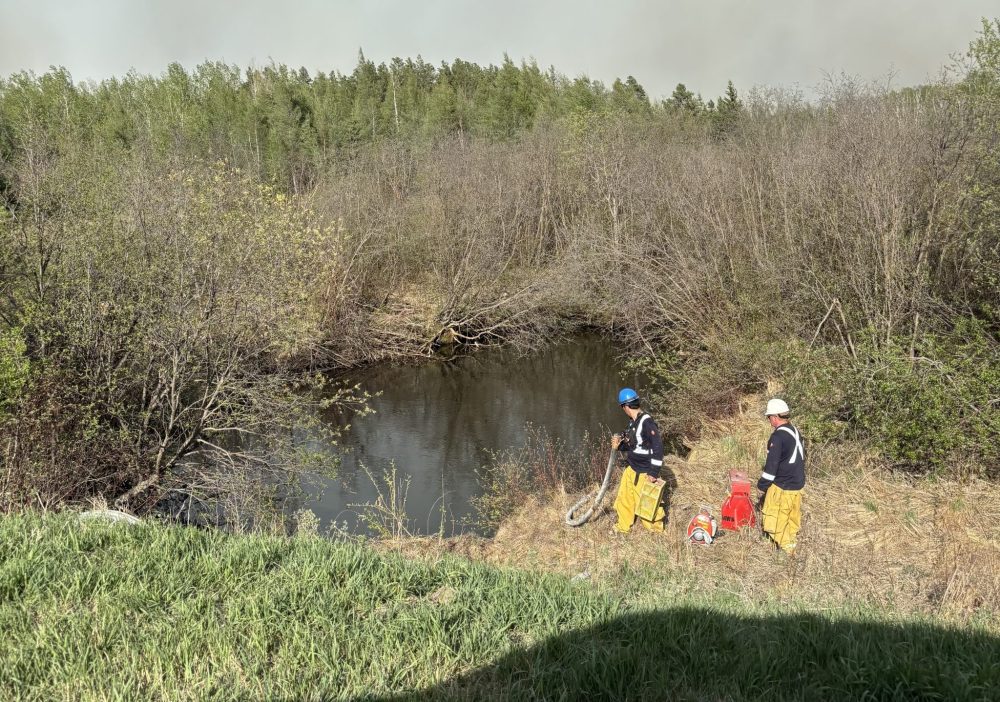
“As soon as we leave those areas, then everything fades away. So then we get off the grid I guess at that point,” Grenier said.
Manitoba’s 2025 wildfire season scorched the province at a historic rate: 428 wildfires burned 2.14 million hectares of forest. Fires in Piney destroyed 9,000 hectares of trees, forcing 300 residents to evacuate.
With another potential wildfire season on the horizon, Grenier said firefighters are “preparing for the worst” when approaching communication.
Local leaders are raising concerns that the persistent issue of poor cellular and internet coverage will put Piney residents at risk if there are more wildfires this year. The problem has lingered for at least 20 years, left unaddressed by provincial and federal governments of all political stripes.
During last year’s blazes, more than a dozen different municipalities, including Reynolds and La Broquerie, sent firefighters to help Piney battle the wildfires. As crews arrived, Grenier said sending them out to the flames became difficult because the outside departments weren’t familiar with local landmarks that helped the local firefighters locate themselves when cell service was down
“To us, it’s just back-of-mind information, but to someone who’s new to the area, well, everything looks the same when you’re out in the bush,” he said.
Some teams were sent to the wrong locations, while others got lost traveling to the hot spots, further delaying the fight against the flames. Fire crews also had close calls as wind gusts caused the fires to change direction quickly, and communication slowed when updating the teams.
As the season progressed, Grenier’s crews adapted to the dead zones and started sending a local firefighter with the outside crews as a guide to mitigate the navigation gaps.
Cell service dead zones have caused daily issues when responding to emergency calls. While rushing to traffic accidents or search-and-rescue operations, emergency crews balance not getting lost with responding quickly, he said.
Grenier remembers racing to an accident near Marchand, approximately in 2022. As his crew was driving to the reported location, the firefighters lost cell service. To avoid any risk of heading to the wrong place, Grenier’s truck was forced to backtrack until there was a connection, call the dispatcher for information and then drive back towards the accident’s location again.
“If you’re not boots on the ground, helping that person that needs your help, you’re wasting time,” he said.
“If you’re spending your time driving around, looking aimlessly, then you’re not helping anyone. You’re burning fuel.”
Piney’s chief administrative officer Martin Van Osch said many of the rural municipality’s communities have poor or no cellular service, despite having three towers within its borders.
Communication with residents and non-residents in the area becomes strained whenever emergencies happen, he said. This year, Piney became a participant in the province’s AlertMB program, a mass alert system that uses smart phone notifications if people are in danger or need to leave an area. Van Osch said he values the added resource, but its effectiveness is hampered by the cellular service dead zones.
“The timely delivery of information to those that are both at risk and under evacuation is paramount, and cellular service is the primary means of communication for many people these days,” he said.
South Junction, Sprague and Vassar are the areas in most need of the expanded coverage. The most recent improvements were made in 2017, adding towers in Woodridge, Menisino and Sprague.
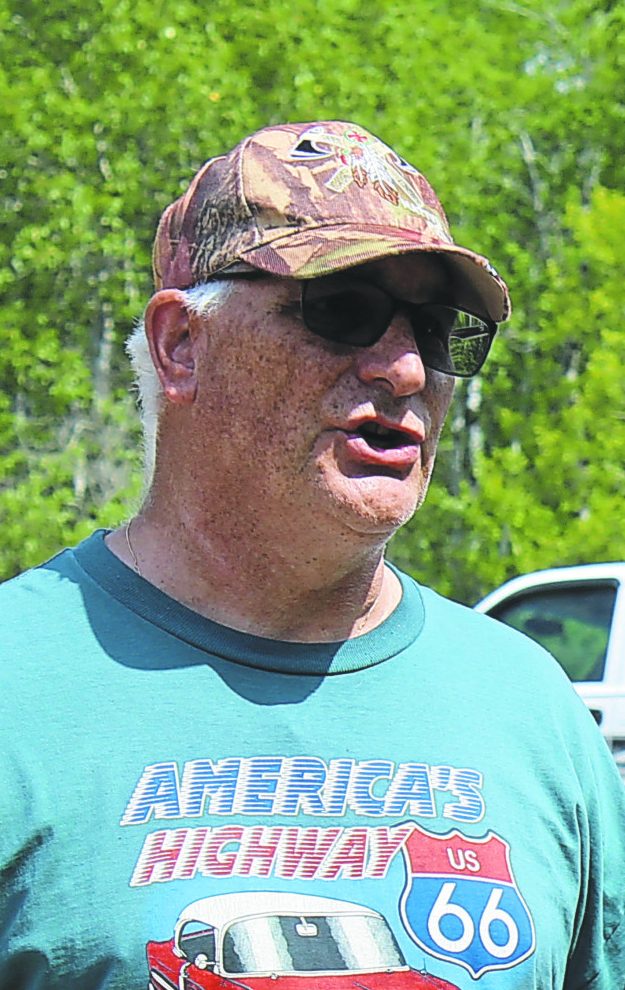
While expanding access to broadband internet can help economic growth, Van Osch said the federal government still needs to prioritize cellular coverage because it’s vital for emergency response.
The rural municipality must work within its means because no cell service improvements are slated for the region in 2026, he said.
Piney officials have brought the concerns to the both the federal and provincial governments and asked for more coverage, Van Osch said.
“We continue to be hopeful and advocate on behalf of the ratepayers and Manitobans for continued improvement. If we didn’t advocate, I feel like the message would just slip by the wayside, and it wouldn’t be a priority for the government to invest in this technology in the service of rural areas,” he said.
Piney Ward 4 Coun. Mark Bernard echoed Van Osch’s concerns and said residents are frustrated. While speaking with The Carillon, Bernard’s phone cut out multiple times. Provincial officials have missed turns travelling to the rural municipality for meetings because GPS systems stopped working, he said.
“If (residents) have a breakdown of a vehicle, or if family and friends are trying to find their location because their GPS doesn’t work because of cell service, it’s very frustrating,” he said.
Bernard has seen decades of promises from the provincial and federal governments to provide cellular service, but said they never delivered because private companies “don’t see a business case” in building the infrastructure in Piney because its population is too low.
He said more telecommunication company competition is needed to offer more options for service providers, rather than the current oligopoly of Telus, Bell and Rogers. The federal government needs to think “outside of the box” when addressing cellular service because the current system isn’t working, Bernard said.
“Something has to give because we’re tired of having the same discussion, and then we’re hearing the same excuses. (Telecommunications companies) think they have valid arguments or valid business cases. They don’t, because you’re dealing with the safety of our rate payers, the safety of our firefighters,” he said.
The issues of spotty cellular service aren’t isolated to only the Southeast. Association of Manitoba Municipalities president Kathy Valentino has heard from members across the province experiencing the same problem.
“If the province wants to grow, it has to prioritize investment in core infrastructure, like connectivity,” she said. “That supports municipal economies and community development and public safety.”
AMM has repeatedly called for a provincial connectivity strategy, with specific targets and timelines, to eliminate cellular service gaps. In 2012, an AMM resolution was put forward to address coverage after wildfires tore through Vita, forcing an evacuation in October of that year. Since then, the association has lobbied the province to target improvements and pursue both federal and private investment to improve the rural cellular infrastructure.
If broadband internet and cellular coverage isn’t addressed, Valentino is concerned that municipalities will struggle in attracting new businesses and investments, stagnating economic growth in communities. She called the lack of improvements “unsettling” as Manitoba prepares for another wildfire season, after rural residents saw challenges receiving information on evacuations.
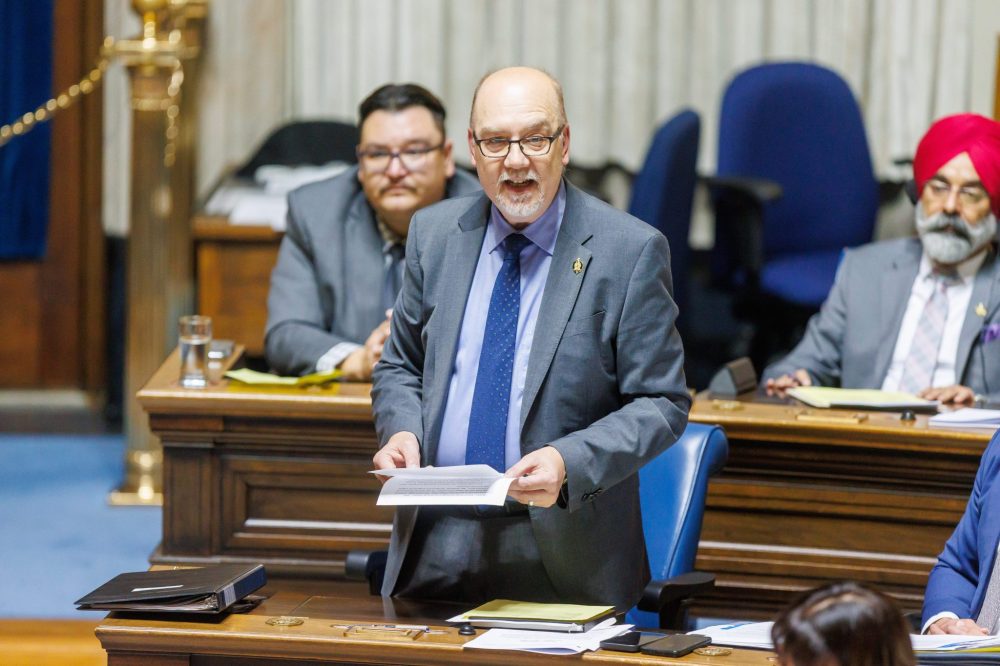
Manitoba’s Innovation and New Technology Minister Mike Moroz said news of cellular service gaps impacting emergency responses was concerning. While he wasn’t aware of the issues in Piney, it has been raised by other municipalities. When addressing rural connectivity, attracting investment from telecommunications companies is difficult because the sparsely populated areas offer no business case for the improvements, he said.
“We’re having to find pathways, together with other levels of government that can get the job done without what appears to be a willingness, particularly from the tele-coms, to help us fill in the gaps,” Moroz told The Carillon.
Despite telecommunications falling under federal jurisdiction, other provinces have taken matters into their own hands for improving coverage. The British Columbia government committed $75 million in 2023 to expand cellular service along 550 kilometres of highway by 2027. Nova Scotia also dedicated funding to add 27 provincial-owned cell towers, as part of provincial strategy to improve service.
Since being elected in 2023, the Manitoba NDP government hasn’t included any funding for expanding cell coverage.
Moroz said federal funds are needed to make the fixes, and accused the former Progressive Conservative government of leaving previously available federal dollars “on the table.”
Manitoba is working with the federal government to secure dollars, he said, but declined to reveal details on potential projects and plans.
In 2019, Innovation, Science and Economic Development Canada and the Canadian Radio-Television and Telecommunications Commission launched the $3.225 billion Universal Broadband Fund, with the goal of connecting all Canadian households to high-speed internet by 2030. Ottawa has funded seven projects in Manitoba for 23 communities since its launch, a CRTC spokesperson said in an email. None of the projects were located in the Southeast.
Ottawa also dedicated $41 million in 2021, through its Universal Broadband Fund, for connecting 93 rural Manitoba communities to internet. Again, no communities in Piney were included.
In 2021, the former PC Manitoba government announced a partnership with New Brunswick-based Xplore Inc., formerly named Xplorenet Communications, to connect 30 First Nations and 350 rural and northern communities to internet and cell service. But critics at the time cited concerns over the government’s decision to allow private companies access to Manitoba Hydro’s fibre optic cable network and the over-reliance on corporate investment rather than public dollars.
The Winnipeg Free Press reported in 2023 that the project’s progress was snagged on invoicing disputes between Hydro and Xplore Inc. Work had stopped on the expansion, and only 20 percent of the project was completed, an April 2023 Hydro memo said.
Bell’s wireless network reaches 99 percent of Canadians, said David Marcille, spokesperson for the telecommunications firm.
“We continue to invest in growing, modernizing and densifying our network as part of our broader plans to improve connectivity across the country, including along major corridors,” he said in an email statement.
Bell is also exploring space-based cellular service, that could further expand connectivity on the ground, as the technology improves, Marcille said.
Both Rogers and Telus didn’t respond to The Carillon’s requests for comment.