
New MHV peace pole to spur reflection: historical society
Advertisement
A new display at the Mennonite Heritage Village that aims to prompt visitors to reflect on peace was erected last week.
The “peace post,” presented in partnership with the Eastmenn historical committee and The Rotary Club of South Eastman, was unveiled on May 8.
The white, metal post is inscribed with the message, “May peace prevail on Earth” in French, English, German and Anishinaabe.
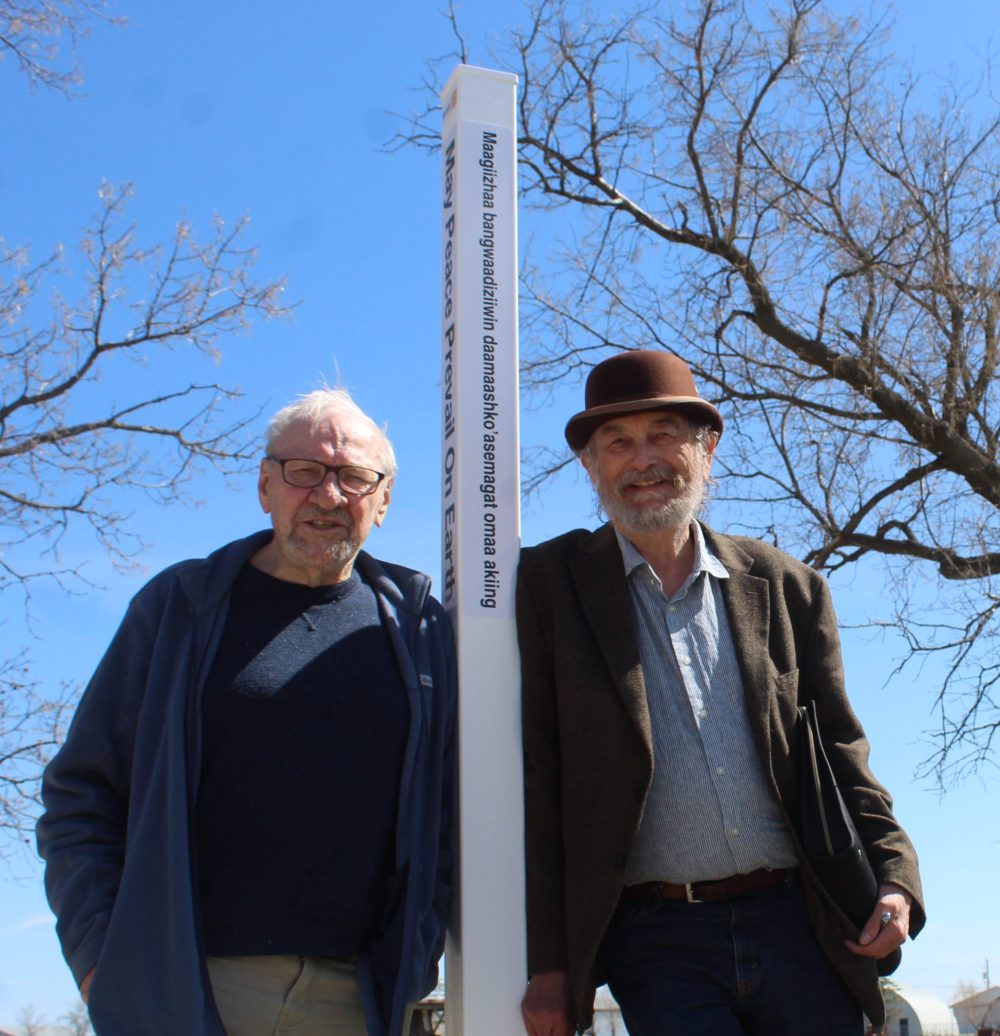
Ed Krahn, co-chair of the EastMenn historical committee, hopes having the new peace pole will help spark reflection after people complete the 55-kilometre Peace Trail. The trail runs from the Mennonite’s first landing site on the Red River near Ste Agathe and ends in Steinbach’s Mennonite Heritage Village.
“It’s an aspiration to move towards that (peace). Hopefully this will help a little bit of the reflection. You’ve got the babbling pool behind us, sort of a nice place to sit on a hot day and be cool and just think and reflect and maybe learn something,” the 71-year-old said.
MHV’s executive director Robert Goertzen said the post and peace garden serve as a reminder that peace was a core tenant for the Anabaptist and Mennonite beliefs for 500 years.
“This is a wonderful day. At the museum, we share the stories of the early Mennonite settlers who came to Manitoba in the 1870s and and onwards. And one of the community’s distinctive values that this group emphasized was living a life of peace. And so we’ve been thrilled to see the development of the peace exhibit on our grounds,” he said.
Glen Klassen, also co-chair of the historical committee, said peace can’t be taken for granted anymore.
“Peace is very important, and we know the unrest in the world. We’d like to keep it this way, and this is another symbol that tells people what’s it all about,” he said.
Sydney Reimer, a member of the historical committee, was tasked with sourcing the post before its unveiling. He contacted someone from Roseau River Anishinaabe First Nation to get the correct translation for the inscription. He said including the message in Anishinaabe was important because it’s located in Treaty One territory, and it acknowledges the Indigenous people that lived on the land before any Mennonite settlers arrived.
Reimer sees the four languages on the pole as representing how the cultures can mingle and coexist with each other.
The rotary club gave the historical committee a $3,000 grant for displays and signage, which was used to fund the post.