
1946 – 2026 Watching Steinbach Grow: Steinbach mayors all kept an eye on Main
Advertisement
Considering the constant growth and the overall financial success of Steinbach, growing from a town of 1,000 to a city of over 18,000, it should come as no surprise that along the way most of the mayors were elected from the Main Street business community.
It would seem Steinbach residents decided that having a successful business on Main Street was a good qualification for someone to head town council. And so it was for K.R. Barkman, L.A. Barkman, and A.D. Penner, who guided Steinbach through the growing pains of the community through the first 34 years as a town.
Of the six mayors that followed, only two were not part of that Main Street business community, and they both served for a decade, showing that it was not absolutely necessary to own a business on Main Street to gain the confidence of the voting public. A few years on council before sitting in the mayor’s chair was experience enough for both Ernie A. Friesen and Les Magnusson.
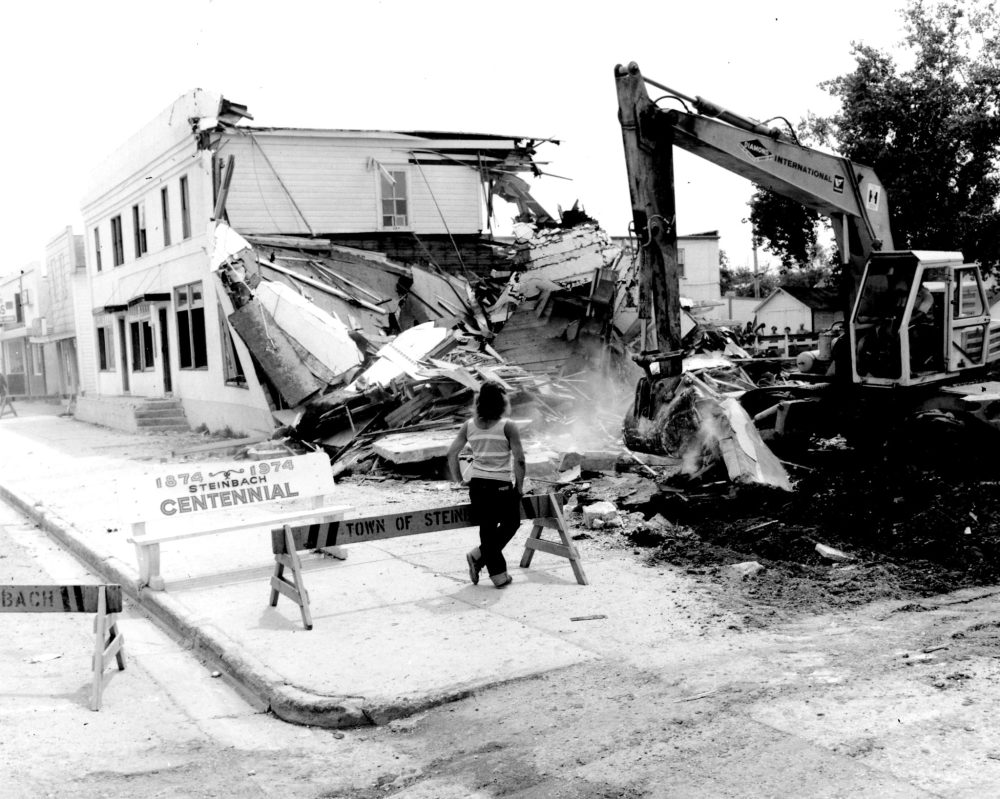
As smoothly as the town has been run over the years, it would seem that it has very much been a matter of following the blueprint of previous councils and administrative staff at city hall. For 80 years, it has been very much business as usual, with the difference being that the town was no longer a corner store, but a giant supermarket.
And in truly democratic fashion, there were any number of major projects along the way that taxpayers were given the opportunity to vote on before the mayor and council went ahead and spent the money.
In some cases, it took a while to convince the public the money would be well spent and it seemed forever that residents waited for the go-ahead on an indoor rink project, an outdoor swimming pool, a second arena and an indoor swimming pool, not to mention the largest of all projects, the Southeast Event Centre.
Looking at the magnificent Southeast Event Centre, it is hard to believe it took 20 years of discussion for Steinbach to build its first arena in 1967. Even then, corners had to be cut to meet the budget approved by council.
It also took an ingenious manipulation of pool referendum results by A.D. Penner to get a public outdoor swimming pool built after the Steinbach Kinsmen closed the pool the service club built in 1959.
Pool votes over five years failed to settle the matter. The first was a distinct “No” for any pool, the second, which offered three options, did not provide a clear indication of what the public wanted and the third, a money by-law for an indoor pool, was defeated.
The mayor argued that even though the “No’s” had the majority in an earlier referendum, if you totalled the indoor and outdoor pool votes, it showed the public wanted a pool. While the public voted against paying for an indoor pool, it was clear they wanted a pool. It was clear the town should build an outdoor pool, Mayor Penner insisted. Council agreed.
But there was one decision that no Steinbach council has ever made on its own, and that one did not even require the spending of any taxpayer dollars.
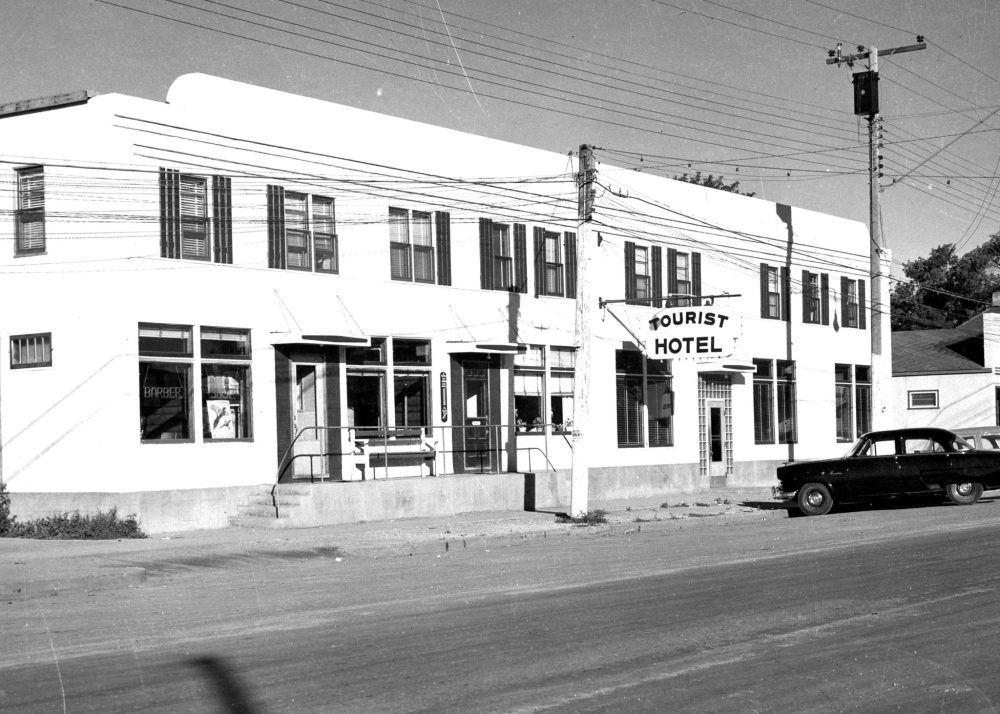
The desire of the community to change with the times and allow the consumption of alcoholic beverages to occur in public places within the boundaries of the community was always a matter of public referendum.
From the very first public vote in 1927, which allowed the Tourist Hotel to serve beer, to the last vote, allowing permanent liquor licenses for lounges in sports clubs and restaurants, Steinbach residents have always been given their say.
It is interesting to note that while a liquor vote passed in 1927, a referendum in 1973 to bring mixed drinking to Steinbach failed, and that was responsible for the new hotel being built outside town limits.
One of the most vigorous campaigns in opposition was in 1950, when radio pastor Gerhard Splinter of Jamestown, North Dakota, spoke at a temperance rally held in the Gospel Tabernacle in Steinbach, a week before the vote. He urged the people of Steinbach to throw the beer parlor out of town.
“Throw the beer parlor out of town and then you are not responsible for what goes on outside town limits.”
His words were to no avail, and the “Yes” vote carried by a large margin. More than 20 years later, in 1973, it was a different story.
Many an article, editorial comment, and letters to the editor on both sides of the issue kept Carillon readers up-to-date on the latest, in an ongoing series of referendums for decades.
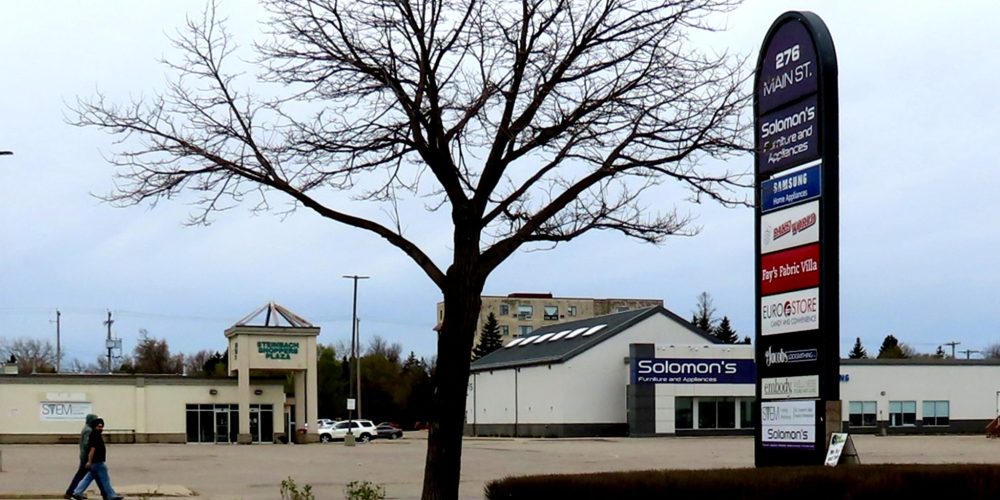
In the end, it would seem, change was inevitable, just as it has been for a previous generation that was constantly lectured on the evils of television, and now can be seen chatting on their cell phones, as the latest technology makes its way into daily lives in Steinbach,
The hotel built just over the boundary to the east in the RM of La Broquerie as a result of the 1973 vote against mixed drinking, may well have determined the direction Steinbach would grow in the future.
Steinbach has expanded its boundaries to the north, south and west, but there has been little residential expansion to the east. In the RM of La Broquerie, most of the population growth outside the Village of La Broquerie has been in pockets of two-acre residential lots.
Steinbach has always served as a magnet for the growth of business, industry and agriculture in the Southeast and that has not gone unnoticed by those in that big city on the other side of the perimeter and the floodway.