
American Division 1 colleges considering age limit
Advertisement
The NCAA is considering more changes to eligibility for college athletes who want to compete at the highest level of American post-secondary sports.
The organization announced May 22 their Division 1 Cabinet was considering introducing an age limit, with athletes having five years to compete. Under their proposal, the clock would start when an athlete graduates high school (or when they turn 19, whichever comes first). There is no current limit on age in the NCAA.
The move could have massive impacts for hockey. Most players complete a four-year junior career until their 20-year-old season in either Canadian Junior A hockey leagues like the Manitoba Junior Hockey League or in the United States Hockey League before joining the NCAA ranks.
Top NHL agent Allan Walsh was one of many from across the hockey world to voice their opposition to the proposed new rule, tweeting, “The ‘5 in 5’ rule cannot and will not stand as applied to College Hockey.”
Heather Weems is the Commissioner of the National Collegiate Hockey Conference and one of the proponents of a tweak the Hockey Commissioners Association is trying to get through.
In a paper signed by USA Hockey, the NHL and major junior leagues, the HCA is proposing to change to where the five-year clock will start for college athletes.
That group wants to move the starting point from high school graduation to college enrollment or the fall semester after a athlete’s 19th birthday, whichever comes first. The HCA is not asking for an exception to the rule for their sport. They want their proposal to be the rule across all of Division 1 sports.
Weems thinks junior teams are not capable of handling teams of mostly high school aged kids and there aren’t enough prep schools to pick up the development slack.
“The junior system provided kids with the opportunity at 17, and more often 18 and 19 to develop while billeting with local teams,” Weems said in an email to The Carillon.
“I do not believe the junior system is built to provide structure and support to 15 and 16 year-olds, and in fact would force families to make decisions about sending their kids away or separating parents to support their hockey development, or even determine hockey is not accessible or affordable enough to continue to play.”
According to the paper, 99.8% of players who play hockey in Division 1 had prior junior experience and an average starting age of 20.5. A typical sport sees an average age of 18.7 for their first-year players.
The NCAA began allowing major junior players to join teams in their league in 2024, after years of refusing any player who suited up for a team in the Western Hockey League, Ontario Hockey League or Quebec Maritimes Hockey League.
Niverville Nighthawks graduating player Adam Vigfusson, who is turning 21 this summer, recently committed to St Cloud State. If the proposed new rules were already in place, he would only be able to play until his age 23 season before losing eligibility.
The new NCAA rules would allow schools flexibility for already enrolled athletes and some grace to athletes who were set to enroll this season and graduated high school earlier but strictly apply the new rules to any players who graduate this season.
“Under the age-based model, waivers would no longer be available to extend eligibility, with exceptions for pregnancy, official religious missions and active-duty military service, provided the student-athlete does not participate in organized competition,” an NCAA release reads.
“Sport-specific exceptions and grace periods are not expected.”
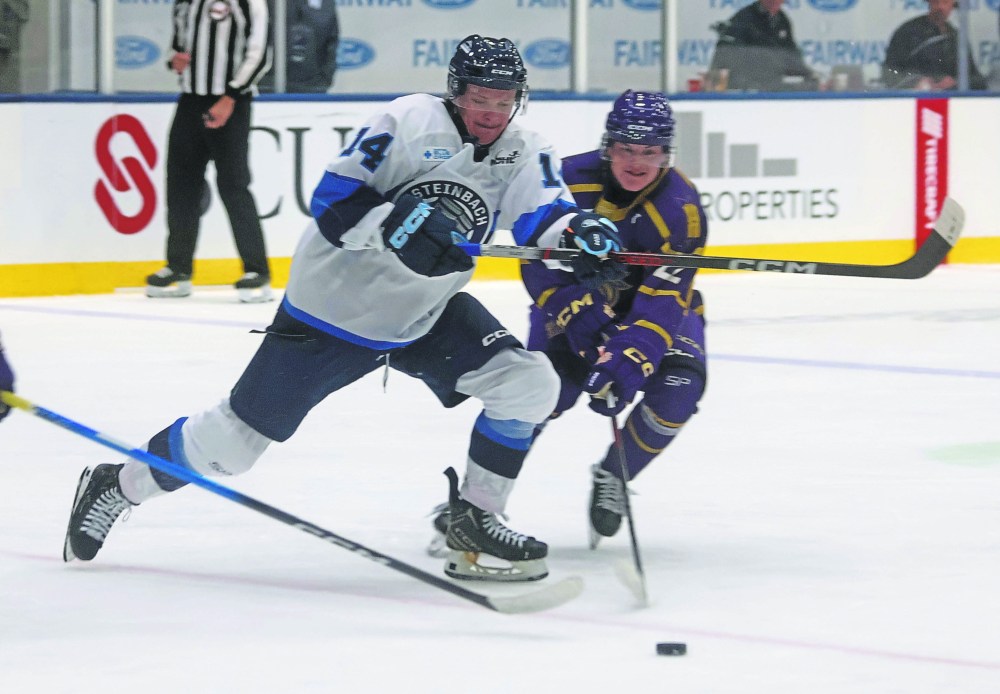
Five current Manitoba Junior Hockey League Players announced Division 1 commitments this season, including Vigfusson. Steinbach’s Rory Gilmour was one of them, committing to Maine University the season before joining The Pistons.
Former Winkler Flyers player Max Lavoie, who spent last season with Brandon in the WHL, also committed to a top division school.
The Division 1 cabinet also noted in the news release a vote on enacting the new rules could come as soon as their June meeting.